Understanding Ulnar Palsy
The ulnar nerve powers many of the small muscles responsible for fine hand coordination, and damage to it can lead to a distinctive pattern of weakness known as ulnar palsy.
This condition often affects grip strength and the ability to spread and bring the fingers together.
Our clinic provides comprehensive evaluation and treatment for ulnar palsy to support nerve recovery and preserve hand function.
What Is Ulnar Palsy?
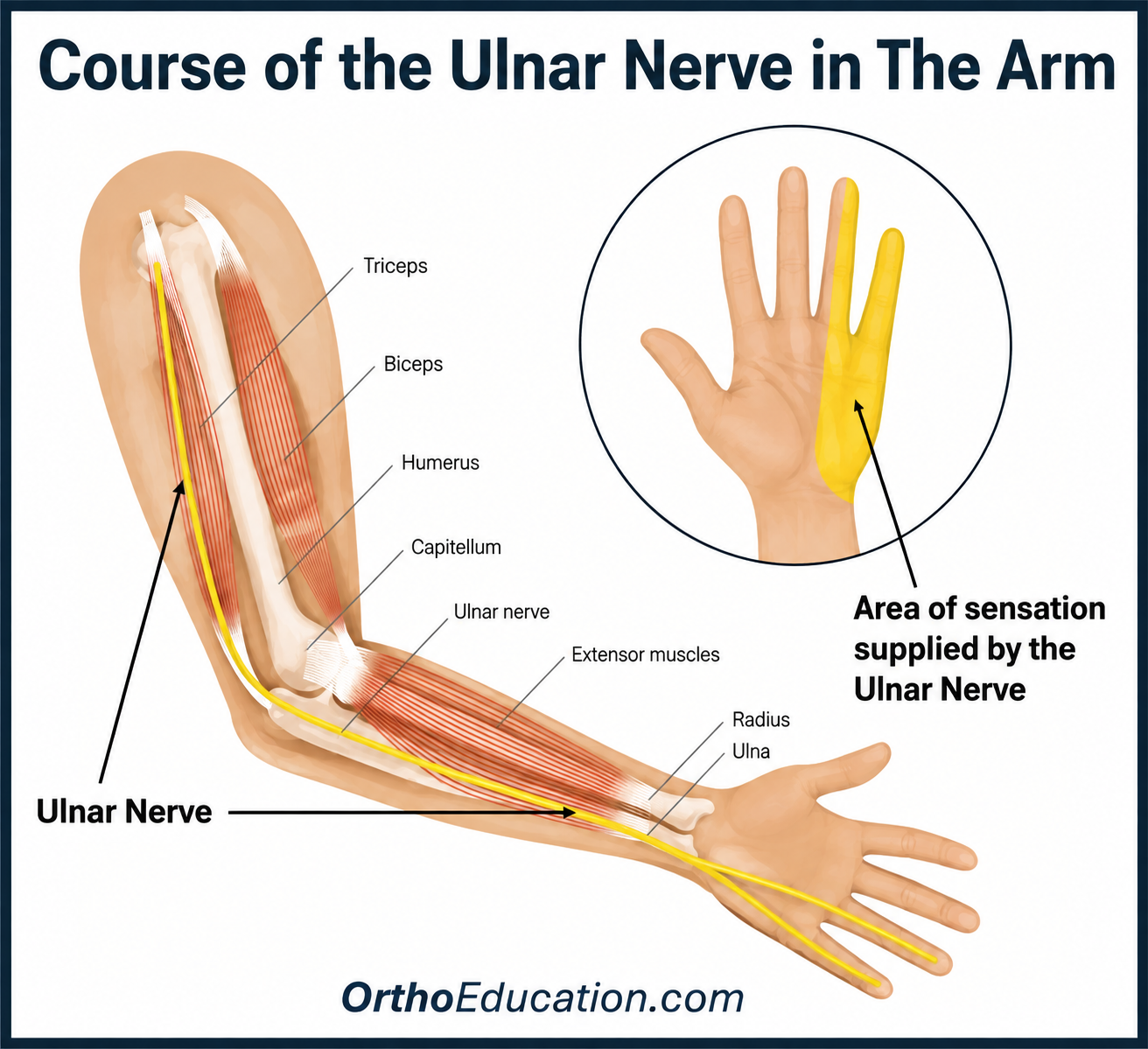
Ulnar palsy occurs when the ulnar nerve, which travels from the inner elbow down into the hand, becomes damaged or compressed, most commonly at the elbow or wrist.
This nerve supplies many of the small muscles in the hand responsible for finger coordination, so injury to it produces characteristic weakness affecting grip and fine motor movements.
Common Causes of Ulnar Palsy
Compression at the elbow, as seen in cubital tunnel syndrome
Compression at the wrist within a structure called Guyon's canal
Direct trauma or fractures affecting the nerve's pathway
Prolonged pressure on the inner elbow or wrist
Symptoms of Ulnar Palsy
- Weakness spreading or bringing the fingers together
- A characteristic clawing appearance of the ring and little fingers in advanced cases
- Numbness or tingling in the ring and little fingers
- Reduced grip and pinch strength
Treatment Options for Ulnar Palsy
Structured clinical options focus on preserving joint motion and relieving pressure on the ulnar nerve:
- Splinting – supports the hand and prevents clawing during nerve recovery
- Structured hand therapy – maintains joint flexibility and retrains hand coordination
- Activity modification – reduces ongoing pressure on the affected nerve
- Surgical decompression or tendon transfer – considered for persistent or severe cases
Frequently Asked Questions
Where does ulnar nerve compression most commonly occur?
The two most common sites are at the elbow, within the cubital tunnel, and at the wrist, within a passage called Guyon's canal.
What does 'clawing' of the fingers mean in ulnar palsy?
It refers to a characteristic bent position of the ring and little fingers that can develop when the small muscles these fingers rely on lose normal nerve function.
Can ulnar palsy improve with therapy alone?
Milder cases often improve with splinting, therapy, and activity changes, while more significant nerve damage may require surgical intervention for meaningful recovery.
Concerned about wrist or hand pain? Book a consultation today with our specialists.
Book Hand Specialist Consultation