Understanding Inflammatory Spine Conditions
Spondylitis broadly refers to inflammation of the vertebrae and spinal joints, encompassing a family of related inflammatory conditions, of which ankylosing spondylitis is the most well-known example.
Distinguishing spondylitis, which is driven by inflammation, from spondylosis, which reflects degenerative wear, is important since the two have different underlying causes and require different treatment approaches.
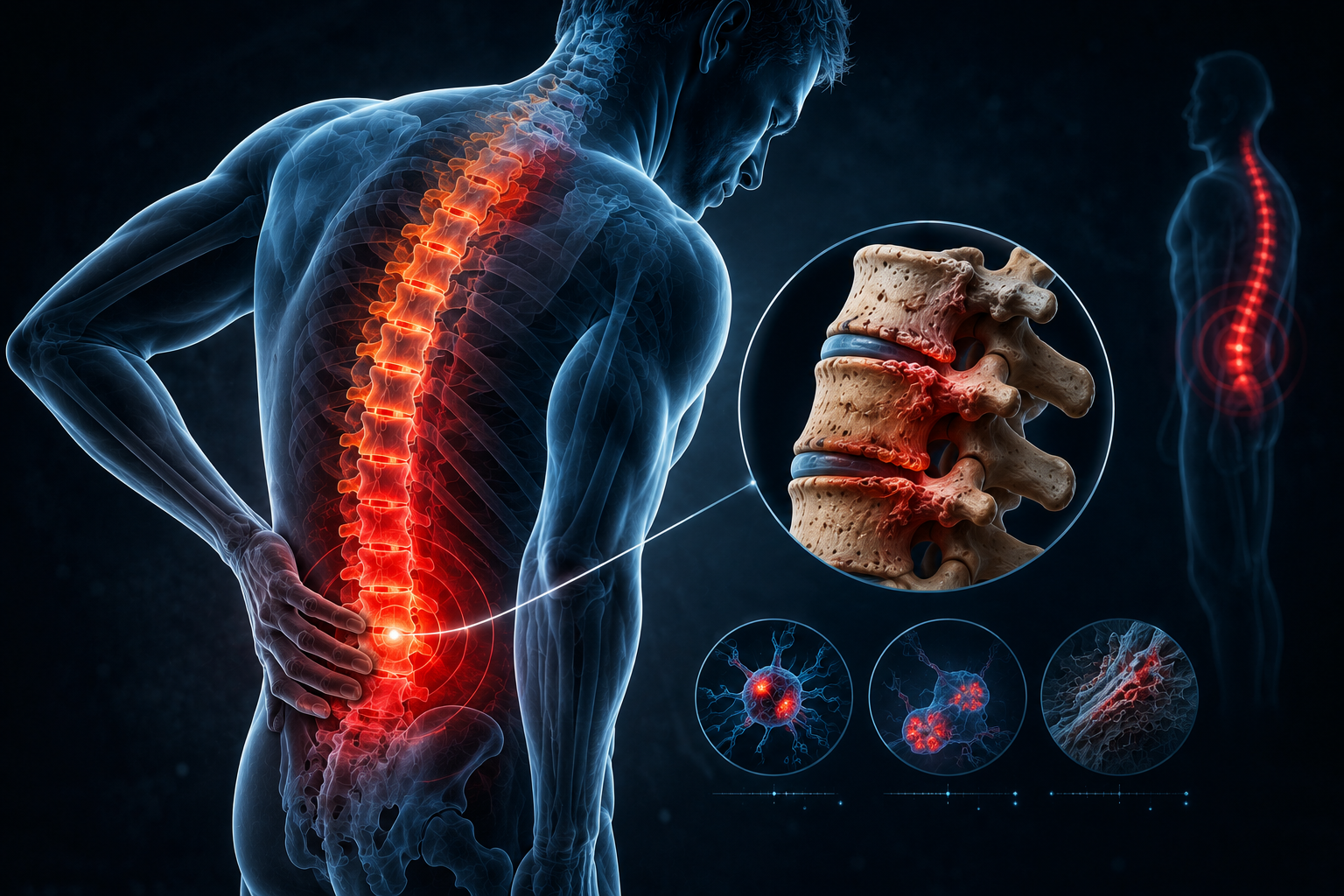
Spondylitis vs Spondylosis
- Spondylitis refers to inflammatory conditions affecting the spine, often autoimmune in nature
- Spondylosis refers to degenerative, age-related wear of the spine, unrelated to autoimmune inflammation
- Spondylitis pain classically improves with movement and worsens with rest, opposite to the typical pattern seen in degenerative spondylosis
Types of Spondylitis
- Ankylosing spondylitis — the most recognized form, primarily affecting the spine and sacroiliac joints
- Psoriatic spondylitis — associated with psoriasis and affecting the spine and joints
- Reactive spondylitis — triggered by certain infections
- Enteropathic spondylitis — associated with inflammatory bowel conditions
Symptoms
- Chronic back or neck pain with prolonged morning stiffness
- Pain that improves with activity and worsens with prolonged rest
- Fatigue related to ongoing systemic inflammation
- In some types, additional joint involvement or skin and bowel-related symptoms depending on the underlying associated condition
Treatment Principles
- Regular exercise and physiotherapy to maintain spinal mobility
- Anti-inflammatory medication to control symptoms
- Disease-modifying or biologic medications for more significant, persistent inflammation
- Coordinated care addressing any associated condition, such as psoriasis or inflammatory bowel disease
Frequently Asked Questions
What is the difference between spondylitis and spondylosis?
Spondylitis refers to inflammatory spinal conditions, often autoimmune in origin, while spondylosis refers to degenerative, age-related spinal wear unrelated to autoimmune inflammation.
Is spondylitis curable?
There is currently no cure for most forms of spondylitis, but with appropriate medication and consistent exercise, symptoms can typically be well managed long-term.
Can spondylitis affect more than just the spine?
Yes, depending on the specific type, spondylitis can also involve other joints, as well as the skin, eyes, or bowel in some associated conditions.
Take Care of Your Spinal Health
Concerned about back, neck, or spine pain? Book a consultation today with our specialists.
Book Spine Specialist Consultation