Understanding O'Donoghue's Triad
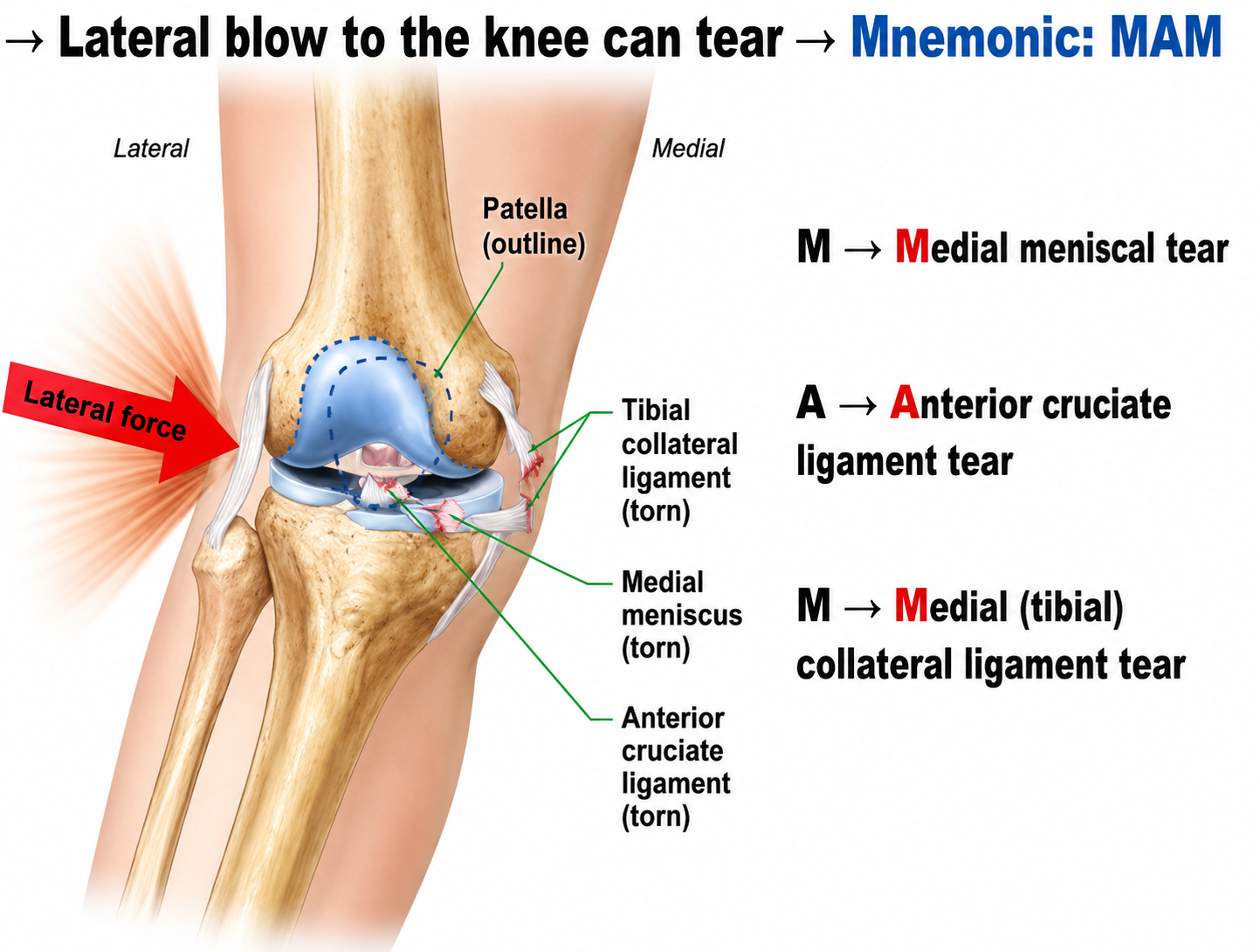
O'Donoghue's triad, sometimes called the "unhappy triad," refers to a specific combination of knee injuries occurring together: a tear of the anterior cruciate ligament (ACL), a tear of the medial collateral ligament (MCL), and damage to the medial meniscus.
This injury pattern typically results from a forceful blow to the outer knee while the foot is planted, commonly seen in contact sports, and represents a more complex injury requiring comprehensive assessment and treatment planning.
How O'Donoghue's Triad Occurs
This injury pattern classically occurs when a lateral force strikes the outer side of a planted knee, forcing it inward while simultaneously twisting. This combination of forces can simultaneously overload the MCL, ACL, and medial meniscus, leading to the characteristic triad of injuries.
Symptoms
- A distinct, audible popping sound at the time of trauma
- Significant joint swelling developing rapidly within hours of the injury
- Intense pain localized along the inner knee (MCL) and deep within the joint (ACL and meniscus)
- A pronounced sensation of joint instability and giving way
- Immediate difficulty bearing weight on the affected leg
Diagnosis
Diagnosis requires a meticulous clinical examination assessing the structural integrity of all three components.
This is combined with high-resolution MRI imaging to precisely confirm the extent of ligament and meniscal involvement, since accurately mapping all injured structures is essential for planning appropriate surgical and non-surgical interventions.
Treatment Approach
- Initial phase: Managing acute swelling and restoring early range of motion
- Surgical intervention: Reconstruction of the ACL, often combined with targeted meniscus repair when tissue viability permits
- Conservative MCL management: The torn MCL is frequently managed with protective bracing, as it typically heals well without direct surgery
- Structured rehabilitation: Comprehensive physical therapy following surgery to restore strength and stability across all affected tissues
Recovery Outlook
Recovery from O'Donoghue's triad is more prolonged than an isolated ligament injury due to the combined structural damage involved. It often requires nine to twelve months of dedicated, progressive rehabilitation before a safe return to competitive sport, with close clinical monitoring of strength and joint stability throughout the recovery process.
Frequently Asked Questions
Is O'Donoghue's triad the same as an ACL tear?
No, it specifically refers to the combined injury of the ACL, MCL, and medial meniscus occurring simultaneously, which is significantly more extensive and complex than an isolated ACL tear.
Does the MCL always need surgery in this injury pattern?
Not usually — the MCL possesses an excellent blood supply and often heals very well with functional bracing and physiotherapy alone, even when the ACL requires surgical reconstruction.
How long is recovery from O'Donoghue's triad?
Given the extensive multi-structural damage involved, recovery typically requires nine to twelve months of comprehensive rehabilitation before returning to high-demand or competitive sporting activities.
Take Care of Your Knee Health
Concerned about complex knee pain or looking for a specialist diagnosis? Book a consultation today with our orthopedic experts.
Book Knee Specialist Consultation