Understanding Wrist Pain
The wrist is one of the most complex joints in the body, made up of eight small bones, numerous ligaments, and tendons that all coordinate to allow precise, controlled hand movement.
This complexity means wrist pain can arise from many different structures, from cartilage and tendons to nerves and small joints.
Our clinic offers thorough evaluation and treatment for wrist pain caused by injury, overuse, or nerve compression, tailored specifically to restore normal hand function and relieve discomfort.
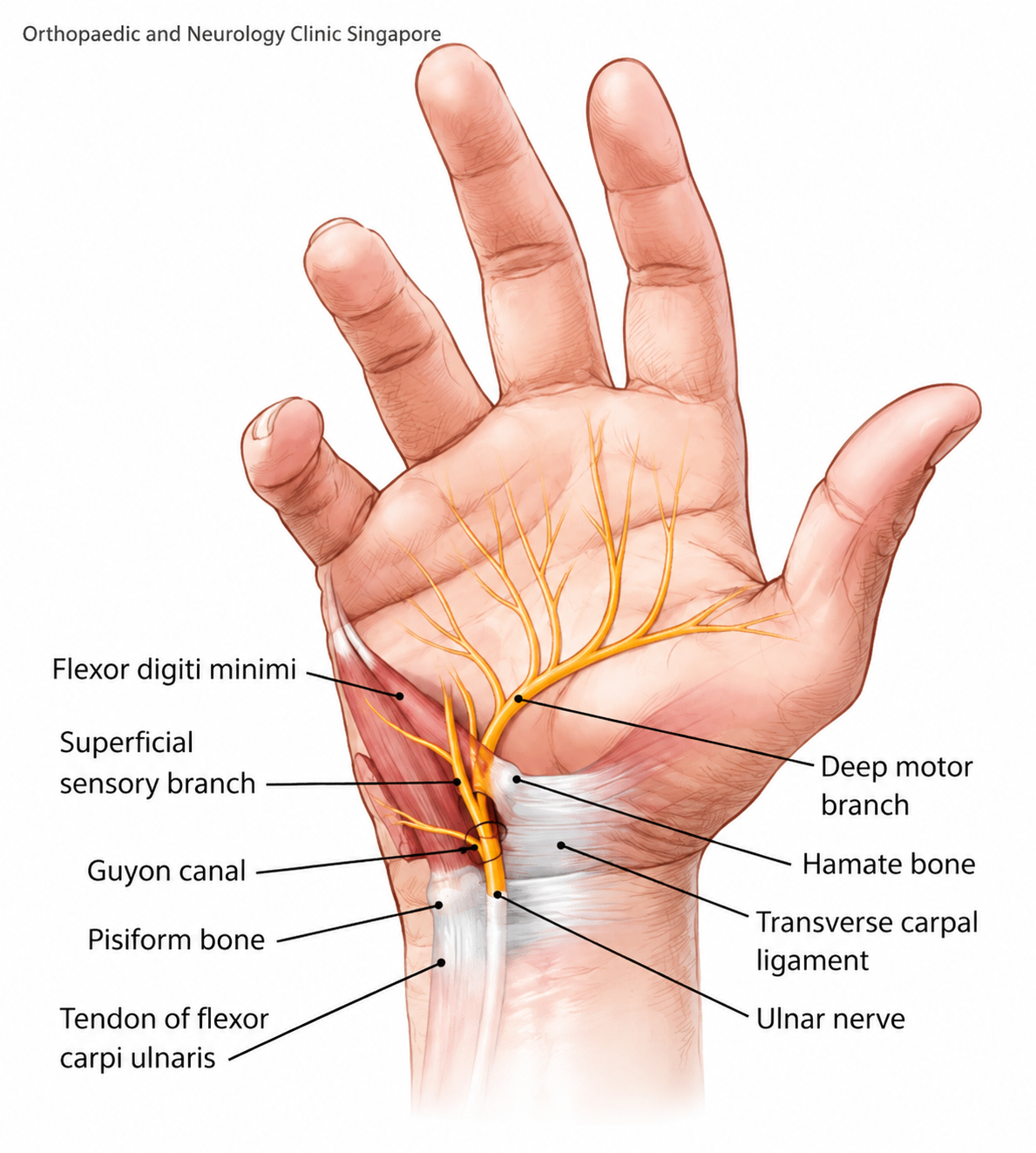
Why the Wrist Is Vulnerable to Injury
Because the wrist bridges the forearm and hand while supporting a wide range of motion, it absorbs significant stress during gripping, lifting, and repetitive hand movements.
The small size of its bones and ligaments, combined with the sheer volume of use the wrist gets daily, makes it especially prone to strain, overuse injuries, and nerve compression.
Common Causes of Wrist Pain
Repetitive hand and wrist movements from work, typing, or sports
Falls onto an outstretched hand causing sprains or fractures
Nerve compression as tendons and nerves pass through narrow wrist tunnels
Inflammatory conditions affecting the small joints of the wrist
Previous injury or fracture leading to long-term stiffness
Categories of Wrist Conditions We Treat
- Cartilage and ligament injuries – including TFCC strain and ganglion cysts
- Nerve compression syndromes – such as carpal tunnel syndrome
- Tendon conditions – including De Quervain's tenosynovitis and tendon injuries
- Post-injury rehabilitation – recovery after fractures, tendon repair, or nerve injury
Our Approach to Wrist Pain Treatment
Because so many small structures overlap within a compact space, an accurate diagnosis is the foundation of effective wrist pain treatment.
Our specialists combine a focused physical examination with imaging when needed to identify the exact cause, then recommend a plan ranging from splinting and physiotherapy to injections or surgical referral for more complex cases.
Frequently Asked Questions
When should I see a doctor for wrist pain?
If pain persists beyond a couple of weeks, follows a fall or injury, or is accompanied by numbness, swelling, or weakness, it's worth having your wrist properly evaluated.
Can wrist pain be treated without surgery?
Yes, many wrist conditions improve with splinting, activity modification, and physiotherapy, with surgery reserved for cases that don't respond to conservative care.
Why does wrist pain sometimes cause numbness in the fingers?
Several nerves pass through narrow tunnels at the wrist, so swelling or compression in this area can produce numbness or tingling that extends into the hand and fingers.
Concerned about wrist or hand pain? Book a consultation today with our specialists.
Book Wrist Specialist Consultation