Understanding Snapping Hip Syndrome
Snapping hip syndrome describes a clicking, popping, or snapping sensation felt around the hip during movement, often noticeable when walking, running, or standing up from a seated position.
While the sensation can be alarming, it is frequently painless and harmless, though in some cases it is associated with discomfort and underlying tendon or labral irritation. Understanding which type of snapping hip is present helps determine whether treatment is needed.
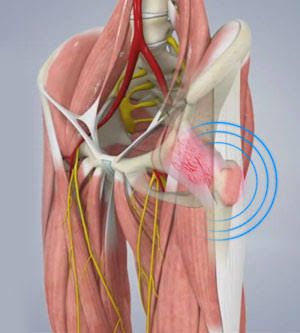
Types of Snapping Hip Syndrome
- External snapping hip: Caused by the iliotibial band or gluteal tendon sliding over the greater trochanter (outer hip bone), representing the most common type
- Internal snapping hip: Caused by the iliopsoas tendon catching over the front of the hip joint or pelvic brim
- Intra-articular snapping hip: Related to structural issues within the joint itself, such as a labral tear or loose cartilage fragment
Symptoms
- An audible or palpable snapping sensation during hip flexion, extension, or rotation
- Snapping that may or may not be accompanied by localized pain
- A subjective feeling of the hip "giving way" or catching during specific functional movements
- Discomfort with repetitive activity if secondary inflammation develops around the snapping tendon
Common Causes and Risk Groups
- Dancers, runners, and athletes performing repetitive hip flexion movements
- Excessive tightness in the iliotibial band or hip flexor muscles
- Muscle imbalances around the pelvis and hip girdle
- Structural hip abnormalities in less common intra-articular cases
Diagnosis
Diagnosis is usually based on reproducing the snapping sensation during a clinical physical examination and identifying its precise location, whether at the outer hip, front of the hip, or deep within the joint.
Dynamic ultrasound can help visualize tendon snapping in real time, while MRI may be utilized if an intra-articular cause such as a labral tear is suspected.
Treatment Options
- Targeted stretching: Lengthening the iliotibial band, hip flexors, or affected tendon depending on the syndrome type
- Muscle strengthening: Exercises for the hip and gluteal muscles to improve dynamic movement control
- Activity modification: Adjusting routines if snapping is associated with pain during specific movements
- Symptom management: Anti-inflammatory treatment for associated tendon irritation
- Specialist care: In select persistent, painful cases, further specialist evaluation for structural causes
Is Snapping Hip Always a Concern?
Painless snapping hip without functional limitation is very common and often does not require medical treatment.
However, snapping accompanied by pain, weakness, or a sense of instability warrants further clinical assessment to identify and address any underlying soft tissue or structural cause.
Frequently Asked Questions
Is snapping hip syndrome dangerous?
In most cases, snapping hip syndrome is completely benign, especially when painless. It becomes a clinical concern mainly when accompanied by pain, weakness, or a sensation of the hip giving way.
Can stretching fix snapping hip syndrome?
For external and internal snapping hip caused by tight tendons or the iliotibial band, targeted stretching and strengthening often significantly reduce or fully resolve the snapping sensation.
Why does my hip snap when I stand up?
This is commonly due to a tendon or the iliotibial band shifting position over a bony prominence as the hip moves from a flexed to an extended position, which is characteristic of the external type of snapping hip.
When should snapping hip be evaluated by a specialist?
If snapping is persistent, painful, or associated with mechanical locking or joint instability, it should be assessed further by an orthopedic specialist to rule out an intra-articular cause such as a labral tear.
Take Care of Your Hip Health
Concerned about persistent hip clicking or looking for a specialist diagnosis? Book a consultation today with our orthopedic experts.
Book Hip Specialist Consultation