What Is Cauda Equina Syndrome?
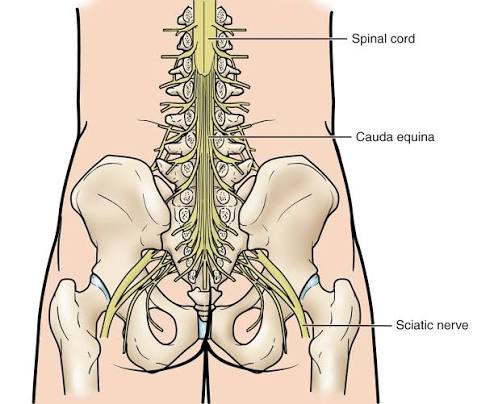
Cauda equina syndrome (CES) is a rare but serious spinal condition where the bundle of nerve roots at the base of the spinal cord — called the cauda equina, meaning "horse's tail" — becomes severely compressed.
These nerves control movement and sensation in the legs, as well as bladder and bowel function, so CES is considered a medical emergency requiring immediate treatment to prevent permanent nerve damage.
Warning Signs and Symptoms
Sudden, severe lower back pain, often with pain radiating down one or both legs
Numbness or tingling in the inner thighs, buttocks, or groin — known as saddle anaesthesia
New difficulty controlling the bladder or bowel, including retention or incontinence
Loss of sexual sensation or function
Progressive leg weakness or difficulty walking
Reduced or absent reflexes in the lower limbs
Saddle anaesthesia combined with bladder or bowel changes is the clearest red flag for cauda equina syndrome and calls for emergency care right away.
What Causes It?
- A large or sudden herniated (slipped) disc pressing on the nerve bundle
- Severe lumbar spinal stenosis
- Spinal trauma, such as a fracture from an accident or fall
- Spinal tumours or infections
- Complications following spinal surgery
- Inflammatory conditions affecting the lower spine
How It's Diagnosed
Because timing is critical, diagnosis moves quickly. Doctors assess reflexes, muscle strength, and sensation, paying close attention to saddle numbness and bladder or bowel symptoms.
An urgent MRI scan is the standard next step, since it clearly shows the exact location and severity of nerve compression and guides emergency treatment planning.
Treatment Options
Cauda equina syndrome almost always requires emergency spinal decompression surgery, ideally within 24 to 48 hours of symptom onset, to relieve pressure on the nerves and give the best chance of recovery.
- Physiotherapy to rebuild strength, mobility, and coordination
- Bladder and bowel retraining if function has been affected
- Pain management alongside gradual rehabilitation
- Ongoing monitoring, since recovery of nerve function can continue for months
Why Immediate Action Matters
Delaying treatment for cauda equina syndrome significantly raises the risk of permanent nerve damage, including lasting bladder, bowel, or sexual dysfunction and leg weakness.
If you experience sudden saddle numbness, new bladder or bowel problems, or rapidly worsening leg weakness alongside back pain, seek emergency medical care immediately rather than waiting for a routine appointment — early surgery offers the best outcome.
Book Emergency Consultation