Understanding Carpal Tunnel Syndrome
Numbness and tingling in the thumb, index, and middle fingers, especially at night, are classic signs of carpal tunnel syndrome, one of the most common nerve compression conditions affecting the hand.
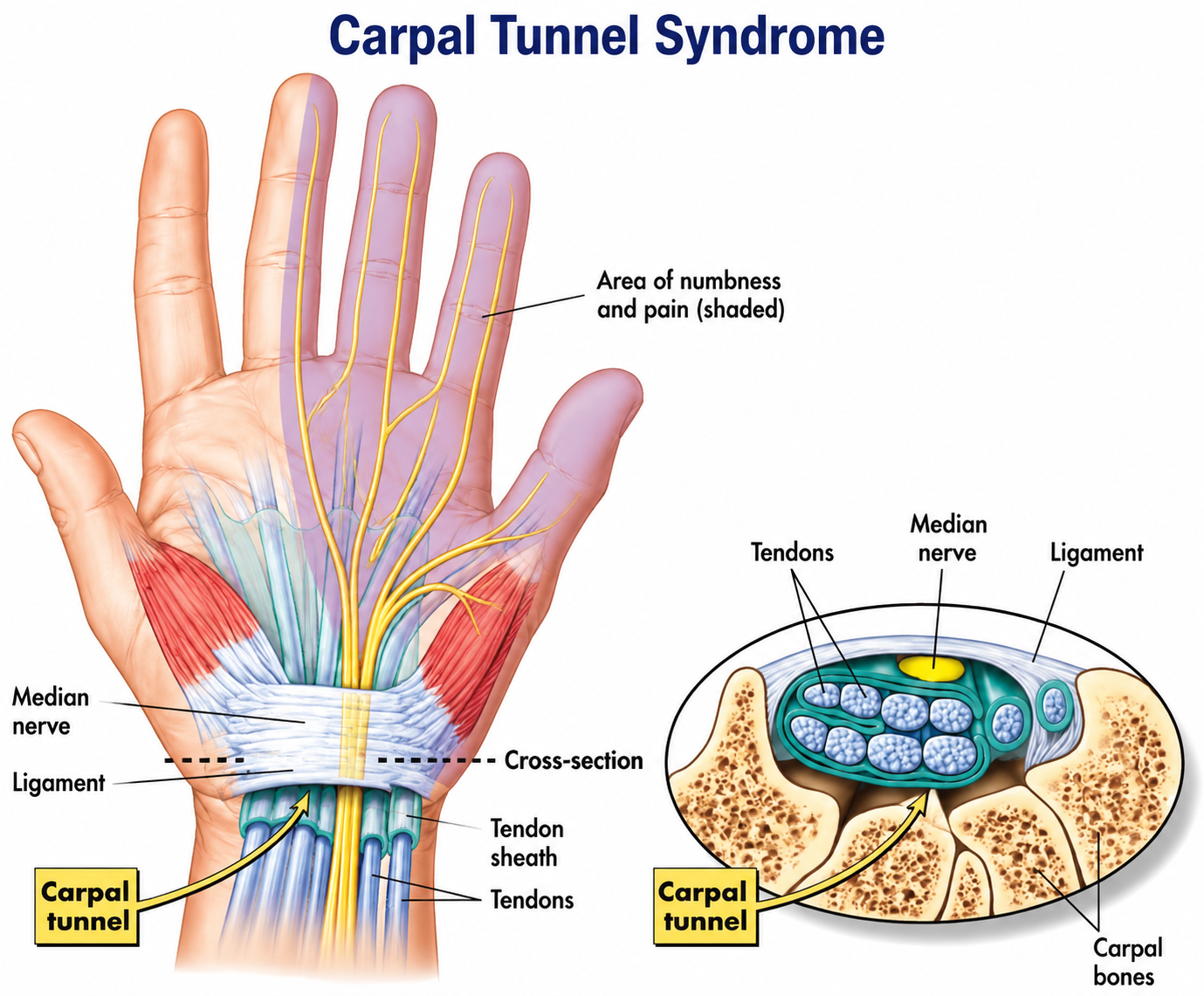
It develops when the median nerve becomes compressed as it passes through a narrow tunnel at the wrist.
Our clinic provides accurate diagnosis and effective treatment for carpal tunnel syndrome to relieve nerve pressure and restore hand function.
What Is Carpal Tunnel Syndrome?
The carpal tunnel is a narrow passageway on the palm side of the wrist through which the median nerve and several tendons travel into the hand.
When swelling or structural changes narrow this tunnel, the median nerve becomes compressed, leading to the numbness, tingling, and weakness characteristic of carpal tunnel syndrome.
Common Causes and Risk Factors
Repetitive hand and wrist movements, including typing and manual work
Pregnancy-related fluid retention narrowing the tunnel temporarily
Underlying conditions such as diabetes, thyroid disorders, or rheumatoid arthritis
Previous wrist fracture altering the shape of the tunnel
Genetic factors resulting in a naturally smaller carpal tunnel
Symptoms of Carpal Tunnel Syndrome
- Numbness and tingling in the thumb, index, and middle fingers
- Symptoms that often worsen at night or upon waking
- Weakness affecting grip strength or fine motor tasks
- A tendency to drop objects due to reduced hand coordination
Treatment Options for Carpal Tunnel Syndrome
Targeted clinical interventions focus on relieving nerve pressure and restoring hand function:
- Wrist splinting – particularly effective when worn at night
- Activity modification – reduces repetitive strain contributing to symptoms
- Anti-inflammatory treatment – manages associated discomfort
- Corticosteroid injection – provides temporary relief for moderate cases
- Carpal tunnel release surgery – considered for persistent or severe nerve compression
Frequently Asked Questions
Why do carpal tunnel symptoms often worsen at night?
Many people sleep with their wrists bent, which increases pressure within the carpal tunnel and can intensify numbness and tingling.
Can carpal tunnel syndrome be treated without surgery?
Yes, many mild to moderate cases improve with splinting, activity changes, and anti-inflammatory treatment, with surgery reserved for persistent or severe cases.
How effective is carpal tunnel release surgery?
It's generally very effective for relieving nerve compression, particularly when performed before permanent nerve damage or muscle wasting occurs.
Concerned about wrist or hand pain? Book a consultation today with our specialists.
Book Hand Specialist Consultation