Understanding De Quervain's Tenosynovitis
Pain along the thumb side of the wrist that worsens with gripping or twisting movements is often a sign of De Quervain's tenosynovitis, a condition affecting the tendons that move the thumb.
It's especially common among new parents from repetitive lifting motions and among people with hobbies or jobs involving frequent wrist use.
Our clinic offers targeted treatment for De Quervain's tenosynovitis to relieve pain and restore smooth thumb movement.
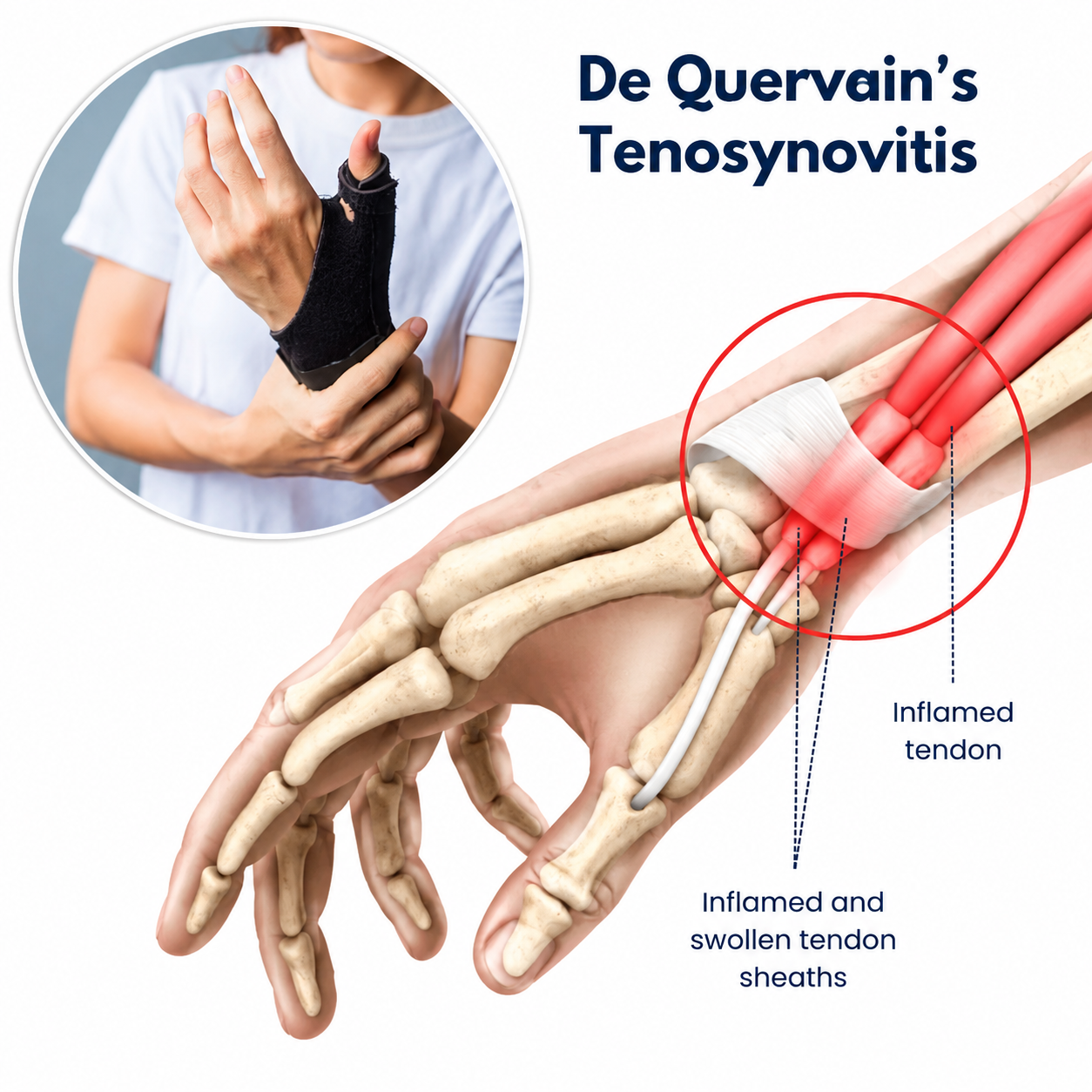
What Is De Quervain's Tenosynovitis?
De Quervain's tenosynovitis occurs when the tendons and surrounding sheath that control thumb movement, located along the thumb side of the wrist, become inflamed and swollen.
This swelling narrows the tunnel through which the tendons glide, causing pain and a restricted, sometimes catching sensation with thumb and wrist movement.
Common Causes and Risk Factors
Repetitive gripping or lifting, particularly common in new parents lifting infants
Repetitive wrist and thumb movements from hobbies like gardening or racquet sports
Occupational tasks involving frequent grasping or wrist twisting
Hormonal changes during pregnancy or postpartum contributing to tendon swelling
Symptoms of De Quervain's Tenosynovitis
- Pain along the thumb side of the wrist, worsening with gripping or twisting
- Swelling near the base of the thumb
- A catching or snapping sensation with thumb movement
- Difficulty performing tasks like lifting objects or turning a doorknob
Treatment Options for De Quervain's Tenosynovitis
Targeted medical management focuses on calming inflammation and protecting the thumb tendons:
- Thumb spica splinting – rests the affected tendons to reduce irritation
- Activity modification – limits repetitive gripping or twisting motions
- Anti-inflammatory treatment – manages pain and swelling
- Corticosteroid injection – often highly effective for reducing tendon inflammation
- Surgical release – considered for cases unresponsive to conservative treatment
Frequently Asked Questions
Why is De Quervain's tenosynovitis common in new parents?
Repeatedly lifting an infant with the thumbs extended and wrists angled places sustained strain on the thumb tendons, making this a frequently seen condition among new parents.
How effective is a corticosteroid injection for this condition?
It's often very effective, with many patients experiencing significant relief after just one or two injections combined with activity modification.
Is surgery commonly needed for De Quervain's tenosynovitis?
No, most cases respond well to splinting, activity changes, and injections, with surgery reserved for persistent cases that don't improve with conservative treatment.
Concerned about wrist or hand pain? Book a consultation today with our specialists.
Book Hand Specialist Consultation