Understanding SCFE
Slipped capital femoral epiphysis, commonly abbreviated as SCFE, is a hip condition affecting adolescents in which the growth plate at the top of the thighbone weakens, allowing the femoral head to slip out of its normal position relative to the neck of the bone.
It typically occurs during the rapid growth phase of puberty and requires prompt diagnosis and treatment to prevent long-term complications affecting hip function and joint health.
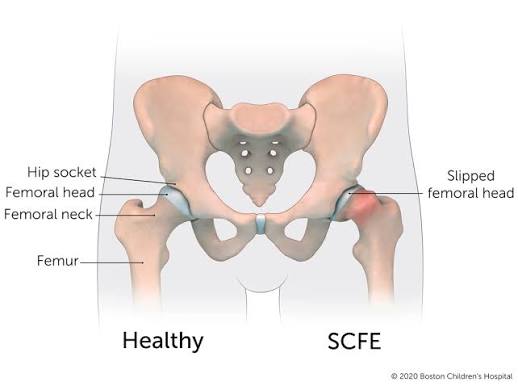
What Is SCFE?
During adolescence, the growth plate connecting the femoral head to the femoral neck is relatively weak compared to surrounding bone. In SCFE, this growth plate gives way under mechanical stress, causing the femoral head to slip backward and downward. This can happen gradually over weeks to months (stable SCFE) or suddenly following minor trauma (unstable SCFE), with the latter carrying higher complication risks.
Risk Factors
- Rapid growth during the adolescent growth spurt, typically ages 11 to 15
- Obesity, which places excessive mechanical stress on the vulnerable growth plate
- Hormonal or endocrine conditions affecting bone development and mineralization
- Higher incidence in boys compared to girls
- A family history of SCFE in select cases
Symptoms
- Groin, hip, thigh, or knee pain (referred pain can sometimes make diagnosis less obvious when knee pain predominates)
- A noticeable limp or altered walking pattern
- Reduced hip range of motion, particularly internal rotation
- The affected leg turning outward more than the unaffected side
- Sudden inability to bear weight in unstable, more severe cases
Why Early Diagnosis Matters
SCFE is an orthopedic condition requiring urgent attention because delayed diagnosis increases the risk of the slip worsening.
This can lead to long-term joint damage, restricted hip motion, and early arthritis. Because knee pain is a common misleading symptom, a thorough hip examination is essential for any adolescent presenting with unexplained knee pain and a limp.
Diagnosis
X-rays of both hips are the primary diagnostic tool, allowing clinicians to compare the affected and unaffected sides to detect even subtle slips.
In certain cases, additional imaging such as MRI may be utilized to assess the precise severity and stability of the slip in greater detail.
Treatment Approach
- Surgical stabilization: Fixing the femoral head in place, typically with a single screw, to prevent further slippage
- Weight-bearing precautions: Immediate non-weight-bearing protocols once SCFE is suspected to reduce slippage risk
- Bilateral monitoring: Close follow-up of the opposite hip, as many children later develop SCFE on both sides
- Rehabilitation: Structured physical therapy and a gradual return to activity following surgical stabilization
Frequently Asked Questions
Why does SCFE sometimes cause knee pain instead of hip pain?
Referred pain patterns mean that irritation within the hip joint can be felt clearly at the knee, which is why any adolescent with unexplained knee pain and a limp should have their hip carefully evaluated.
Is SCFE an emergency?
Unstable SCFE, where the child suddenly cannot bear weight on the leg, is considered an orthopedic emergency requiring prompt surgical treatment to minimize serious complications.
Can SCFE affect both hips?
Yes, a notable proportion of children who develop SCFE in one hip will later develop it in the other side, which is why the opposite hip is monitored closely after an initial diagnosis.
What is the long-term outlook after SCFE treatment?
With prompt diagnosis and surgical stabilization, many children maintain good long-term hip function, though more severe or delayed cases carry an increased risk of future joint complications.
Take Care of Your Child's Hip Health
Concerned about adolescent hip or knee pain? Book a consultation today with our pediatric orthopedic specialists.
Book Hip Specialist Consultation