Understanding Chest Wall & Rib Discomfort
Pain around the ribs and breastbone can be alarming, especially when it mimics chest-related discomfort. Two of the most common musculoskeletal causes of this pain are rib dysfunction and costochondritis.
While they often overlap and can occur together, they are distinct conditions with different underlying mechanics.
Rib dysfunction refers to a joint-level problem where one or more ribs lose their normal gliding motion at the spine or breastbone, while costochondritis is an inflammatory condition of the cartilage that connects the ribs to the sternum. Understanding the difference is the first step toward getting the right treatment and lasting relief.
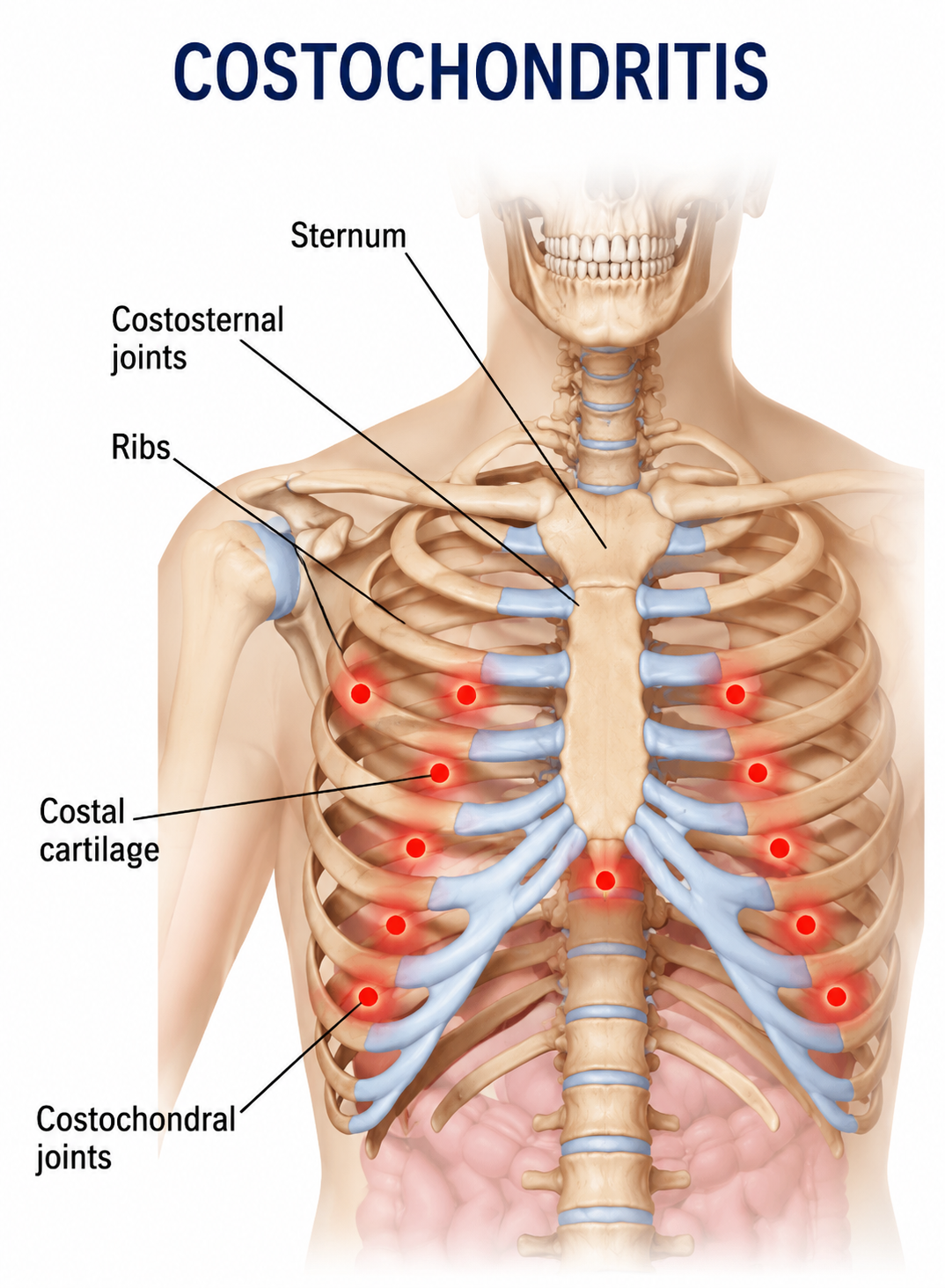
What Is Rib Dysfunction?
Rib dysfunction, sometimes called a rib subluxation or rib joint restriction, occurs when a rib becomes stiff or slightly misaligned at its joint with the spine (costovertebral joint) or breastbone (costosternal joint).
This restricts the natural up-and-down, bucket-handle motion the ribs make during breathing. It commonly results from awkward twisting movements, heavy lifting, sudden coughing or sneezing, poor posture, or a direct blow to the chest wall.
What Is Costochondritis?
Costochondritis is inflammation of the costal cartilage — the flexible tissue joining the ribs to the sternum.
Unlike rib dysfunction, which is a mechanical joint restriction, costochondritis is primarily an inflammatory process. It often develops after repetitive strain, a respiratory infection, minor chest trauma, or unaccustomed upper-body exercise, and it typically causes localized tenderness directly over the cartilage junctions.
Key Differences Between the Two Conditions
- Rib dysfunction is a mechanical joint restriction; costochondritis is cartilage inflammation.
- Rib dysfunction pain often shifts with rib movement and manual correction brings quick relief.
- Costochondritis pain is reproduced by direct pressure over the costosternal junctions and improves gradually with anti-inflammatory care rather than instant joint mobilization.
- Rib dysfunction may cause a popping or catching sensation; costochondritis causes a steady, localized ache or sharp pain with palpation.
- Both conditions can coexist, as prolonged rib joint restriction can secondarily irritate the costal cartilage.
Common Symptoms
- Sharp or aching pain along the front or side of the chest wall
- Pain that worsens with deep breathing, coughing, twisting, or reaching overhead
- Tenderness when pressing on the rib-to-sternum junctions or rib angles near the spine
- A sensation of tightness, catching, or a rib feeling "out of place"
- Pain that may radiate around the ribcage, sometimes mistaken for cardiac or lung issues
Causes and Risk Factors
- Repetitive twisting or overhead sports (golf, swimming, tennis, rowing)
- Sudden forceful coughing, sneezing, or vomiting episodes
- Poor posture, prolonged sitting, or slouched desk work
- Direct trauma such as a fall or a seatbelt injury
- Viral or upper respiratory infections that trigger costal cartilage inflammation
- Heavy lifting with improper breathing mechanics
Diagnosis & Treatment Options
Diagnosis: A physiotherapist or physician typically diagnoses these conditions through a detailed history and hands-on physical examination, checking for tenderness at specific rib joints versus the costosternal cartilage. Rib mobility is assessed during breathing, and palpation helps localize the exact pain generator. Imaging such as X-ray or ECG may be used to rule out fractures or cardiac causes when the presentation is unclear, though costochondritis and rib dysfunction rarely show up on standard imaging.
Core Treatment Options:
- Manual rib mobilization or gentle chiropractic-style adjustment to restore joint gliding
- Targeted stretching and thoracic mobility exercises
- Anti-inflammatory measures such as ice, heat, or topical/oral NSAIDs for costochondritis
- Postural correction and ergonomic adjustments to reduce recurrent strain
- Breathing retraining exercises to normalize rib cage motion
- Activity modification during the acute inflammatory phase, with gradual return to sport or lifting
Frequently Asked Questions
Is rib dysfunction the same as costochondritis?
No. Rib dysfunction is a mechanical restriction at the rib joints, while costochondritis is inflammation of the cartilage connecting the ribs to the breastbone. They can occur together but are treated differently.
How long does costochondritis usually take to heal?
Most cases improve within a few weeks with rest, anti-inflammatory care, and activity modification, though some cases can linger for several months if the aggravating activity continues.
Can physiotherapy fix a rib out of place?
Yes. Manual rib mobilization techniques performed by a trained physiotherapist can often restore normal rib joint movement quickly, frequently within one or two sessions for straightforward cases.
Should I worry that my chest wall pain is heart-related?
Musculoskeletal chest pain is usually reproducible by pressing on the area or moving the torso, whereas cardiac pain is not affected by touch or position. Any doubt warrants prompt medical evaluation.
When to Seek Medical Attention
While most cases of rib dysfunction and costochondritis are benign and resolve with conservative care, chest pain should always be evaluated promptly if it is accompanied by shortness of breath, sweating, radiating arm or jaw pain, dizziness, or a history of heart disease, to rule out a cardiac emergency.
Concerned about chest, rib, or upper back pain? Book a consultation today with our specialists.
Book Rib Specialist Consultation