Understanding Back Pain
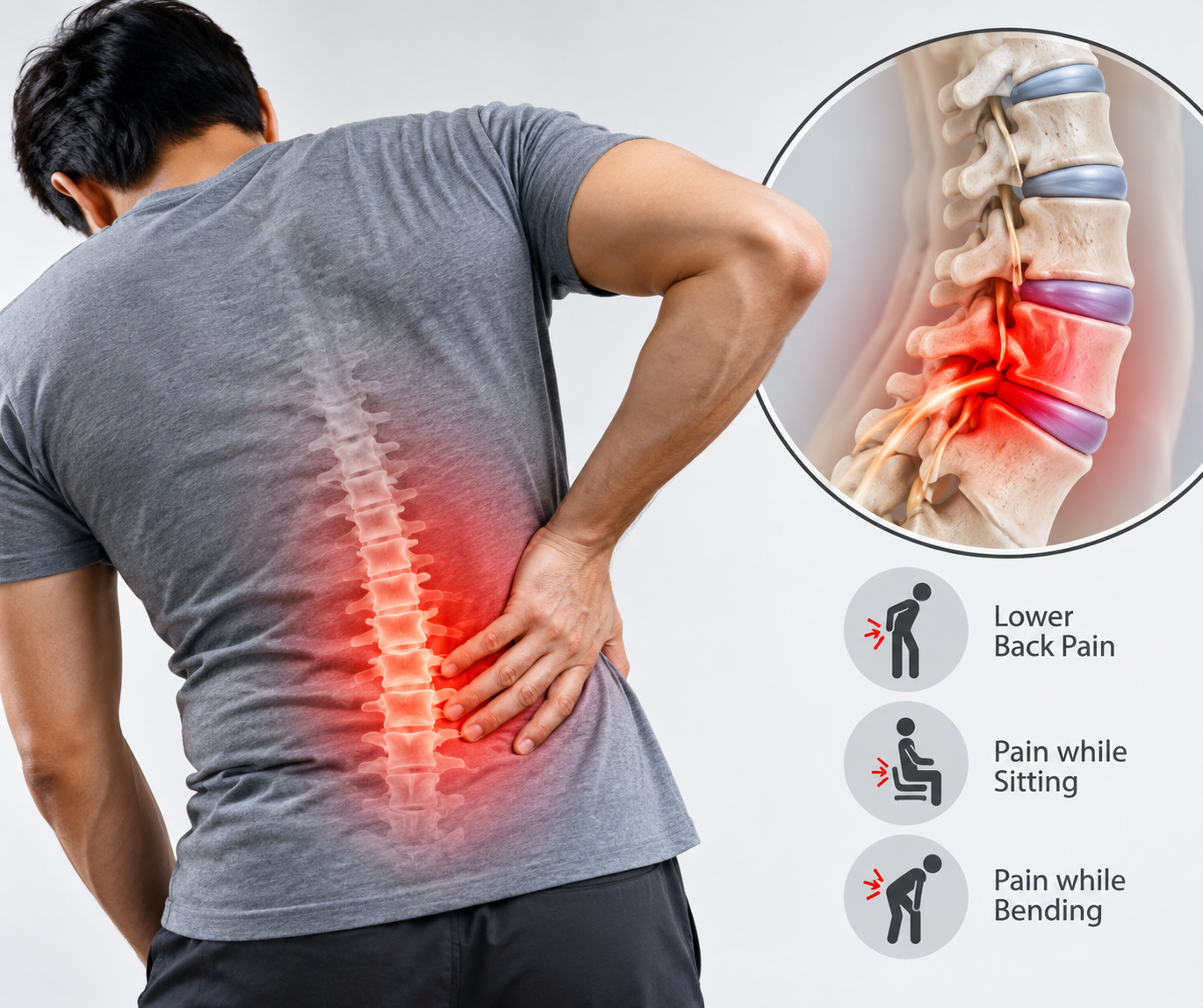
Back pain is one of the leading reasons people visit a doctor, ranging from a mild, occasional twinge to sharp, debilitating pain. Most commonly felt in the lower back, it can also affect the neck, upper backor mid-back.
Pain persisting beyond 12 weeks is classified as chronic back pain and needs a professional evaluation rather than self-treatment.
Warning Signs to Watch For
Pay close attention to these common warning indicators that require professional attention:
Persistent or recurring back pain
Localised tenderness or stiffness limiting movement
Pain radiating into the hips, thighsor legs (often linked to sciatica)
Tingling, numbnessor a pins-and-needles sensation
Leg weakness or balance difficulty
What Causes Back Pain?
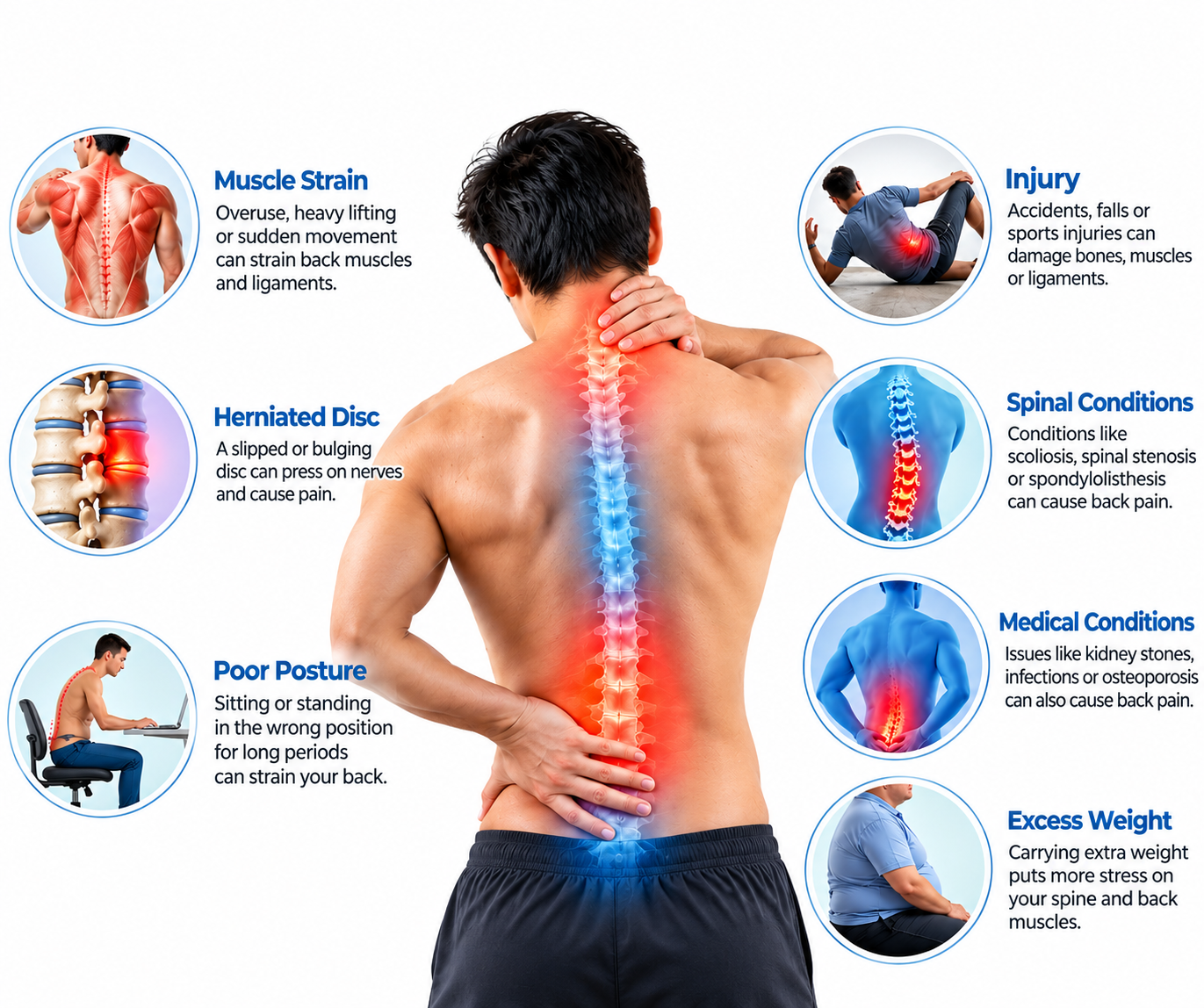
Back pain usually stems from a mix of physical strain, lifestyle habits, and spinal wear rather than one single trigger:
- Occupational strain — heavy lifting, repetitive bending, long driving hours, prolonged standing or sitting.
- Lifestyle factors — inactivity, poor posture, excess weight, weak core muscles.
- Structural conditions — osteoarthritis, degenerative disc disease, herniated or slipped disc, spinal fractures.
- Age-related changes — disc and joint degeneration, osteoporosis, reduced flexibility.
- Other factors — pregnancy, obesity, inflammatory spinal conditions.
How Back Pain Is Diagnosed
Spine specialists follow a structured evaluation: a review of your medical history and symptoms, a physical exam (posture, gait, flexibility, muscle strength, reflexes), and — if nerve involvement is suspected — neurological testing.
Blood tests rule out infection or inflammation, while imaging (X-ray, CT, MRIor myelogram) reveals disc, bone, and nerve issues that a physical exam alone can't detect. Combining these findings gives an accurate diagnosis and a treatment plan built around your specific condition, not a generic fix.
Back Pain Treatment and Prevention Tips
Non-Surgical Treatment
Most back pain resolves with conservative, non-surgical care once the cause is identified. Effective options include:
- Guided spine rehabilitation: a physiotherapy plan tailored to your weak points and movement limits.
- Targeted muscle activation therapy: isolating and strengthening specific underperforming muscles.
- Physiotherapy and exercise: core strengthening, flexibility training, and low-impact cardio like walking or swimming.
- Posture correction: ergonomic workstation setup, lumbar support, and safe lifting technique.
- Heat therapy and acupuncture: for muscle relaxation and pain relief.
- Lifestyle adjustments: healthy weight, regular movement breaks, stress management, and quality sleep.
Preventing Back Pain
Adopt these daily habits to protect your spine and maintain long-term wellness:
- Exercise regularly and strengthen your core.
- Maintain good posture and a healthy body weight.
- Take stretch breaks every 30–45 minutes during long sitting periods.
- Lift with your knees, not your back.
- Avoid smoking and manage stress effectively.
When to See a Spine Specialist
Seek prompt medical care if you experience:
- Pain lasting more than 2–4 weeks or steadily worsening
- Feveror pain following a fall, accidentor injury
- Numbness, tinglingor weakness in the legs
- Difficulty walking, loss of bladder or bowel control
- Unexplained sudden weight loss
Early diagnosis and timely, non-surgical back pain treatment prevent complications, speed up recovery, and get you back to daily life faster — making a spine specialist consultation the smartest first step toward lasting relief.
Book Consultation