Understanding Chest Rehabilitation
Chest rehabilitation is a structured physiotherapy program designed to restore strength, mobility, and breathing efficiency after chest wall injuries, thoracic surgery, rib fractures, or prolonged respiratory illness.
Unlike general fitness training, chest rehab specifically targets the muscles and joints involved in breathing mechanics and upper-body movement, helping patients regain confidence in daily activities such as lifting, reaching, and deep breathing without pain or restriction.
Who Needs Chest Rehab?
- Patients recovering from rib fractures or chest wall trauma
- Individuals after cardiac or thoracic surgery, including sternotomy procedures
- People recovering from pneumonia or other respiratory infections with reduced lung function
- Patients with chronic chest tightness from prolonged hospitalization or ventilator support
- Athletes returning to sport after chest wall strain or costochondritis
Goals of a Chest Rehab Program
- Restore full, pain-free rib cage and chest wall mobility
- Improve lung expansion and breathing efficiency
- Rebuild strength in the chest, shoulder, and upper back muscles
- Reduce scar tissue restriction after surgical incisions
- Support safe return to work, exercise, and daily activities
Core Components of Treatment
- Breathing exercises, including diaphragmatic and segmental breathing techniques
- Gentle rib cage mobilization to restore normal expansion during inhalation
- Progressive strengthening of the pectoral, intercostal, and upper back muscles
- Scar tissue mobilization following surgical incisions
- Postural correction to reduce compensatory strain on the chest and shoulders
- Graded cardiovascular reconditioning as tolerance improves
What a Typical Session Looks Like
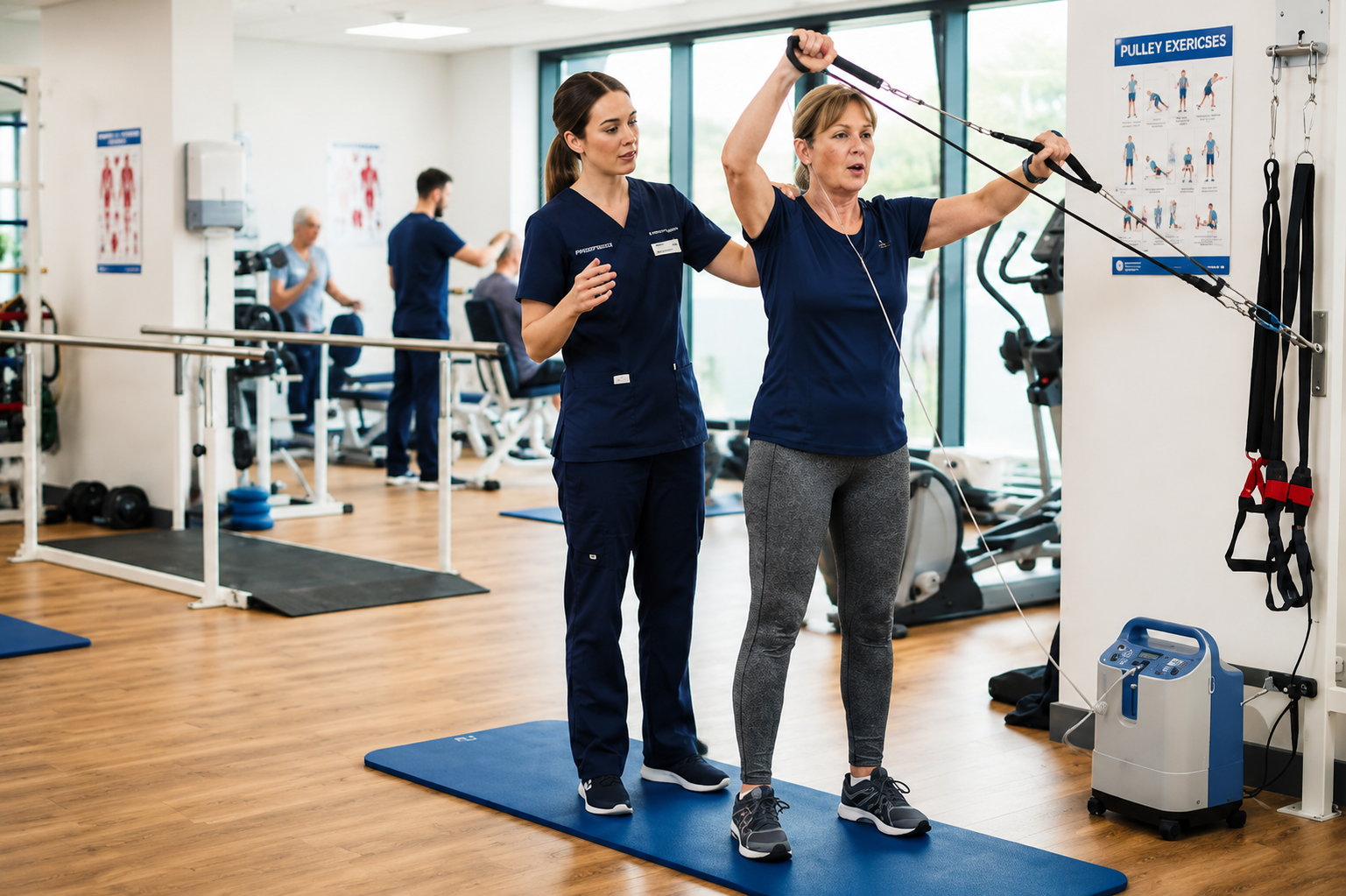
A chest rehab session usually begins with an assessment of breathing pattern, chest wall expansion, and pain levels.
This is followed by guided breathing drills, manual therapy to release tight rib joints or scar adhesions, and a progressive set of strengthening exercises tailored to the patient's stage of recovery. Sessions gradually increase in intensity as pain decreases and function improves, always respecting individual healing timelines.
Precautions During Recovery
- Avoid heavy lifting or overhead strain until cleared by your therapist
- Progress breathing and stretching exercises gradually to avoid sharp pain
- Monitor for warning signs such as increasing shortness of breath or fever, which require medical review
- Follow surgical precautions closely if recovering from a sternotomy or thoracic procedure
Expected Recovery Timeline
Recovery timelines vary depending on the underlying cause.
Uncomplicated rib fractures often improve within six to eight weeks, while post-surgical chest rehab may take several months for full strength and lung capacity to return. Consistency with prescribed breathing and mobility exercises is one of the strongest predictors of a smooth recovery.
Frequently Asked Questions
How soon after chest surgery can rehab begin?
Gentle breathing exercises are often introduced within the first day or two after surgery, with structured physiotherapy progressing as the surgical team clears the patient for movement.
Can chest rehab help with breathlessness after pneumonia?
Yes. Targeted breathing retraining and gradual reconditioning exercises can significantly improve lung capacity and reduce breathlessness following a respiratory infection.
Is chest rehab painful?
Sessions are designed to work within a comfortable range, gradually increasing intensity. Some mild discomfort during stretching or mobilization is normal, but sharp pain is not and should be reported to your therapist.
Do I need chest rehab after a simple rib fracture?
While minor rib fractures can heal with rest alone, guided breathing exercises and gentle mobilization can speed recovery, reduce stiffness, and prevent complications like reduced lung function.
Take the Next Step in Your Recovery
Concerned about chest, rib, or upper back pain? Book a consultation today with our specialists.
Book Chest Rehab Consultation