Understanding Slipped Discs
A slipped disc, medically known as a herniated or prolapsed disc, occurs when the soft, gel-like center of a spinal disc pushes through a tear in its tougher outer layer, potentially irritating nearby nerves.
This condition is a common cause of back and leg pain, particularly in the lower spine, and while the term "slipped" suggests the disc has moved out of place entirely, it more accurately describes this bulging or leaking of disc material.
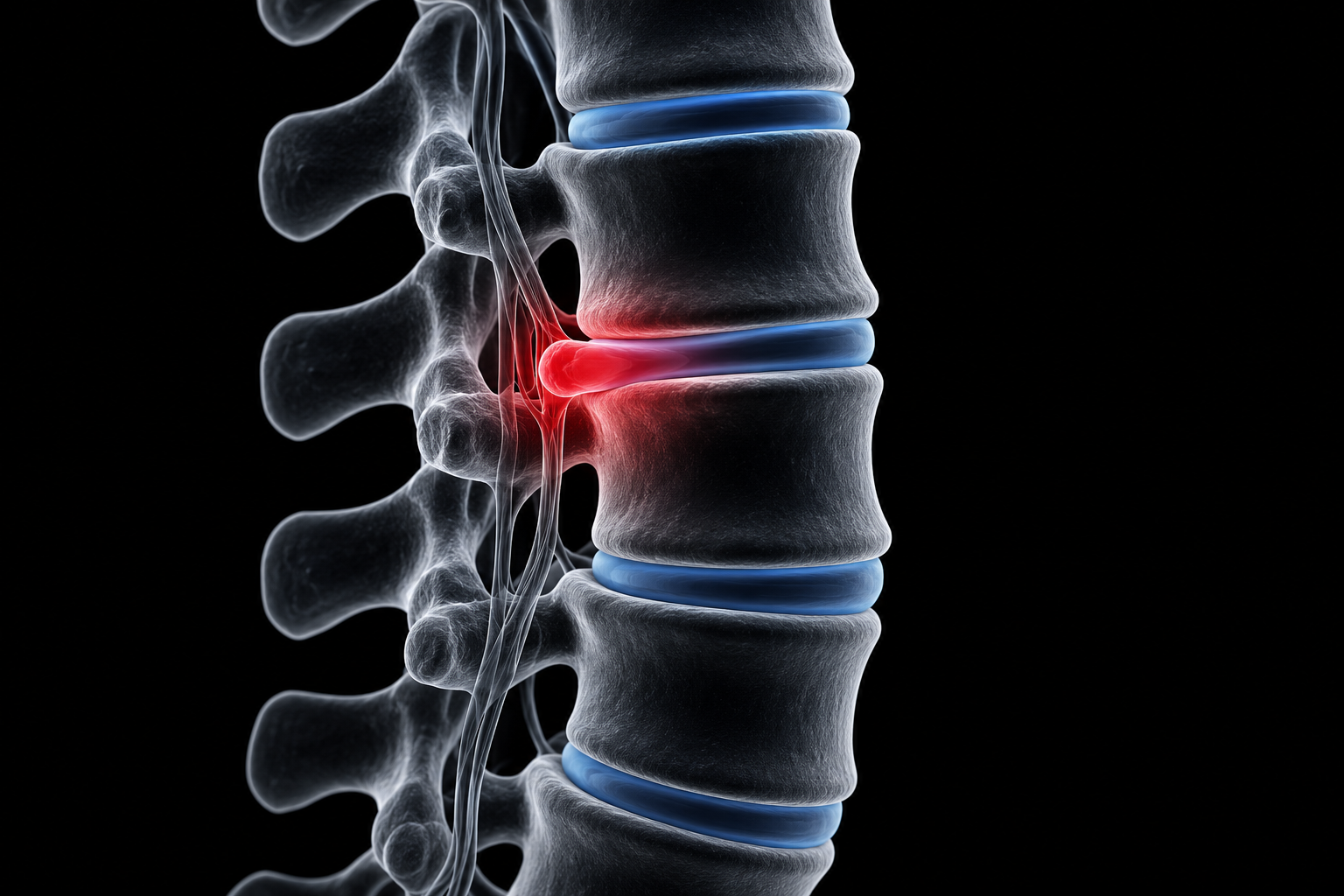
How a Slipped Disc Develops
- Gradual wear and tear of the disc's outer layer over time
- Sudden heavy lifting with poor technique
- Repetitive bending or twisting movements
- Age-related disc dehydration reducing its resilience to stress
Symptoms
- Localized back or neck pain at the level of the affected disc
- Radiating pain, numbness, or tingling into the arm or leg if a nerve is irritated
- Muscle weakness in the affected limb in more significant cases
- Pain that may worsen with sitting, bending, or coughing
Diagnosis
Diagnosis is based on a clinical examination assessing nerve function and pain patterns, confirmed with MRI imaging, which clearly shows the location and severity of the disc herniation and its relationship to nearby nerve structures.
Treatment Options
- Physiotherapy focused on specific exercises to reduce nerve irritation and improve mechanics
- Activity modification during the acute phase, followed by gradual return to normal activity
- Anti-inflammatory medication or epidural injections for significant nerve-related pain
- Surgical discectomy considered for persistent, significant nerve symptoms unresponsive to conservative treatment
Frequently Asked Questions
Does a slipped disc always need surgery?
No, the majority of slipped discs improve with conservative treatment such as physiotherapy and activity modification, with surgery reserved for persistent or significant nerve-related symptoms.
Can a slipped disc heal on its own?
Yes, many disc herniations gradually shrink and symptoms resolve over weeks to months as the body's natural healing processes take effect.
What activities should I avoid with a slipped disc?
Heavy lifting, prolonged sitting, and repetitive bending or twisting are often modified during the acute and recovery phases to reduce strain on the affected disc.
Take Care of Your Spinal Health
Concerned about back, neck, or spine pain? Book a consultation today with our specialists.
Book Spine Specialist Consultation