Understanding Patellar Dysfunction
Patellar dysfunction is a broad term describing problems with how the kneecap moves, tracks, or stabilizes within its groove during knee movement.
Unlike chondromalacia, which focuses on cartilage health, patellar dysfunction centers on the mechanics of kneecap motion itself, including maltracking, subluxation, and instability, all of which can lead to pain, a sense of the knee giving way, or even episodes of the kneecap slipping out of place.
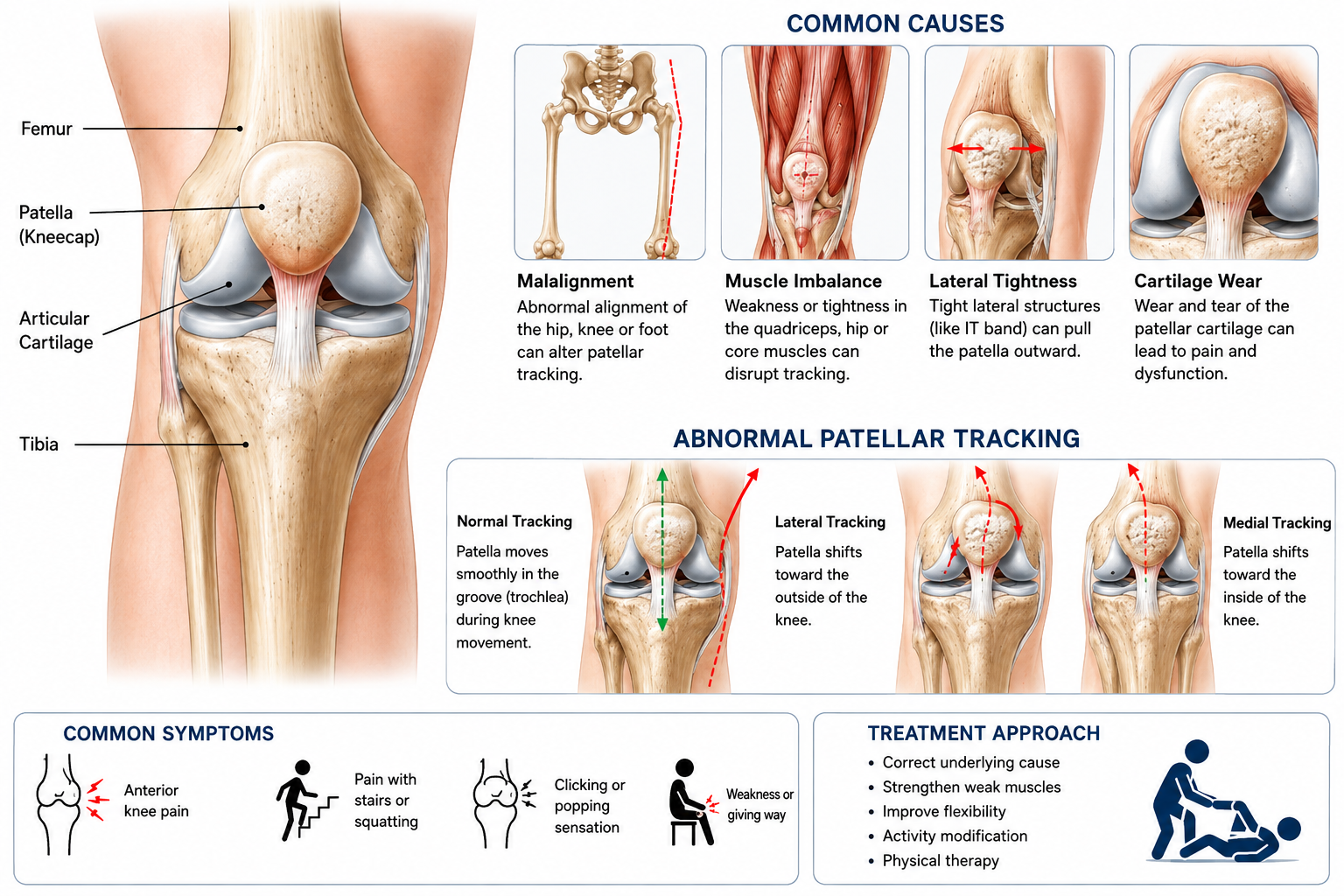
Forms of Patellar Dysfunction
- Patellar maltracking: The kneecap shifts abnormally within its groove during bending
- Patellar subluxation: Partial, temporary displacement of the kneecap from its groove
- Patellar instability: A tendency for the kneecap to feel loose or shift with certain movements
- Patellar dislocation: A more complete displacement of the kneecap, often following trauma
Contributing Factors
- Shallow or abnormally shaped trochlear groove
- Weakness of the inner quadriceps muscle (VMO)
- Ligamentous laxity or generalized joint hypermobility
- Muscle tightness in the outer thigh and iliotibial band
- Previous patellar dislocation increasing future instability risk
Symptoms
- A sensation of the kneecap shifting or catching during movement
- Pain around the kneecap, particularly with twisting or pivoting activities
- Episodes of the knee giving way
- Visible or felt kneecap displacement in more significant cases
- Swelling following an acute subluxation or dislocation event
Treatment
- Targeted strengthening: Conditioning of the inner quadriceps and hip stabilizers
- Supportive care: Patellar bracing or taping to improve tracking during activity
- Activity modification: Reducing high-risk pivoting movements during rehabilitation
- Surgical stabilization: Considered for recurrent dislocation or significant structural abnormality
Frequently Asked Questions
What's the difference between patellar dysfunction and chondromalacia?
Patellar dysfunction relates to abnormal kneecap movement and stability, while chondromalacia specifically involves cartilage softening; the two can coexist but describe different underlying problems.
Is patellar instability common in young athletes?
Yes, particularly in adolescents and young adults involved in pivoting sports, especially those with generalized joint laxity.
Can exercise alone fix patellar maltracking?
Many cases improve significantly with targeted strengthening and taping, though recurrent instability or dislocation may require further specialist evaluation.
Take Care of Your Knee Health
Concerned about knee pain or looking for a diagnosis? Book a consultation today with our specialists.
Book Knee Specialist Consultation