Understanding Lower Back Pain
Lower back pain is one of the most common musculoskeletal complaints worldwide, affecting the majority of people at some point in their lives.
It can range from a mild, short-lived ache following unaccustomed activity to a persistent condition affecting daily function, with causes ranging from simple muscle strain to more specific structural issues such as disc problems or joint irritation.
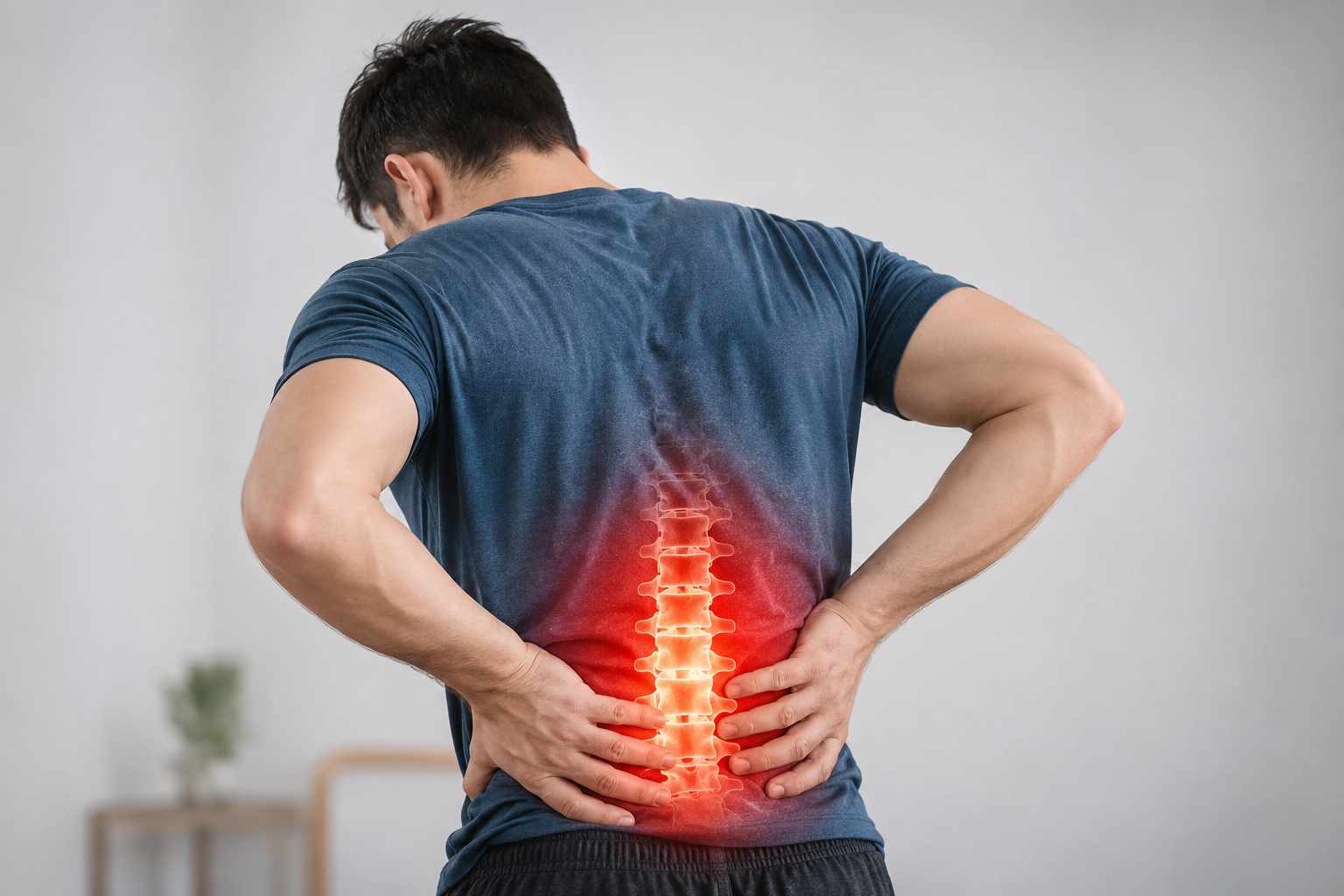
Common Causes
- Muscle or ligament strain from lifting, twisting, or sudden movement
- Disc-related issues, including bulging or herniated discs
- Facet joint irritation or arthritis
- Sacroiliac joint dysfunction
- Poor posture and prolonged sitting
Symptoms
- Dull, aching pain localized to the lower back
- Sharp pain with specific movements such as bending or twisting
- Stiffness, particularly after periods of rest
- Radiating leg pain if a nerve is involved
General Treatment Approach
- Staying as active as tolerated rather than prolonged bed rest
- Targeted physiotherapy exercises for core strength and flexibility
- Postural and ergonomic adjustments
- Anti-inflammatory measures for acute symptom relief
- Further evaluation for pain accompanied by leg symptoms, weakness, or that persists beyond a few weeks
When to Seek Medical Attention
While most lower back pain improves within a few weeks with simple measures, pain accompanied by significant leg weakness, numbness in the groin area, or bladder or bowel changes should be evaluated urgently, as these can indicate a more serious underlying condition.
Concerned about back, neck, or spine pain? Book a consultation today with our specialists.
Book Spine Specialist ConsultationFrequently Asked Questions
Should I rest completely with lower back pain?
Generally, staying as active as tolerated is more beneficial than prolonged bed rest, which can actually slow recovery and increase stiffness.
How long does lower back pain usually last?
Most acute episodes improve significantly within a few weeks, though some cases can become more persistent and benefit from a structured physiotherapy program.
When is lower back pain an emergency?
Sudden bladder or bowel changes, significant leg weakness, or numbness in the groin area alongside back pain warrant urgent medical evaluation.