Understanding Infraspinatus Tendinitis
The infraspinatus muscle plays a key role in rotating the arm outward and stabilizing the back of the shoulder, and its tendon can become inflamed from repetitive rotational strain.
Infraspinatus tendinitis often causes deep, aching pain at the back of the shoulder that can be mistaken for other rotator cuff issues. Our clinic provides accurate diagnosis and treatment to relieve this often-overlooked source of shoulder pain.
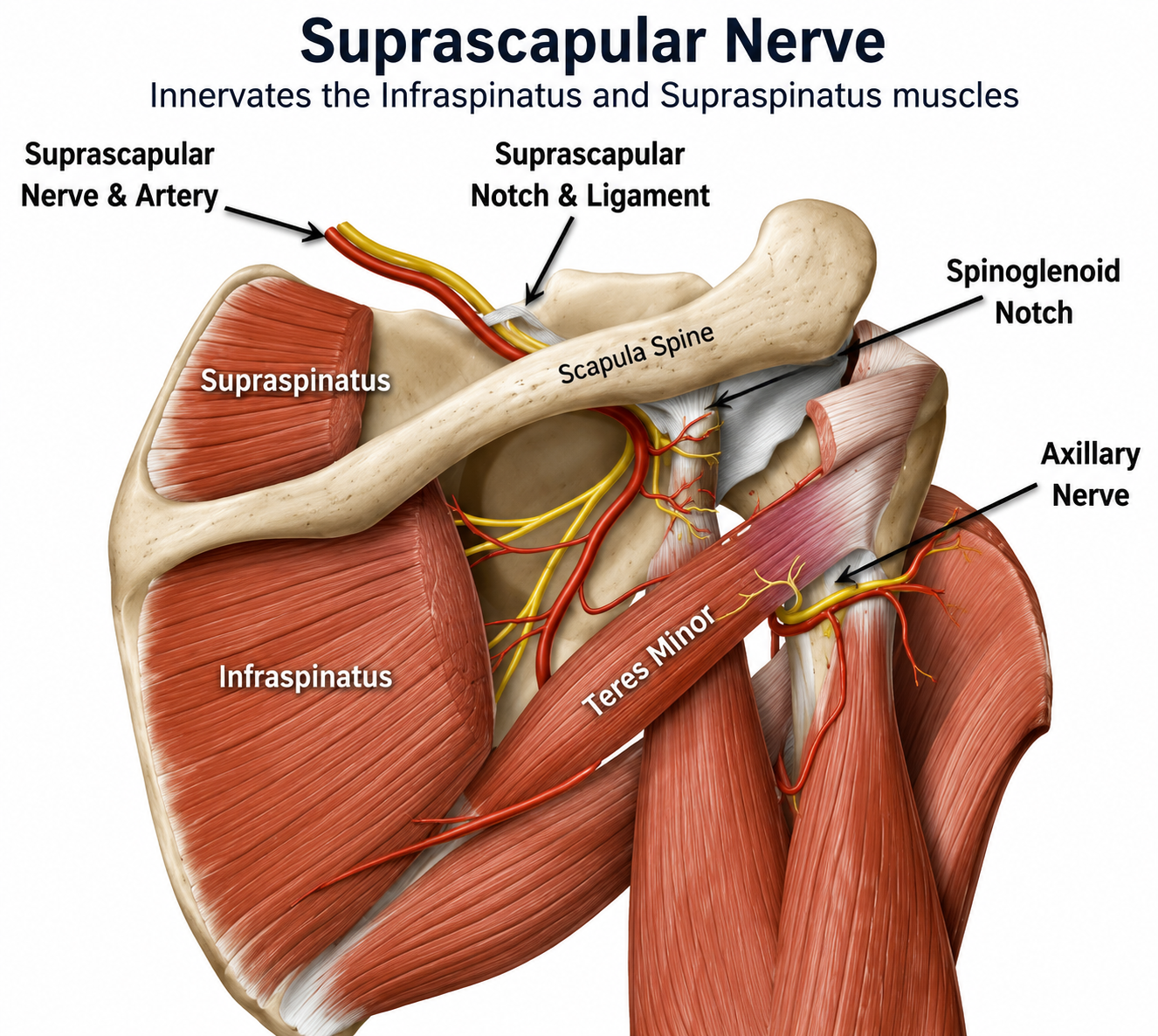
Understanding the Infraspinatus Tendon
Positioned at the back of the shoulder blade, the infraspinatus is one of the four rotator cuff muscles and is primarily responsible for external rotation of the arm. Because it works constantly to stabilize the shoulder during arm movement, repeated strain can gradually irritate and inflame its tendon.
Common Causes
- Repetitive throwing or racquet sports requiring forceful external rotation
- Poor posture that places the shoulder blade in an altered position
- Muscle imbalances between the front and back of the shoulder
- Age-related wear reducing tendon resilience
Recognizing the Symptoms
- Deep, aching pain at the back of the shoulder
- Pain triggered or worsened by rotating the arm outward
- Weakness noticed during activities like reaching backward
- Discomfort that can radiate down the outer arm
Treatment for Infraspinatus Tendinitis
- Targeted physiotherapy: strengthens external rotators and corrects imbalances
- Postural correction: reduces strain from poor shoulder blade positioning
- Anti-inflammatory treatment: manages pain during flare-ups
- Corticosteroid injection: used selectively for persistent inflammation
Frequently Asked Questions
How is infraspinatus tendinitis diagnosed?
A physical exam testing external rotation strength, along with imaging like ultrasound or MRI when needed, helps confirm the diagnosis and rule out a tear.
Can poor posture really cause this condition?
Yes, a rounded shoulder posture alters the mechanics of the shoulder blade, placing extra strain on the infraspinatus tendon over time.
How long does treatment typically take?
Most patients see improvement within 6 to 10 weeks of consistent physiotherapy and activity modification.
Take Care of Your Health
Concerned about shoulder pain or looking for a diagnosis? Book a consultation today with our specialists.
Book Specialist Consultation