Understanding Painful Arc Syndrome
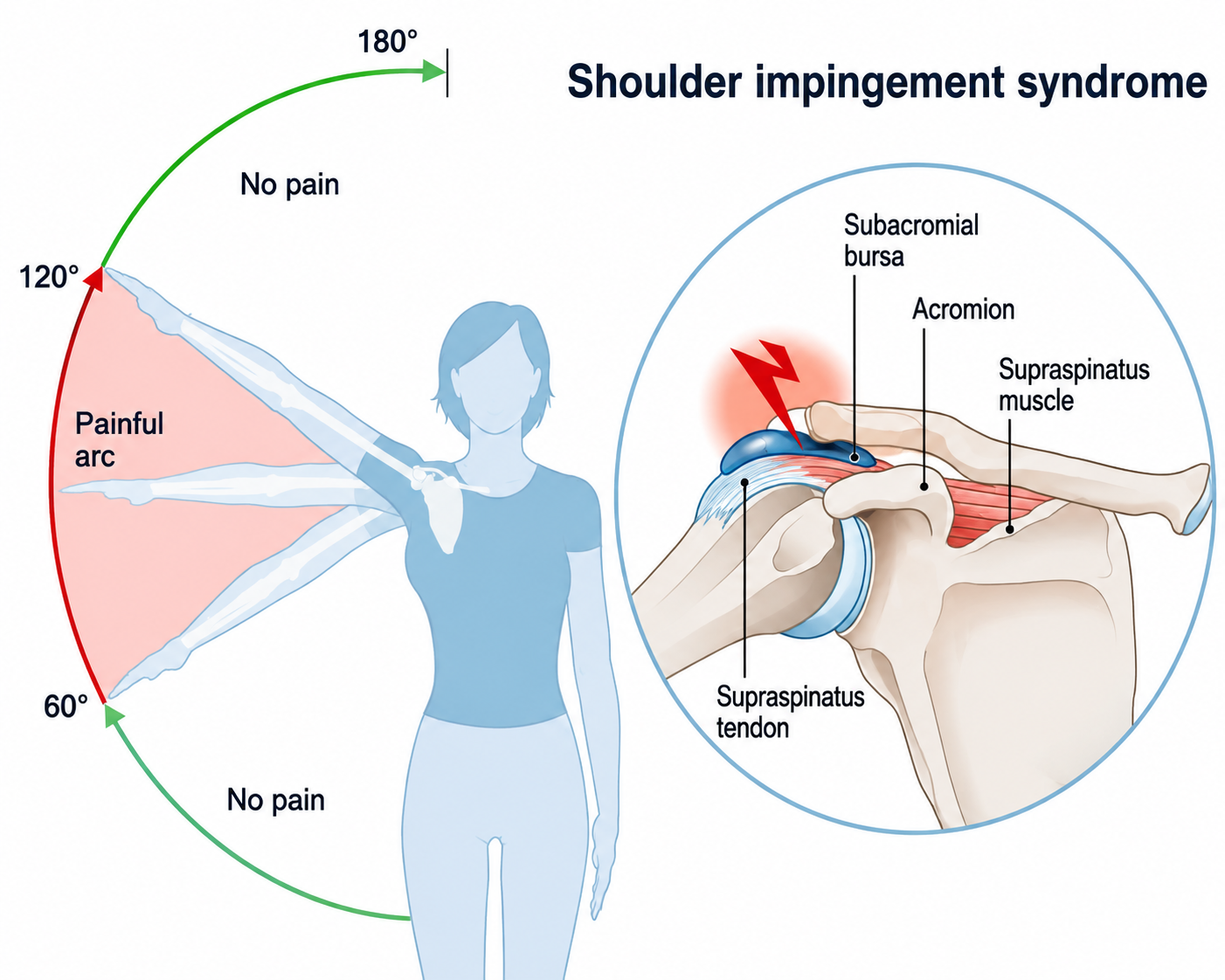
Painful arc syndrome describes a very specific pattern of shoulder pain that occurs during a particular portion of arm movement, typically between 60 and 120 degrees of elevation, while the rest of the movement stays relatively comfortable.
This characteristic pattern usually points to impingement of soft tissue beneath the shoulder blade. Our clinic identifies the underlying cause of painful arc syndrome and provides treatment to eliminate the painful range.
What Is Painful Arc Syndrome?
As the arm is raised to the side, certain tendons and the subacromial bursa pass through a narrow space beneath the acromion. Painful arc syndrome occurs when this space becomes compressed at a specific angle of movement, pinching soft tissue and producing pain only within that particular arc, while lower and higher positions remain pain-free.
Underlying Causes
- Supraspinatus tendinitis or rotator cuff impingement
- Subacromial bursitis contributing to reduced space beneath the acromion
- Bone spurs narrowing the subacromial space over time
- Poor shoulder blade mechanics altering the movement pathway
How Painful Arc Syndrome Presents
- Pain specifically between 60 and 120 degrees of arm elevation
- Minimal discomfort at the start or the very top of the movement
- Pain reproduced during overhead reaching or lifting to the side
- Occasional clicking or catching sensation during the painful range
Treatment for Painful Arc Syndrome
- Physiotherapy: corrects shoulder blade mechanics and strengthens the rotator cuff
- Activity modification: avoids repeated movement through the painful arc
- Anti-inflammatory treatment: reduces swelling contributing to impingement
- Corticosteroid injection: eases inflammation in persistent cases
- Surgical decompression: considered when conservative treatment doesn't resolve symptoms
Frequently Asked Questions
What conditions commonly cause painful arc syndrome?
It's most often linked to rotator cuff tendinitis, subacromial bursitis, or bone spurs narrowing the space beneath the shoulder blade.
Can painful arc syndrome resolve on its own?
Mild cases may improve with rest and activity changes, but persistent symptoms usually benefit from a structured physiotherapy program.
Is surgery commonly needed for this condition?
No, most cases respond well to conservative treatment, with surgery reserved for cases that don't improve after a thorough non-surgical approach.
Take Care of Your Health
Concerned about shoulder pain or looking for a diagnosis? Book a consultation today with our specialists.
Book Specialist Consultation