Understanding Bicipital Tendinitis
The long head of the biceps tendon runs through the front of the shoulder joint before attaching to the upper arm, and its position makes it prone to irritation from surrounding shoulder conditions.
Bicipital tendinitis often produces pain at the front of the shoulder that can be mistaken for other rotator cuff issues. Our clinic diagnoses and treats bicipital tendinitis to relieve pain and restore comfortable arm movement.
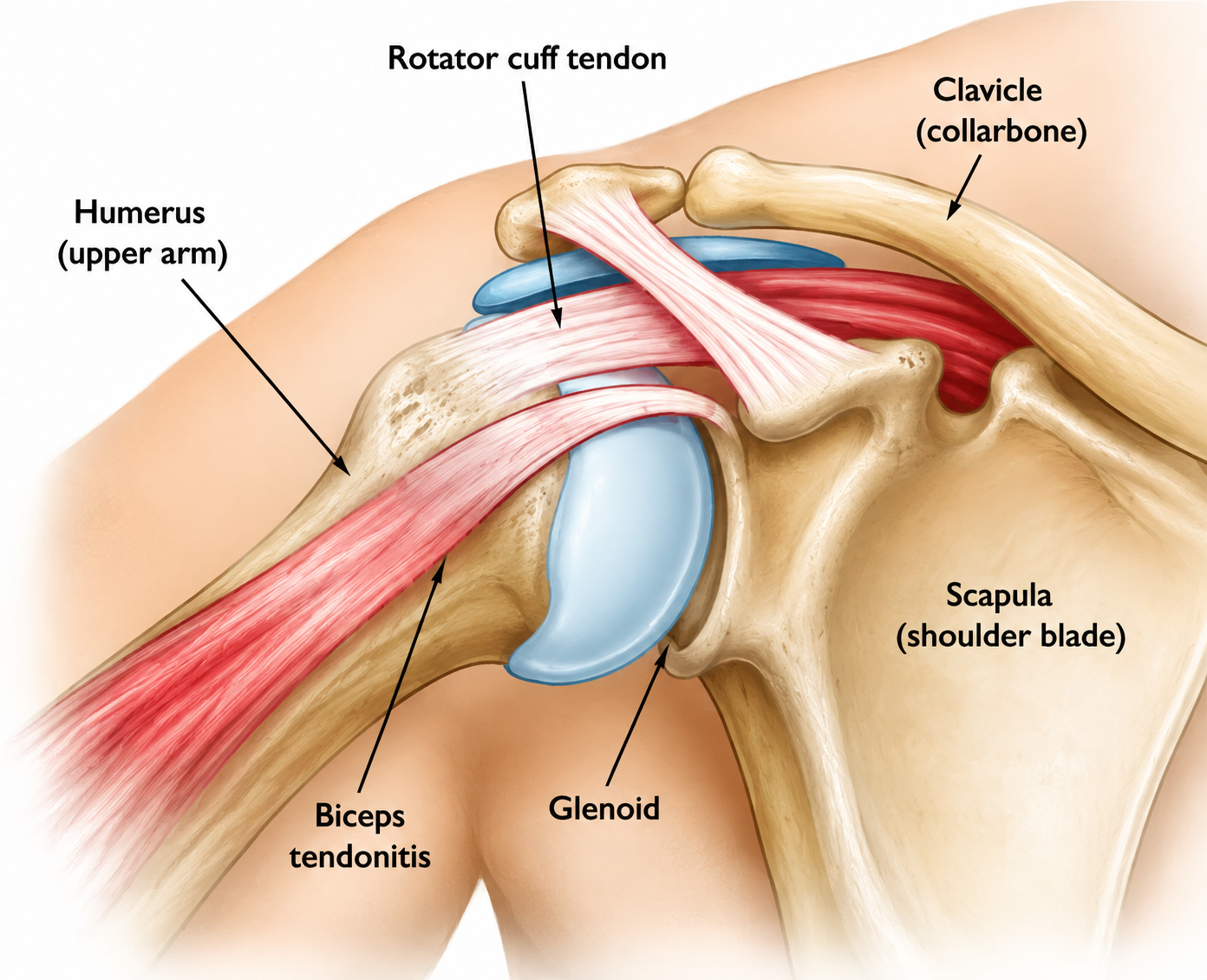
Understanding the Biceps Tendon's Role in the Shoulder
The long head of the biceps tendon travels through a groove at the front of the upper arm bone and into the shoulder joint itself, helping stabilize the joint during movement. Because it passes so close to other rotator cuff structures, irritation here is often linked to nearby shoulder problems rather than occurring in isolation.
Common Causes of Bicipital Tendinitis
- Repetitive overhead or lifting activity placing strain on the biceps tendon
- Associated rotator cuff impingement or tendinitis
- Direct trauma to the front of the shoulder
- Age-related degeneration of the tendon
Typical Symptoms
- Pain at the front of the shoulder, sometimes radiating down the upper arm
- Discomfort with overhead reaching or lifting movements
- Tenderness directly over the front of the shoulder
- Pain that worsens when bending the elbow against resistance
Treatment for Bicipital Tendinitis
- Rest and activity modification: reduces ongoing tendon irritation
- Physiotherapy: restores strength and normal shoulder mechanics
- Anti-inflammatory treatment: eases pain and swelling
- Corticosteroid injection: used selectively for persistent symptoms
Frequently Asked Questions
Is bicipital tendinitis the same as a biceps tear?
No, tendinitis involves inflammation without structural damage, while a tear reflects an actual disruption of the tendon fibers, which imaging can help distinguish.
Why does biceps tendon pain often occur alongside rotator cuff problems?
The biceps tendon runs closely alongside the rotator cuff tendons, so inflammation or impingement in one area commonly affects the other.
Can bicipital tendinitis be treated without injections?
Yes, many cases respond well to rest, physiotherapy, and activity changes, with injections reserved for more persistent discomfort.
Take Care of Your Health
Concerned about shoulder pain or looking for a diagnosis? Book a consultation today with our specialists.
Book Specialist Consultation