Understanding Pelvic Girdle Pain
Pelvic girdle pain refers to discomfort arising from the joints and connecting structures of the pelvis, including the sacroiliac joints and the pubic symphysis at the front of the pelvis.
It is a broader term than SI joint dysfunction alone, encompassing multiple pelvic structures, and is particularly well recognized in the context of pregnancy, though it can also affect non-pregnant individuals from injury or biomechanical strain.
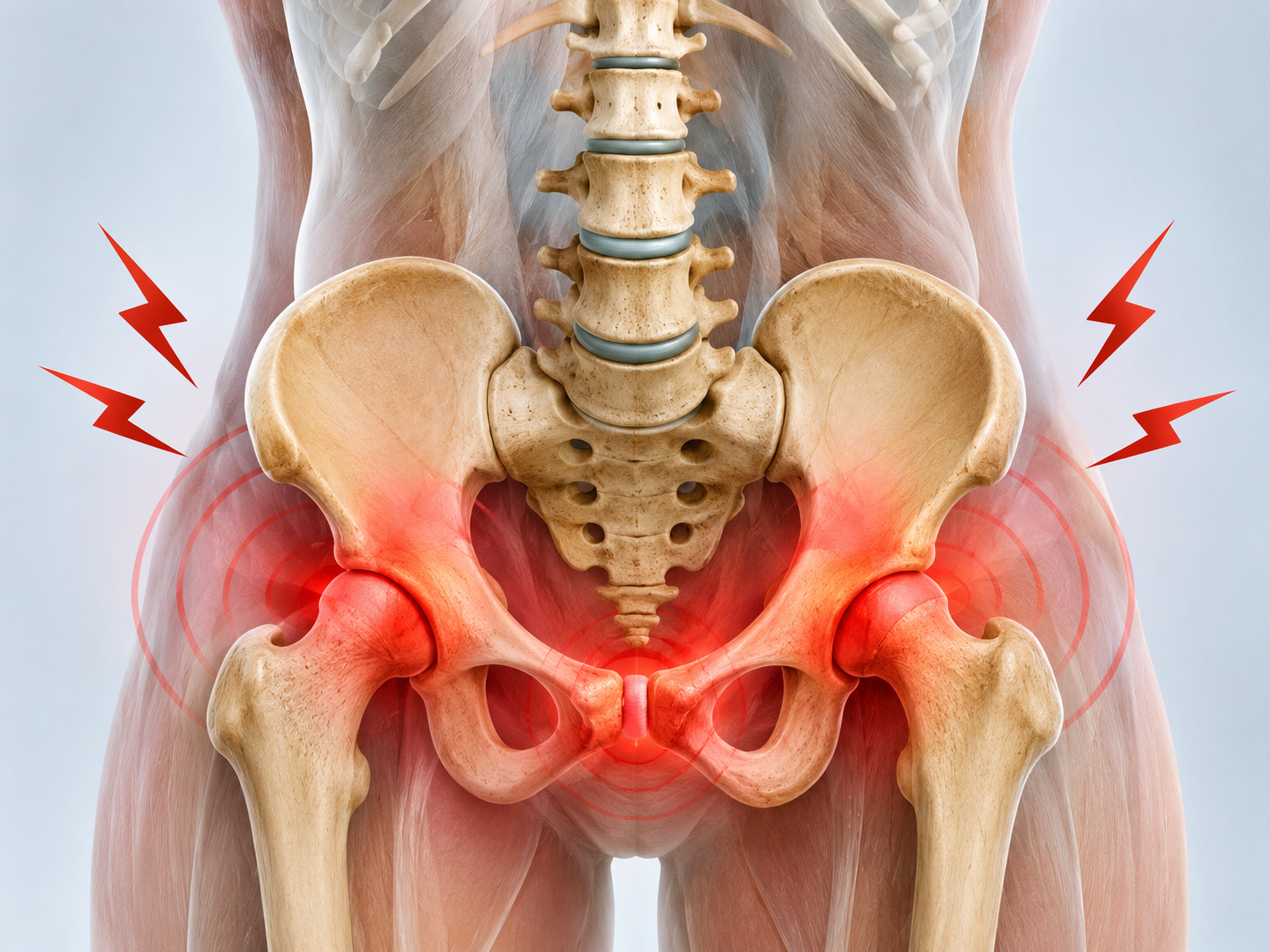
Structures Involved in Pelvic Girdle Pain
- The sacroiliac joints at the back of the pelvis
- The pubic symphysis at the front, where the two pelvic bones meet
- Supporting ligaments and muscles that stabilize the entire pelvic ring
Symptoms
- Pain across the lower back, buttocks, hips, or pubic region
- Discomfort that worsens with walking, climbing stairs, or turning over in bed
- A sensation of pelvic instability or grinding
- Pain that may radiate into the inner thigh in cases involving the pubic symphysis
Common Contributing Factors
- Pregnancy-related hormonal changes increasing ligament laxity
- Previous pelvic trauma or injury
- Muscle imbalances around the hip and core
- Asymmetric loading patterns from certain sports or occupations
Treatment and Management
- Pelvic stabilization exercises targeting the deep core and hip muscles
- Supportive pelvic belts to reduce excessive movement across the pelvic joints
- Activity modification to avoid asymmetric loading positions during flare-ups
- Manual therapy to address specific joint restrictions
- Guidance on safe movement strategies, particularly important during pregnancy
Frequently Asked Questions
Is pelvic girdle pain the same as SI joint dysfunction?
They overlap, but pelvic girdle pain is a broader term that can involve the SI joints, the pubic symphysis, or both, while SI joint dysfunction refers specifically to the joints at the back of the pelvis.
Is pelvic girdle pain common in pregnancy?
Yes, it is a well-recognized and common complaint during pregnancy due to hormonal and biomechanical changes affecting the pelvic joints.
Can pelvic girdle pain be treated without medication?
Yes, targeted physiotherapy, pelvic support belts, and activity modification are often highly effective without the need for medication.
Take Care of Your Health
Concerned about back, neck, or spine pain? Book a consultation today with our specialists.
Book Specialist Consultation