Understanding Patella Baja
Patella baja, also called patella infera, is the opposite structural variation to patella alta, in which the kneecap sits lower than normal relative to the knee joint.
This condition can restrict normal kneecap movement, particularly limiting full knee extension, and is often encountered as a complication following knee surgery or prolonged immobilization rather than as a primary, standalone condition.
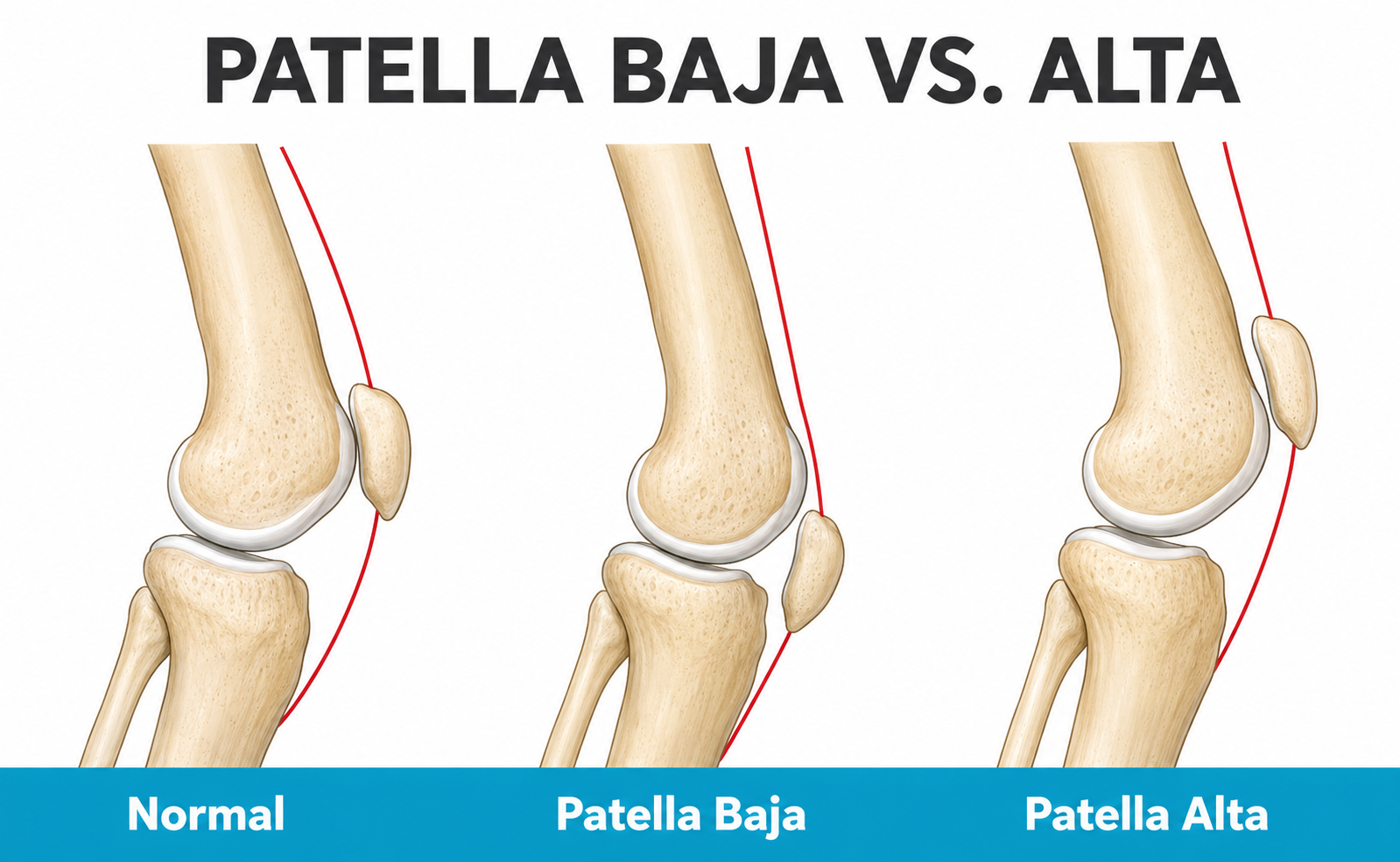
What Is Patella Baja?
In patella baja, the patellar tendon effectively shortens or scars, pulling the kneecap into a lower position than normal. This altered position can increase pressure on the lower portion of the kneecap cartilage and limit smooth gliding motion during knee bending and straightening.
Common Causes
- Surgical scarring: Tendon shortening following knee procedures, particularly ACL reconstruction
- Prolonged immobilization: Extended rest after injury or surgery without adequate early mobility work
- Tendon injury: Patellar tendon damage or partial rupture altering normal healing tension
- Inflammatory factors: Chronic joint conditions occasionally contributing to structural tendon changes
Symptoms
- Restricted knee extension or a persistent feeling of tightness in the front of the knee
- Anterior knee pain, particularly when kneeling or engaging in deep knee bends
- An increased pressure sensation located under the lower portion of the kneecap
- Reduced overall active and passive knee range of motion
Diagnosis
Similar to patella alta, patella baja is identified through specific X-ray or MRI diagnostic measurements comparing patellar tendon length to patellar height.
This evaluation is frequently prompted by unexplained joint stiffness or restricted extension following prior knee surgery.
Treatment Approaches
- Early structured physiotherapy: Post-surgical rehabilitation designed specifically to prevent tendon shortening and adhesion formation
- Progressive stretching and mobilization: Targeted techniques focused on restoring full knee extension
- Scar tissue management: Specialized soft tissue release methods where relevant to free restricted gliding planes
- Surgical intervention: Tendon lengthening procedures considered exclusively for severe, function-limiting cases
Frequently Asked Questions
Is patella baja common after knee surgery?
It is a recognized, though not universal, complication particularly associated with prolonged immobilization or delayed early rehabilitation protocols following certain knee procedures.
Can patella baja be prevented?
Yes, early guided mobilization and structured physiotherapy initiated immediately after knee surgery significantly reduce the risk of developing patella baja.
Does patella baja always need surgery to correct?
No, many cases improve significantly with dedicated stretching and physiotherapy, with surgical procedures reserved only for severe, persistent movement restrictions.
Take Care of Your Knee Health
Concerned about post-surgical stiffness or looking for a specialist diagnosis? Book a consultation today with our experts.
Book Knee Specialist Consultation