Understanding Plantar Fasciitis
Plantar fasciitis is one of the most common causes of heel pain, resulting from irritation and micro-tearing of the plantar fascia, a thick band of tissue running along the bottom of the foot from the heel to the toes.
It typically develops gradually from repetitive strain and is particularly known for causing sharp pain with the very first steps of the morning, a hallmark symptom that helps distinguish it from other causes of foot pain.
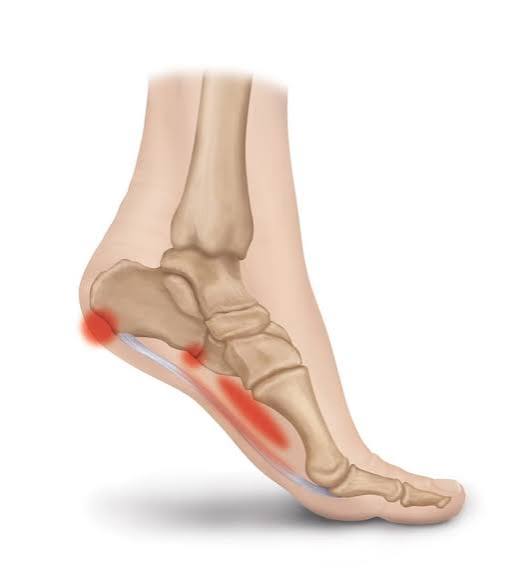
What Causes Plantar Fasciitis?
- Repetitive standing, walking, or running, particularly on hard surfaces
- Tight calf muscles increasing tension on the plantar fascia
- Flat feet or high-arched foot structures altering normal foot biomechanics
- Sudden increases in activity level or unsupportive footwear choices
- Excess body weight increasing mechanical load on the plantar fascia
Symptoms
- Sharp, stabbing heel pain, especially noticeable with the first steps in the morning
- Pain that eases after a few minutes of walking but can return after prolonged standing
- Localized tenderness when pressing on the bottom of the heel
- Discomfort that worsens after, rather than during, physical exercise
Diagnosis
Plantar fasciitis is typically diagnosed clinically based on the characteristic pattern of morning heel pain and localized tenderness at the heel's underside.
Imaging is generally reserved for persistent cases or to rule out other differential causes such as a calcaneal stress fracture.
Treatment Options
- Stretching: Dedicated calf and plantar fascia stretching exercises
- Orthotics: Supportive, cushioned footwear and custom orthotic inserts
- Activity modification: Reducing prolonged standing or high-impact loading
- Symptom relief: Ice therapy and anti-inflammatory measures
- Night splints: Maintaining a gentle stretch on the fascia overnight
- Advanced care: Corticosteroid injections or shockwave therapy for persistent, unresponsive cases
Frequently Asked Questions
How long does plantar fasciitis take to heal?
Many cases improve within several weeks to a few months with consistent stretching and activity modification, though some chronic cases can take longer to fully resolve.
Is walking bad for plantar fasciitis?
Gentle walking is generally fine, but prolonged standing or high-impact activity on hard surfaces can aggravate symptoms during an acute flare-up.
What is the fastest way to relieve plantar fasciitis pain?
Consistent calf and fascia stretching, combined with supportive footwear and reduced aggravating activity, tends to provide the most reliable relief over time.
Take Care of Your Foot Health
Concerned about ankle or foot pain? Book a consultation today with our specialists.
Book Specialist Consultation