Understanding Wrist Drop
Wrist drop describes the inability to lift or extend the wrist and fingers upward, leaving the hand hanging in a flexed, drooping position.
This distinctive symptom usually points to a problem with the radial nerve, though its underlying cause can vary.
Our clinic evaluates and treats wrist drop with a focus on identifying the source of nerve involvement and restoring functional wrist movement.
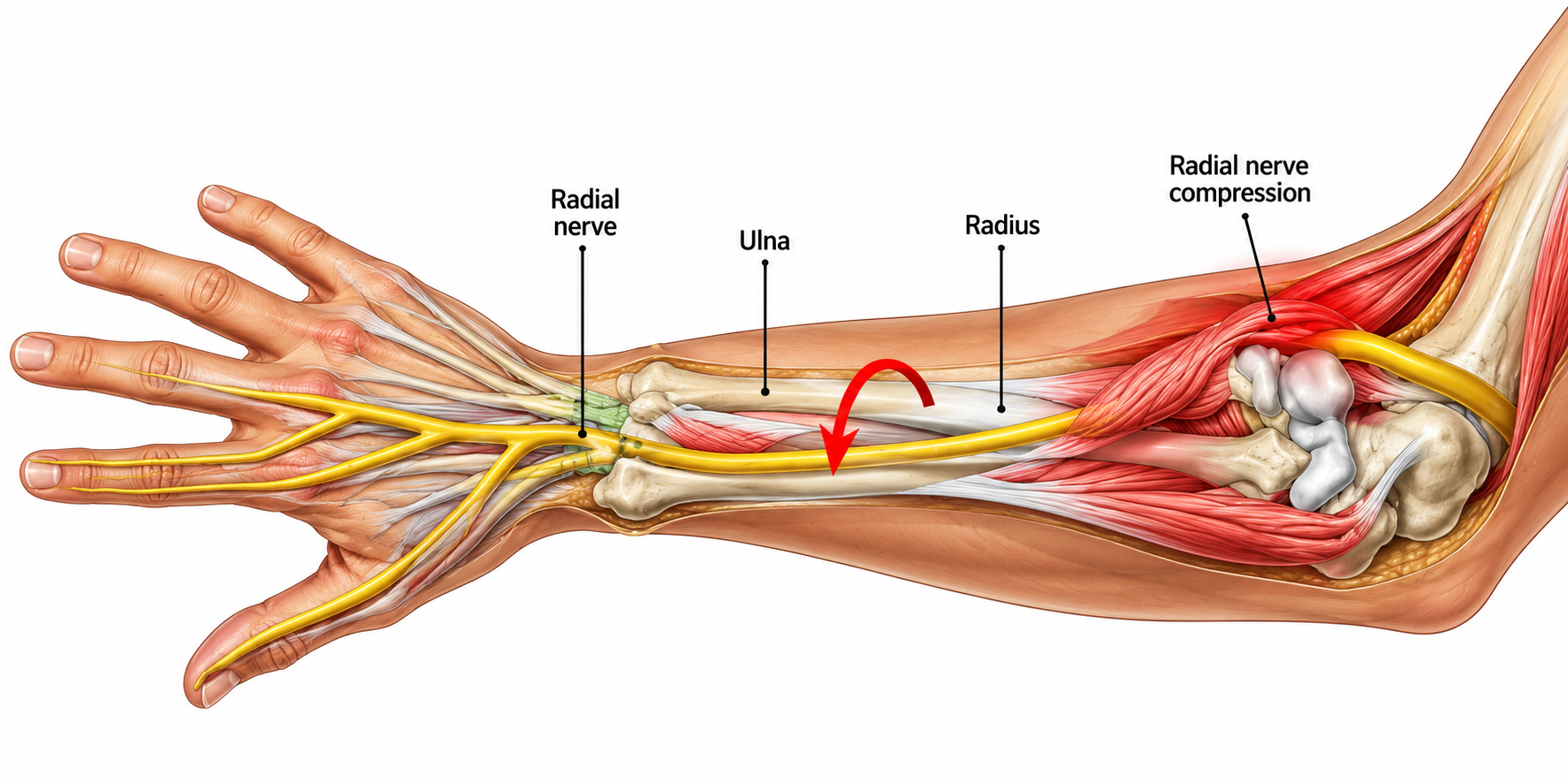
What Causes Wrist Drop?
Wrist drop develops when the muscles responsible for extending the wrist and fingers lose their nerve supply, most often due to radial nerve damage somewhere along its path from the upper arm to the hand.
Without this nerve signal, the extensor muscles can't function, and gravity pulls the wrist and fingers into a flexed position.
Common Causes of Wrist Drop
Radial nerve injury from an upper arm fracture
Prolonged compression of the nerve, sometimes called 'Saturday night palsy' from sleeping with the arm compressed
Direct trauma or penetrating injury along the nerve's pathway
Lead or other toxic exposures affecting nerve function in rarer cases
Recognizing Wrist Drop
- Inability to lift the wrist upward against gravity
- Fingers that hang in a flexed position and can't be straightened
- Numbness on the back of the hand in some cases
- Difficulty gripping objects due to poor wrist positioning
Treatment for Wrist Drop
Effective management of wrist drop focuses on protecting joint structures while enabling nerve repair and muscle functionality:
- Wrist splinting – holds the wrist in a functional position while nerve recovery occurs
- Hand therapy – maintains joint mobility and prevents stiffness during recovery
- Addressing the underlying cause – treating the specific nerve injury driving the condition
- Surgical options – nerve repair or tendon transfer for cases without spontaneous recovery
Frequently Asked Questions
Is wrist drop the same condition as radial palsy?
Wrist drop is the visible symptom, while radial palsy is the underlying nerve condition most commonly responsible for causing it.
Can wrist drop resolve completely?
Many cases caused by temporary compression improve significantly as the nerve heals, though recovery time and outcome depend on the severity and cause of the nerve injury.
Why is a splint important for wrist drop?
A splint keeps the wrist and fingers in a supportive, functional position, protecting the joints and improving hand use while nerve recovery is underway.
Concerned about wrist or hand pain? Book a consultation today with our specialists.
Book Hand Specialist Consultation