Understanding Chondromalacia Patella
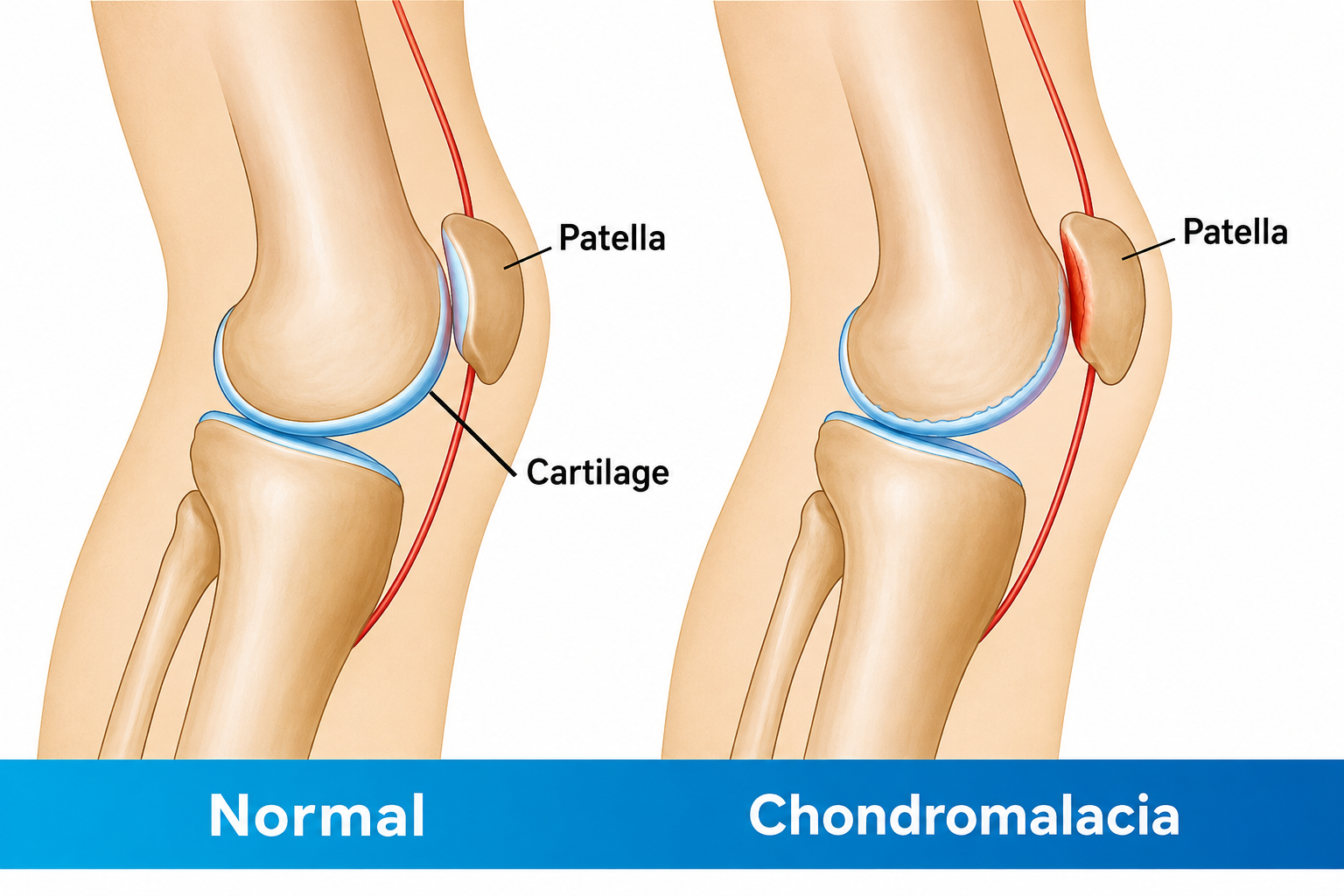
Chondromalacia patella refers to the softening and breakdown of the cartilage on the underside of the kneecap, where it glides against the thighbone.
This structural cartilage change is distinct from patellofemoral pain syndrome, which relates more to kneecap tracking and muscular control, although the two conditions frequently overlap and share similar symptoms of anterior knee pain.
What Causes Chondromalacia Patella?
- Repetitive stress: Continuous impact on kneecap cartilage from running, jumping, or squatting activities
- Direct trauma: Acute impact or injury directly to the kneecap
- Patellar maltracking: Chronic malalignment placing uneven mechanical pressure on the cartilage surface
- Muscle imbalance: Weakness or imbalance in the quadriceps and surrounding hip muscles
- Age-related wear: Natural degenerative cartilage changes occurring in older individuals
Symptoms
- Aching pain felt beneath or directly around the kneecap
- A grinding, grating, or crackling sensation when bending the knee
- Pain that worsens with prolonged sitting, kneeling, or stair climbing
- Occasional mild swelling around the joint capsule
- A subjective sensation of the knee feeling unstable or weak, without true structural giving-way
Diagnosis
Diagnosis often begins with a thorough clinical examination but is definitively confirmed with MRI imaging.
MRI can directly visualize cartilage softening, fissuring, and thinning beneath the kneecap, helping clinicians distinguish chondromalacia from pure tracking-related patellofemoral pain.
Treatment Options
- Targeted strengthening: Quadriceps and hip conditioning to reduce mechanical pressure on the affected cartilage
- Activity modification: Avoiding positions and exercises that heavily load the kneecap joint
- Symptom control: Anti-inflammatory measures utilized during painful flare-ups
- Supportive care: Patellar taping or bracing to optimize tracking and reduce discomfort
- Surgical evaluation: In select, more advanced cases, arthroscopic assessment and treatment
Frequently Asked Questions
Is chondromalacia patella a form of arthritis?
It is related but distinct — chondromalacia specifically refers to cartilage softening under the kneecap, and while it can progress toward patellofemoral arthritis, it is considered an earlier, often reversible stage.
Can chondromalacia patella heal on its own?
With appropriate strengthening and activity modification, symptoms often improve significantly, though underlying cartilage structural changes may persist to some degree.
Does chondromalacia patella require surgery?
Surgery is rarely needed and is strictly reserved for cases that fail extensive conservative treatment or involve severe, debilitating cartilage damage.
Take Care of Your Knee Health
Concerned about knee pain or looking for a specialist diagnosis? Book a consultation today with our orthopedic experts.
Book Knee Specialist Consultation