Understanding Collateral Ligament Injuries
The medial collateral ligament (MCL) and lateral collateral ligament (LCL) run along the inner and outer sides of the knee, respectively, providing crucial side-to-side stability.
Strains to these ligaments commonly occur from direct impact or forceful sideways movement of the knee and, unlike ACL and PCL injuries, often respond very well to conservative treatment alone.
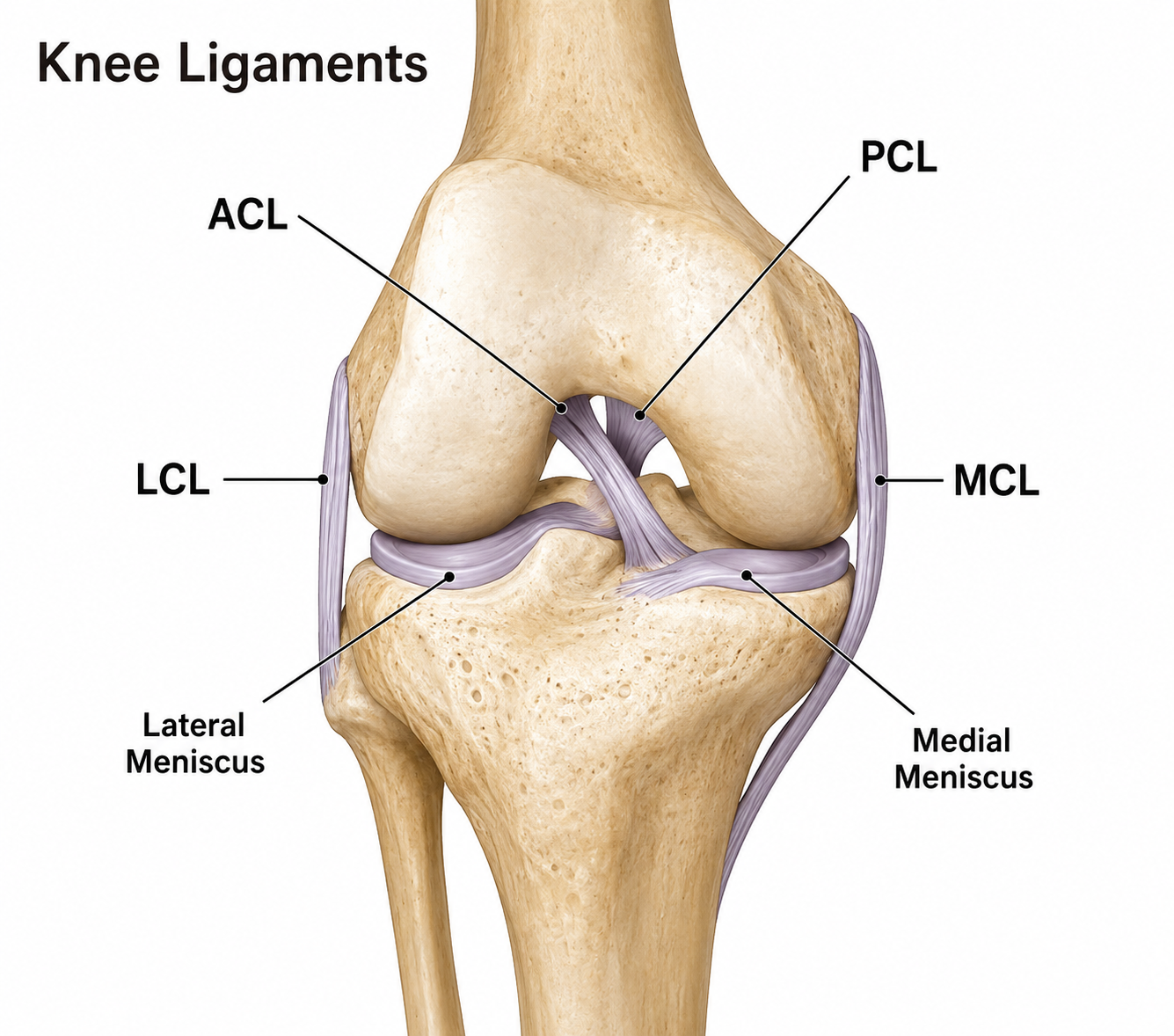
How MCL and LCL Injuries Happen
- Valgus stress: A direct blow to the outer side of the knee forcing it inward, commonly injuring the MCL
- Varus stress: A direct blow to the inner side of the knee forcing it outward, commonly injuring the LCL
- Sudden pivoting, cutting, or twisting movements during athletic activities
- Combined trauma resulting in multi-ligament knee injuries during high-energy events
Grades of Collateral Ligament Strain
- Grade 1: Mild stretching with tenderness upon palpation but no joint instability
- Grade 2: Partial tearing accompanied by noticeable looseness during clinical examination
- Grade 3: Complete tear resulting in significant side-to-side joint instability
Symptoms
- Localized pain and tenderness along the inner (MCL) or outer (LCL) side of the knee
- Swelling localized closely to the affected side of the joint
- Bruising that may develop gradually over the following days
- A distinct sense of the knee wobbling or feeling unstable with side-to-side movement in higher-grade strains
Diagnosis
Diagnosis relies heavily on specific clinical stress tests performed to assess side-to-side knee joint stability.
This is combined with high-resolution MRI imaging when necessary to accurately confirm the precise grade of injury and check for associated damage to the menisci or cruciate ligaments.
Treatment Approach
- Functional bracing: Utilizing specialized hinged braces to protect the healing ligament, particularly for grade 2 and 3 injuries
- Progressive physiotherapy: Dedicated rehabilitation to safely restore active range of motion and muscular strength
- Symptom management: Application of ice and anti-inflammatory measures for early pain and swelling control
- Surgical considerations: Surgery is rarely required for isolated MCL or LCL injuries, being reserved mainly for complex combined multi-ligament trauma
Frequently Asked Questions
Do MCL and LCL tears need surgery?
Isolated MCL and LCL injuries possess an excellent blood supply and usually heal very well with functional bracing and structured physiotherapy alone, with surgery reserved for complex multi-ligament injuries.
How long does an MCL or LCL strain take to heal?
Mild to moderate strains often improve significantly within a few weeks to two months, while more severe tears require a longer, structured rehabilitation protocol.
Can I still walk with an MCL or LCL strain?
Yes, many individuals can walk with mild to moderate strains, though a protective brace or supportive wrap is often recommended during the initial healing phase.
Take Care of Your Knee Health
Concerned about side-to-side knee stability or looking for a specialist diagnosis? Book a consultation today with our orthopedic experts.
Book Knee Specialist Consultation