Understanding Disc Bulges
A disc bulge occurs when a spinal disc extends slightly beyond its normal boundary, without the more significant tearing seen in a herniated or sequestered disc.
Disc bulges are extremely common and frequently found incidentally on imaging, even in people without any back pain at all, making it important to understand that a disc bulge finding does not automatically explain a person's symptoms.
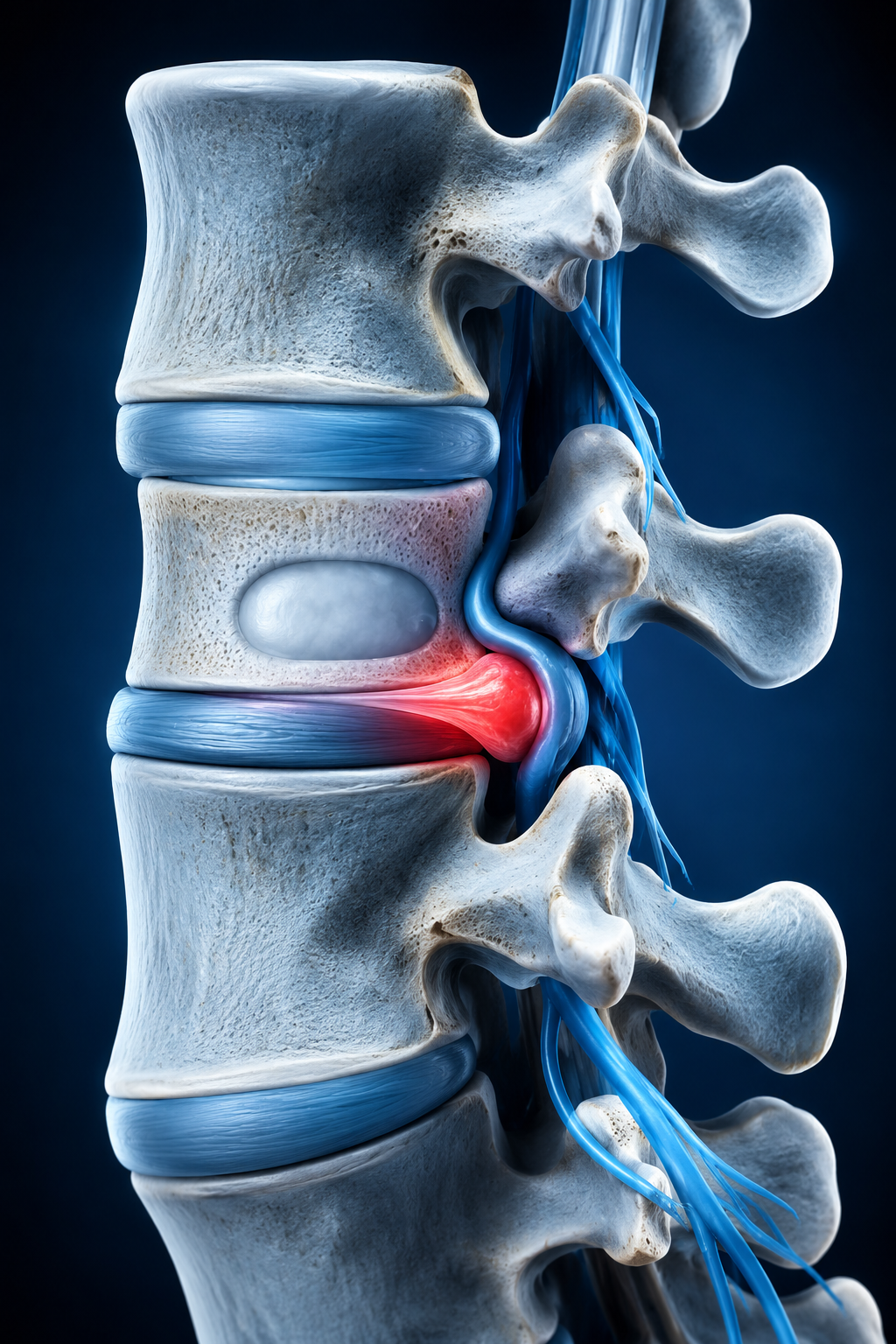
What Is a Disc Bulge?
Unlike a disc herniation, where the outer layer of the disc is torn and inner material pushes through, a disc bulge involves the disc extending outward as a whole, with its outer layer remaining largely intact. This is generally considered a milder and often more stable finding compared to a true herniation.
Is a Disc Bulge Always the Cause of Pain?
Research has consistently shown that disc bulges are present in a significant proportion of people without any back pain, particularly with increasing age. This means that when a disc bulge is found on imaging, it should always be interpreted alongside a person's specific symptoms and examination findings, rather than assumed to be the definitive cause of pain.
Symptoms, When Present
- Localized back or neck discomfort at the level of the bulge
- Occasional mild nerve-related symptoms if the bulge is positioned near a nerve root
- Often no symptoms at all, particularly with smaller, broad-based bulges
Treatment
- Physiotherapy focused on core strengthening and postural correction
- Activity modification during symptomatic periods
- Reassurance and education, since many disc bulges are stable, incidental findings
- Further evaluation reserved for cases with significant or progressive nerve-related symptoms
Frequently Asked Questions
Does a disc bulge always cause pain?
No, disc bulges are commonly found on imaging in people without any back pain, so the finding should always be considered alongside actual symptoms rather than assumed to be the cause.
Is a disc bulge the same as a herniated disc?
No, a disc bulge is generally a milder finding where the outer disc layer remains intact, while a herniated disc involves a tear in this outer layer with inner material pushing through.
Does a disc bulge need treatment?
Many disc bulges, particularly those without associated symptoms, need no specific treatment beyond general spine health measures such as core strengthening and good posture.
Take Care of Your Spinal Health
Concerned about back, neck, or spine pain? Book a consultation today with our specialists.
Book Spine Specialist Consultation