Understanding Tendon Cut Injuries
A cut to the hand or wrist can easily damage more than just the skin, often severing one or more of the tendons that control finger and wrist movement.
Because tendons don't have the same blood supply as muscle, they require careful surgical repair and a structured recovery process to regain full function.
Our clinic provides expert management of tendon cut injuries, from surgical repair coordination to guided rehabilitation.
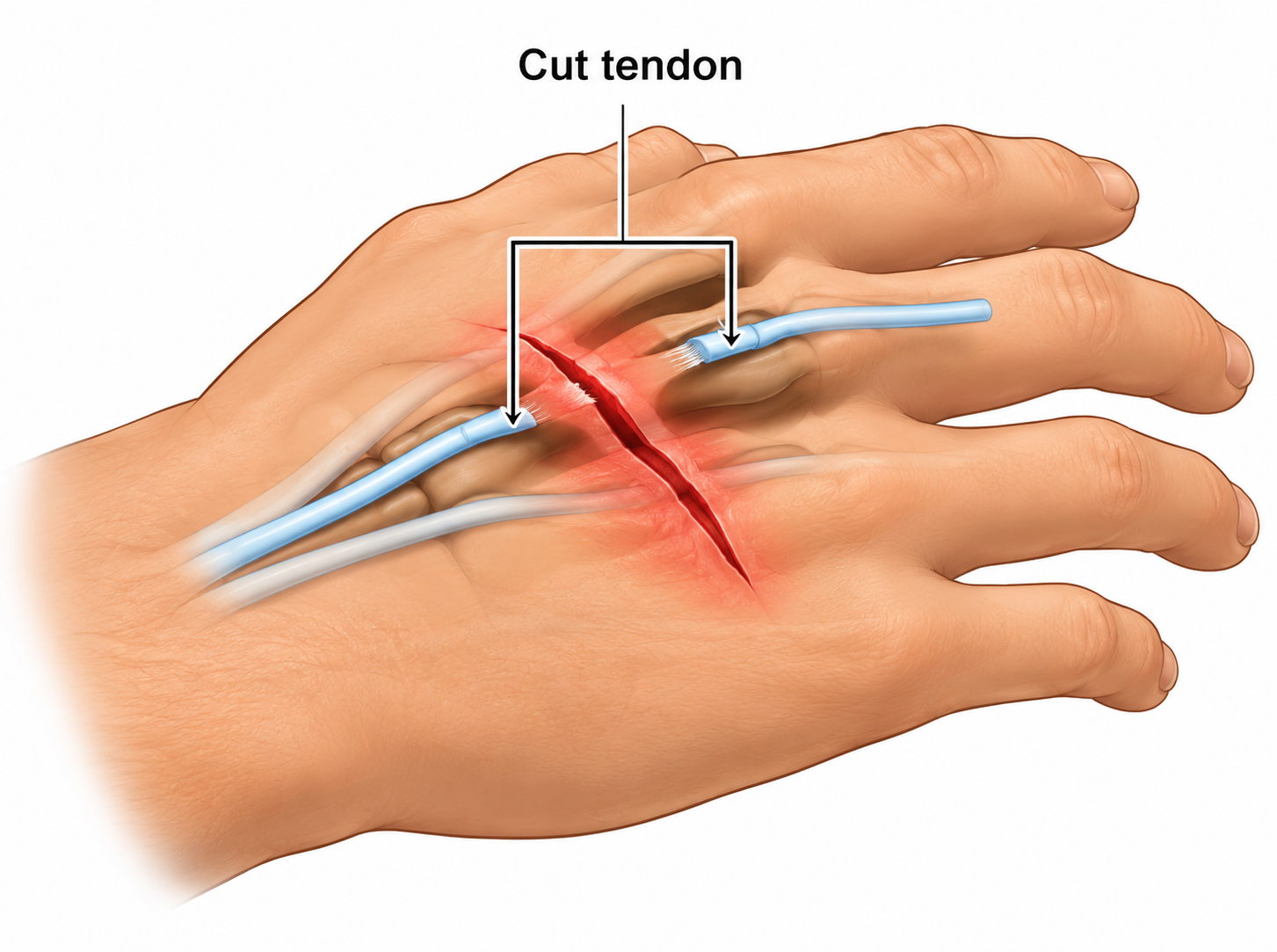
How Tendon Lacerations Happen
Tendons connect muscles in the forearm to the bones of the fingers and wrist, allowing precise bending and straightening movements.
A cut severing one of these tendons, whether from glass, a knife, machinery, or another sharp object, disrupts this connection, leaving the affected finger or wrist unable to move normally until the tendon is surgically repaired.
Common Causes of Tendon Cut Injuries
Accidental cuts from knives, glass, or sharp tools
Workplace injuries involving machinery or blades
Deep lacerations from falls onto sharp surfaces
Injuries during food preparation or household accidents
Signs of a Tendon Cut Injury
- Inability to bend or straighten the affected finger or wrist normally
- A visible wound with associated loss of movement
- Weakness or complete loss of function in the specific movement the tendon controls
- Pain and swelling around the site of injury
Treatment for Tendon Cut Injuries
Comprehensive clinical interventions designed to restore structural integrity and joint gliding include:
- Surgical tendon repair – reconnects the severed tendon ends, ideally soon after injury
- Protective splinting – positions the hand to protect the repair during early healing
- Structured hand therapy – gradually reintroduces movement to prevent stiffness and adhesions
- Progressive strengthening – rebuilds tendon gliding and grip strength over time
Frequently Asked Questions
Is surgery always required for a cut tendon?
Yes, a fully severed tendon generally requires surgical repair to restore normal movement, since tendons cannot reconnect on their own once completely cut.
How soon after injury should tendon repair surgery happen?
Prompt repair, ideally within the first one to two weeks, generally leads to better outcomes, though timing can vary depending on the specific injury and other factors.
How long does recovery from tendon repair take?
Recovery is a gradual process that typically spans several months, with therapy playing a critical role in regaining full tendon gliding and hand function.
Concerned about wrist or hand pain? Book a consultation today with our specialists.
Book Hand Specialist Consultation