Understanding Genu Recurvatum
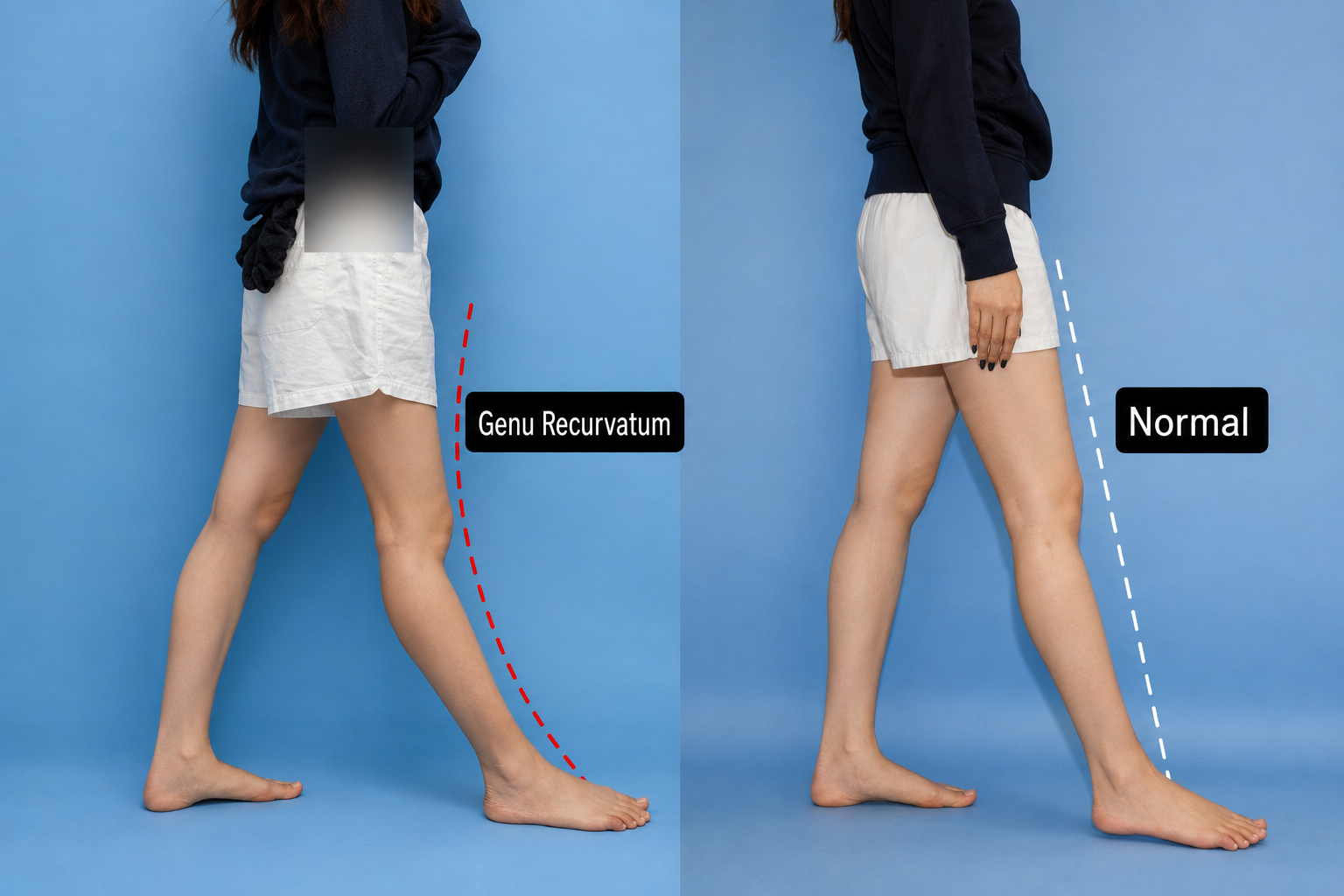
Genu recurvatum refers to a knee alignment condition in which the knee joint extends backward beyond its normal straight position, giving the knee a hyperextended or "bowed backward" appearance when standing.
While mild degrees can be a normal anatomical variation, especially in individuals with generalized joint flexibility, more pronounced genu recurvatum can place additional stress on the knee's supporting ligaments and increase injury risk over time.
What Causes Genu Recurvatum?
- Ligamentous laxity: Generalized joint hypermobility allowing excessive joint range
- Muscle weakness: Insufficient strength in the quadriceps and hamstrings, letting the knee fall into hyperextension during standing
- Neurological factors: Conditions affecting active muscle tone and dynamic control around the knee
- Prior injury: Past trauma to posterior knee structures reducing normal restraint on hyperextension
- Habitual posture: Standing patterns that reinforce locking the knee into backward bowing over time
Symptoms and Concerns
- A visibly backward-curving or bowed posture of the knee when standing
- A subjective sense of knee instability or excessive give during weight-bearing
- Increased mechanical strain placed on the posterior knee ligaments and joint structures over time
- Potential for associated joint discomfort, particularly during prolonged standing
Diagnosis
Genu recurvatum is typically evaluated through clinical observation of standing knee alignment, frequently measured precisely in degrees of hyperextension.
This is combined with a thorough assessment of surrounding muscle strength, joint mobility, and neuromuscular control to identify specific contributing factors.
Treatment and Management
- Targeted strengthening: Dedicated quadriceps and hamstring conditioning to improve dynamic joint stability
- Movement retraining: Postural and gait re-education to break habitual locking into hyperextension
- Supportive bracing: Utilizing specialized orthotics or bracing in select cases for positional feedback
- Multidisciplinary care: Addressing any underlying neurological or structural factors with specialist support
Frequently Asked Questions
Is genu recurvatum always a problem?
Mild hyperextension can be a normal anatomical variant, particularly in flexible individuals, and only becomes clinically significant if it causes joint instability, pain, or excessive strain on supporting structures.
Can exercises correct genu recurvatum?
Targeted quadriceps and hamstring strengthening, combined with dedicated movement retraining, can meaningfully improve dynamic control and reduce habitual hyperextension in many cases.
Does genu recurvatum increase injury risk?
Yes, pronounced hyperextension can place continuous extra stress on the posterior knee ligaments, potentially increasing the risk of structural injury and joint wear over time if left unaddressed.
Take Care of Your Knee Health
Concerned about knee alignment or looking for a professional specialist diagnosis? Book a consultation today with our orthopedic experts.
Book Knee Specialist Consultation