Understanding the Rounded Spine
Within the broader landscape of spinal conditions, kyphosis stands out as a deformity defined by an exaggerated forward curve of the upper spine.
Viewed through the lens of overall spinal health, kyphosis is closely connected to posture, bone density, and structural growth patterns, making it an important condition to understand alongside other common causes of back pain and dysfunction across the spine.
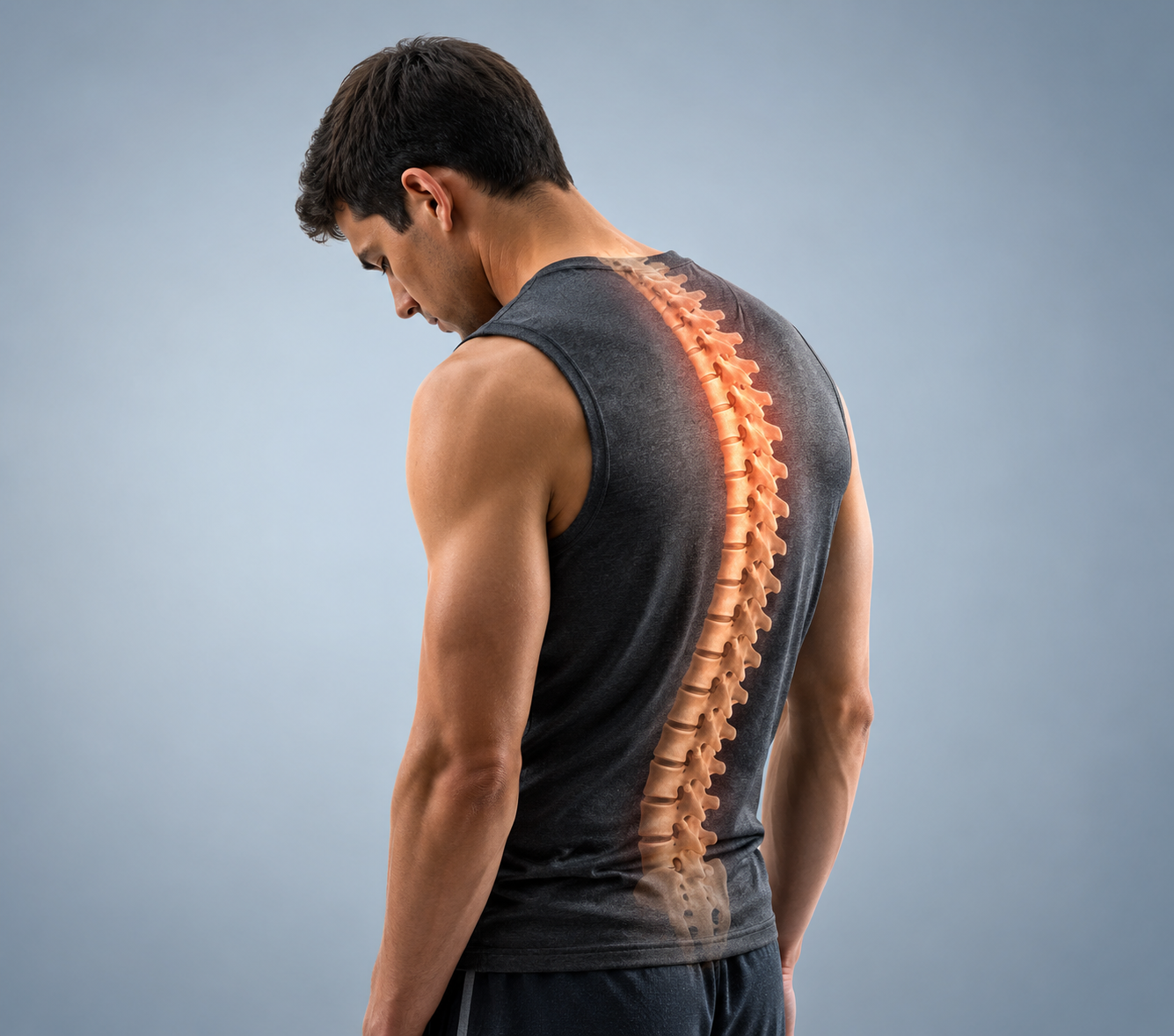
Kyphosis Within the Spectrum of Spinal Conditions
While conditions such as scoliosis involve sideways curvature and spondylolisthesis involves forward vertebral slippage, kyphosis specifically refers to excessive rounding in the sagittal, or front-to-back, plane of the upper spine. Recognizing where kyphosis fits among these related spinal deformities helps clarify why its causes, risk factors, and treatment approaches differ meaningfully from other spinal curve disorders.
Primary Contributing Factors
- Postural habits, particularly prolonged screen-related slouching
- Structural adolescent growth conditions such as Scheuermann's disease
- Osteoporosis-related vertebral compression fractures in older adults
- Degenerative disc changes contributing to progressive curvature with age
How Kyphosis Interacts With Other Spinal Health Issues
- Reduced chest wall expansion in more significant curves, potentially affecting breathing capacity
- Increased mechanical strain on adjacent spinal segments, which can contribute to related back pain
- A close relationship with bone density, since compression fractures from osteoporosis are a notable cause in older adults
A Comprehensive Management Approach
- Postural retraining and targeted extension-based strengthening exercises
- Addressing underlying bone health where osteoporosis contributes to the curve
- Bracing in select growing adolescents with progressive structural curves
- Coordinated care between spine specialists and physiotherapists for more significant or progressive cases
Frequently Asked Questions
How does kyphosis relate to other spinal deformities?
Kyphosis specifically involves front-to-back rounding of the upper spine, distinguishing it from sideways curves like scoliosis or forward vertebral slippage like spondylolisthesis, though all three fall under the broader category of spinal alignment disorders.
Can kyphosis contribute to other back problems?
Yes, significant kyphosis can alter load distribution across the spine, potentially contributing to compensatory strain and pain in adjacent spinal regions.
Is kyphosis linked to osteoporosis?
Yes, particularly in older adults, vertebral compression fractures from osteoporosis are a recognized and important cause of progressive kyphotic curvature.
Take Care of Your Spinal Health
Concerned about back, neck, or spine pain? Book a consultation today with our specialists.
Book Spine Specialist Consultation