Understanding Knee Synovitis
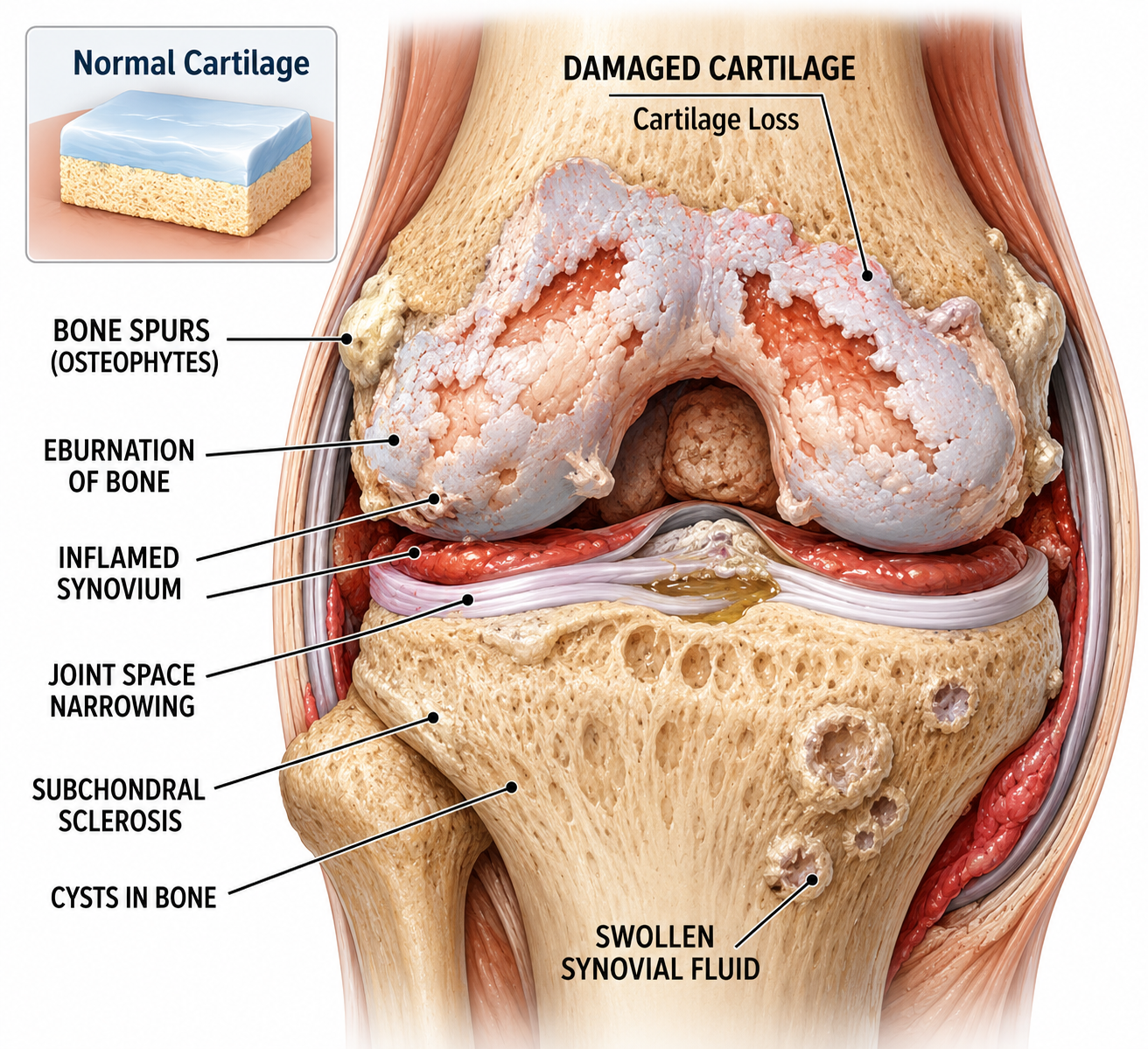
Knee synovitis occurs when the synovium, the thin membrane lining the knee joint that produces lubricating fluid, becomes inflamed.
This inflammation leads to excess fluid production, causing swelling, warmth, and stiffness. Synovitis can arise from injury, overuse, infection, or underlying inflammatory conditions, making accurate identification of the cause central to effective treatment.
What Causes Knee Synovitis?
- Mechanical irritation: Resulting from structural injuries such as a meniscus or ligament tear
- Overuse: Repetitive knee-loading activity causing chronic friction and irritation
- Inflammatory arthritis: Systemic conditions including rheumatoid arthritis
- Infection: Septic synovitis, a serious medical emergency requiring urgent intervention
- Crystal-induced conditions: Metabolic disorders such as gout or pseudogout
Symptoms
- Visible and prominent swelling surrounding the knee joint
- Localized warmth and mild redness over the affected area
- Joint stiffness, particularly noticeable after periods of rest
- Pain that progressively increases with prolonged activity
- A persistent feeling of fullness or tightness within the joint capsule
Diagnosis
Diagnosis involves a thorough clinical examination assessing joint swelling, tenderness, and warmth.
This is often combined with joint fluid aspiration (arthrocentesis) to analyze fluid for infection, crystals, or inflammatory markers, while ultrasound or MRI confirms synovial thickening and rules out underlying structural tears.
Treatment Approach
- Rest and modification: Temporarily reducing activities to minimize ongoing joint irritation
- Symptom control: Ice therapy and anti-inflammatory medications to manage pain and swelling
- Physiotherapy: Restoring muscular strength and joint mechanics once acute inflammation subsides
- Injections: Corticosteroid injections administered for persistent inflammatory synovitis
- Emergency care: Prompt antibiotic treatment and surgical drainage if joint infection is confirmed
Frequently Asked Questions
Is knee synovitis serious?
Most cases are manageable with conservative treatment, but synovitis caused by infection requires urgent medical attention, so sudden severe swelling accompanied by fever should be evaluated promptly.
How long does synovitis take to resolve?
Mechanical or overuse-related synovitis often improves within a few weeks of rest and anti-inflammatory care, whereas underlying systemic or inflammatory causes typically require longer-term medical management.
Can synovitis come back?
Yes, recurrence is possible, especially if the underlying root cause—such as ongoing repetitive strain or an unmanaged inflammatory condition—is not properly addressed.
Take Care of Your Knee Health
Concerned about persistent joint swelling or looking for a specialist diagnosis? Book a consultation today with our orthopedic experts.
Book Knee Specialist Consultation