Understanding Age-Related Spinal Changes
Spondylosis is a general term for age-related degeneration of the spine, including wear of the discs and joints that can occur in the neck, mid-back, or lower back.
While these changes are a normal part of aging and often show up on imaging without causing any symptoms, in some people spondylosis leads to noticeable stiffness, pain, and reduced mobility that benefit from targeted management.
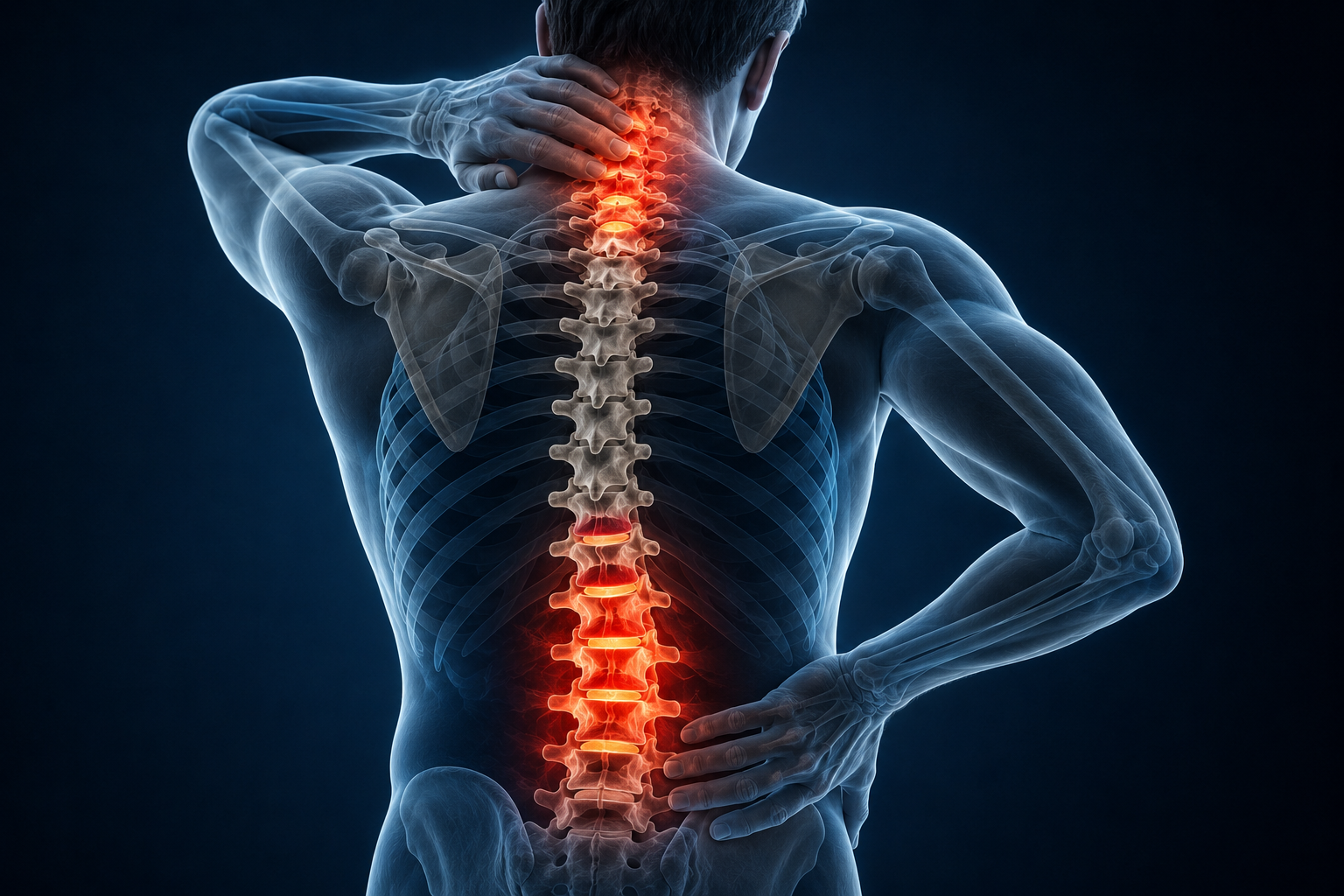
Recognizing the Symptoms
- Gradual, chronic stiffness that is often worse in the morning
- Aching pain localized to the affected region of the spine
- Reduced range of motion, particularly with bending or twisting
- A grinding or crackling sensation with spinal movement
- In more advanced cases, nerve-related symptoms such as tingling if a nerve becomes compressed
Where Spondylosis Commonly Occurs
- Cervical spondylosis: Affecting the neck, one of the most common forms
- Lumbar spondylosis: Affecting the lower back
- Thoracic spondylosis: Less common, affecting the mid-back
What Drives These Changes
- Natural disc dehydration and thinning with age
- Development of bone spurs around worn joints
- Cumulative mechanical stress from years of movement and loading
- Genetic predisposition to earlier or more pronounced degenerative changes
Managing Spondylosis Symptoms
- Regular low-impact exercise to maintain spinal mobility and muscle support
- Physiotherapy focused on flexibility and core strengthening
- Anti-inflammatory measures for symptomatic flare-ups
- Postural awareness to reduce unnecessary strain on affected segments
- Further evaluation if nerve-related symptoms such as numbness or weakness develop
Frequently Asked Questions
Is spondylosis the same as arthritis?
Spondylosis specifically refers to age-related spinal degeneration, which is closely related to osteoarthritis but specifically involves the discs and joints of the spine.
Does everyone with spondylosis have pain?
No, many people show spondylosis changes on imaging with no symptoms at all, and pain is not directly proportional to the degree of imaging changes.
Can spondylosis symptoms be managed without surgery?
Yes, most cases are effectively managed with exercise, physiotherapy, and lifestyle adjustments, with surgery reserved for cases with significant nerve involvement.
Take Care of Your Spinal Health
Concerned about back, neck, or spine pain? Book a consultation today with our specialists.
Book Spine Specialist Consultation