Understanding ACL Sprains and Tears
The anterior cruciate ligament (ACL) is one of the key stabilizing ligaments of the knee, and injuries to it range from mild sprains to complete tears.
ACL injuries are particularly common in sports involving sudden stops, pivots, or jumps, such as football, basketball, and skiing. Because the ACL plays a central role in knee stability, understanding the grade of injury is essential for determining the right treatment path.
Grades of ACL Injury
- Grade 1 sprain: Mild stretching of the ligament fibers with minimal joint instability
- Grade 2 sprain: Partial tearing of the ligament accompanied by noticeable looseness in joint play
- Grade 3 tear: Complete rupture of the ligament, typically causing significant functional instability
How ACL Injuries Happen
- Sudden changes in direction, cutting, or pivoting while the foot is firmly planted
- Landing awkwardly or stiff-legged from a jump
- Direct contact, collision, or a blow to the knee during contact sports
- Rapid deceleration combined simultaneously with a rotational twisting movement
Symptoms
- A distinct, audible "pop" at the time of injury, frequently reported by patients
- Immediate joint swelling (hemarthrosis) developing within hours of the trauma
- A subjective feeling of the knee giving way or lacking structural support
- Intense pain and immediate difficulty bearing weight on the affected leg
- Reduced range of motion during the acute post-injury phase
Diagnosis
Diagnosis relies on specific clinical stability tests (such as the Lachman and pivot-shift tests) performed by an orthopedic specialist.
This is combined with high-resolution MRI imaging, which definitively confirms the exact extent of ligament damage and identifies any associated injuries to the menisci or collateral ligaments that commonly occur alongside ACL tears.
Treatment Options
- Conservative management: Structured physiotherapy and functional bracing for select partial tears or lower-demand, non-pivoting individuals
- ACL reconstruction surgery: Surgical graft replacement for complete tears in active individuals seeking to return to high-demand pivoting sports
- Pre-surgical "prehabilitation": Targeted pre-op exercises designed to optimize muscular strength and reduce joint swelling before reconstruction
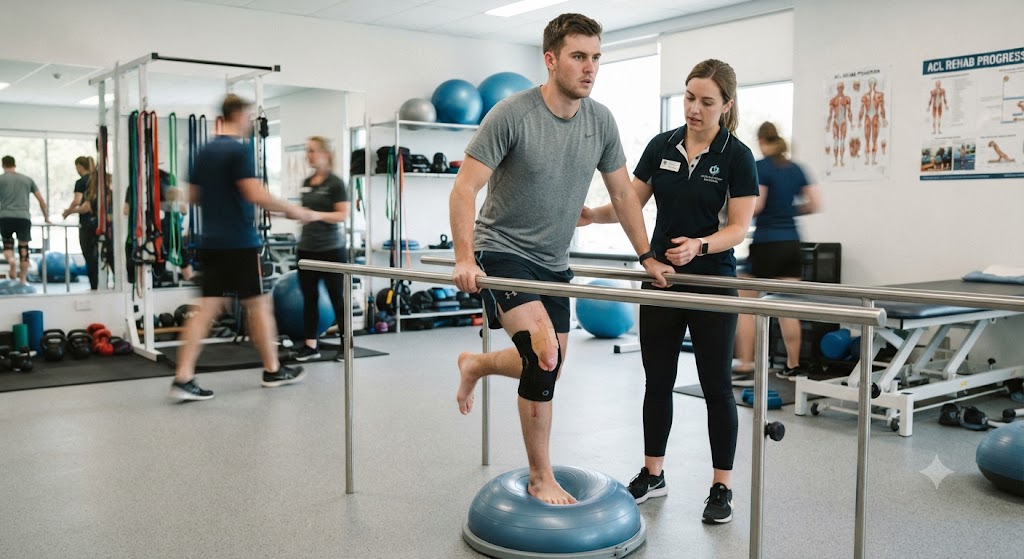
- Comprehensive post-op rehab: A rigorous, progressive rehabilitation program to restore functional strength, joint stability, and confidence in the knee
Frequently Asked Questions
Can an ACL tear heal without surgery?
Some partial tears or complete tears in lower-demand individuals can be managed conservatively with structured physiotherapy, though many active patients wishing to return to pivoting sports benefit significantly from surgical reconstruction.
How long does ACL reconstruction recovery take?
Full return to competitive pivoting sport typically takes nine to twelve months, reflecting the biological timeline required for graft healing, ligamentization, and comprehensive strength and stability rehabilitation.
Can I walk after an ACL tear?
Many people can walk with assistive support shortly after the injury once acute pain subsides, though the knee often feels loose or unstable, particularly when turning, twisting, or navigating uneven surfaces.
Take Care of Your Knee Health
Concerned about knee instability or looking for a specialist diagnosis? Book a consultation today with our orthopedic experts.
Book Knee Specialist Consultation