Understanding Extension Lag
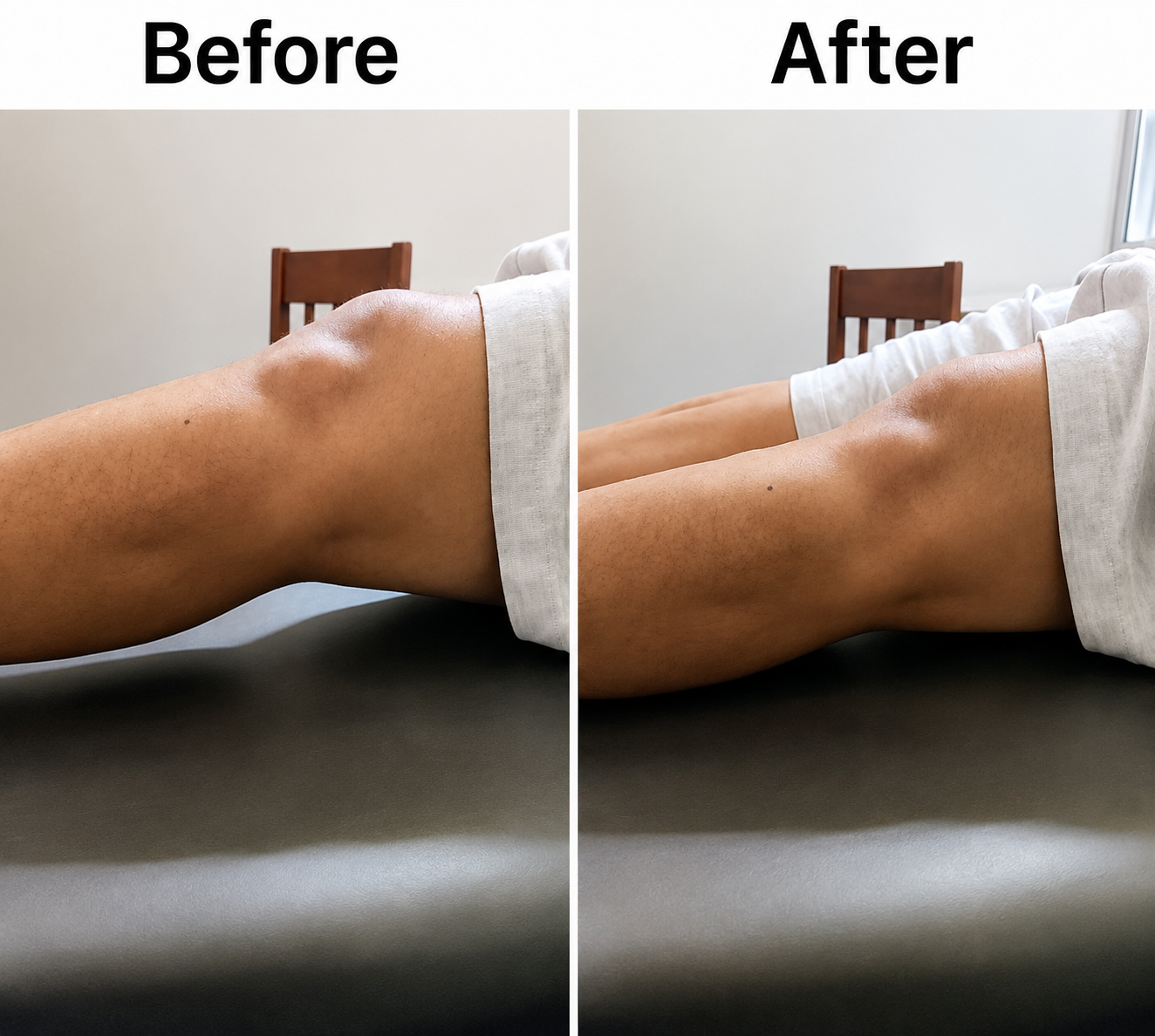
Extension lag is a specific finding in knee rehabilitation where a person is unable to actively straighten the knee fully, even though the knee can be passively straightened by someone else or under gravity.
This gap between passive and active extension usually points to quadriceps weakness or inhibition rather than a mechanical block within the joint, and is a common, important focus area during recovery from knee surgery or injury.
What Causes Extension Lag?
- Quadriceps weakness: Significant muscle deconditioning following surgery or prolonged immobilization
- Pain inhibition: Pain-related neural inhibition of the quadriceps muscle following knee injury
- Joint effusion: Intra-articular swelling reducing effective quadriceps activation and recruitment
- Inadequate rehab: Delayed or insufficient early strengthening protocols after knee surgery
Why It Matters
Persistent extension lag can severely affect your walking pattern, increase abnormal mechanical strain on surrounding joints, and delay overall functional recovery.
Because full active extension is essential for a normal, efficient gait, addressing extension lag early is a high priority in most knee rehabilitation programs, particularly after joint replacement or ligament reconstruction.
How Extension Lag Is Assessed
Extension lag is typically measured by comparing how far a patient can actively lift and straighten the leg against gravity compared to the knee's full passive extension range.
The angular difference between active and passive extension is quantified in degrees to accurately record the extent of the extension lag present.
Treatment Strategies
- Targeted activation: Quadriceps activation exercises, such as quad sets and straight leg raises
- Electrical stimulation: Neuromuscular electrical stimulation (NMES) to help re-engage inhibited muscle fibers
- Swelling management: Comprehensive edema control to reduce joint-related neural inhibition
- Progressive resistance: Gradual strength training as muscular control improves
- Biofeedback: Utilizing biofeedback techniques in select cases to enhance muscle activation awareness
Recovery Outlook
With consistent, targeted quadriceps strengthening, most cases of extension lag improve steadily over the weeks following injury or surgery. However, persistent or significant lag may require closer clinical follow-up with a specialist physiotherapist to identify any additional contributing factors.
Frequently Asked Questions
Is extension lag the same as knee stiffness?
No, joint stiffness refers to a mechanical restriction in passive movement range, while extension lag specifically describes an inability to actively achieve the knee's available extension range due to muscle weakness or inhibition.
How long does extension lag take to resolve?
With consistent quadriceps strengthening and proper activation work, many cases improve significantly within a few weeks, though timelines vary depending on the underlying cause and starting severity.
Can extension lag affect walking?
Yes, an uncorrected extension lag can lead to compensatory walking patterns, abnormal gait mechanics, and increased strain on other lower limb joints, making early intervention important.
Take Care of Your Knee Health
Concerned about active knee extension or looking for a professional specialist evaluation? Book a consultation today with our experts.
Book Knee Specialist Consultation