Understanding Sciatica Nerve Pain
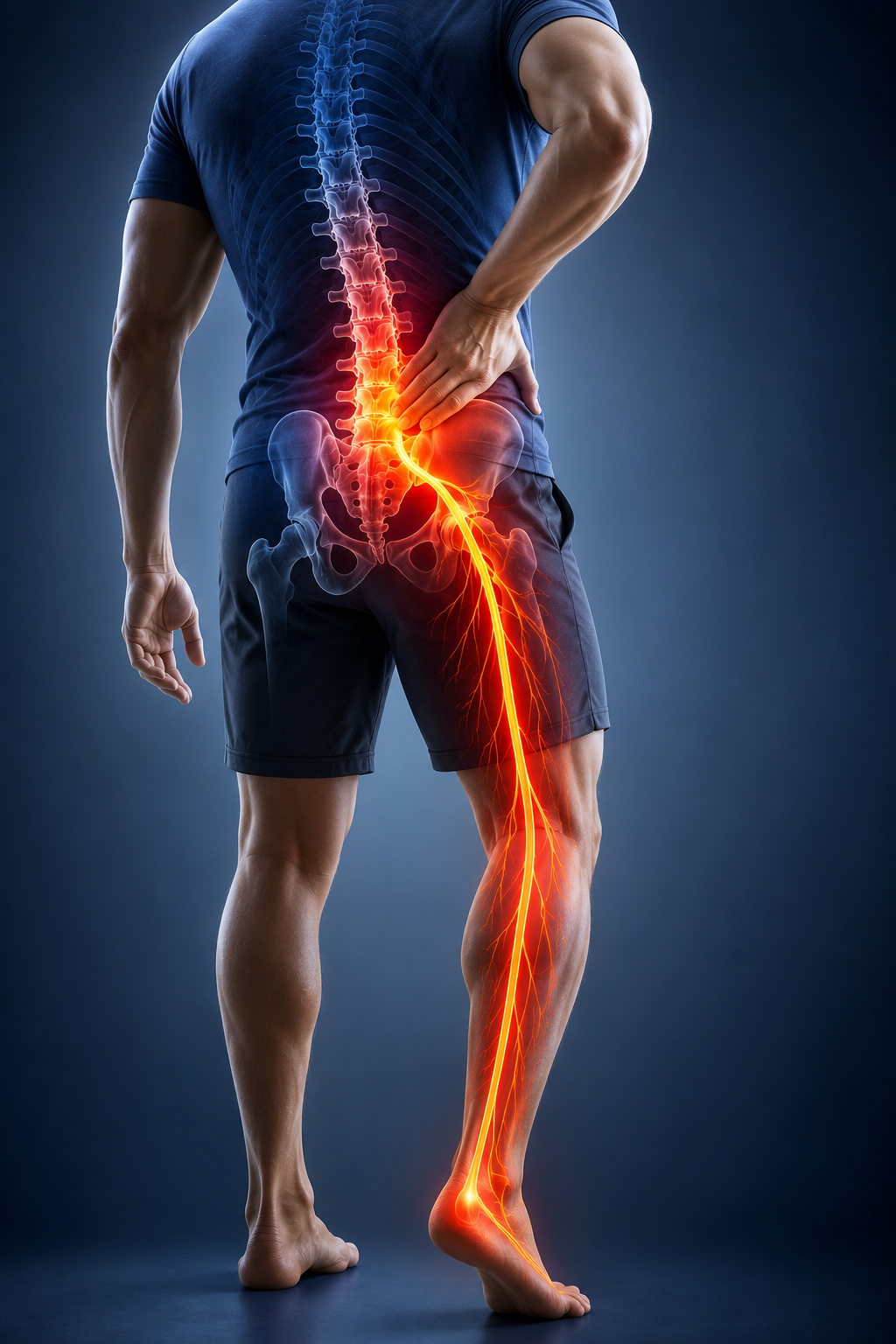
Sciatica describes pain that radiates along the path of the sciatic nerve, running from the lower back through the buttock and down the back of the leg.
Rather than being a diagnosis in itself, sciatica is a symptom pattern caused by irritation or compression of the sciatic nerve or its contributing nerve roots, most commonly from a disc problem in the lower spine.
Common Causes of Sciatica
- A herniated or bulging disc pressing on a nerve root
- Spinal stenosis narrowing the space around the nerve roots
- Piriformis syndrome, where a deep hip muscle irritates the sciatic nerve
- Spondylolisthesis or other structural spinal changes affecting nerve space
Symptoms
- Sharp, shooting, or burning pain radiating from the lower back or buttock down the leg
- Numbness or tingling along the path of the nerve
- Muscle weakness in the affected leg in more significant cases
- Pain that may worsen with sitting, coughing, or certain movements
Diagnosis
Diagnosis is based on a clinical examination, including specific nerve tension tests, combined with MRI imaging when needed to identify the underlying cause of nerve irritation and guide treatment planning.
Treatment Options
- Physiotherapy focused on specific nerve-gliding and mechanical relief exercises
- Activity modification during the acute phase
- Anti-inflammatory medication or epidural injections for significant symptoms
- Surgical intervention considered for persistent, severe, or progressively worsening nerve symptoms
Frequently Asked Questions
Is sciatica the same as a slipped disc?
Not exactly — sciatica describes the pattern of nerve pain radiating down the leg, and a slipped disc is one of the most common underlying causes, though sciatica can also result from other conditions such as spinal stenosis or piriformis syndrome.
How long does sciatica take to go away?
Many cases improve significantly within four to six weeks with conservative treatment, though some cases can take longer depending on the underlying cause and severity.
What is the fastest way to relieve sciatica pain?
Targeted physiotherapy exercises, activity modification, and, when needed, anti-inflammatory treatment tend to provide the most reliable relief for most people.
Take Care of Your Spinal Health
Concerned about back, neck, or spine pain? Book a consultation today with our specialists.
Book Spine Specialist Consultation