Understanding Disc Sequestration
Disc sequestration is the most advanced stage of disc herniation, occurring when a fragment of disc material completely separates from the main disc and migrates within the spinal canal.
This distinguishes it from a simple bulge or herniation where the disc material remains connected to the disc itself, and understanding this distinction is important because sequestered fragments can behave differently in terms of both symptoms and treatment response.
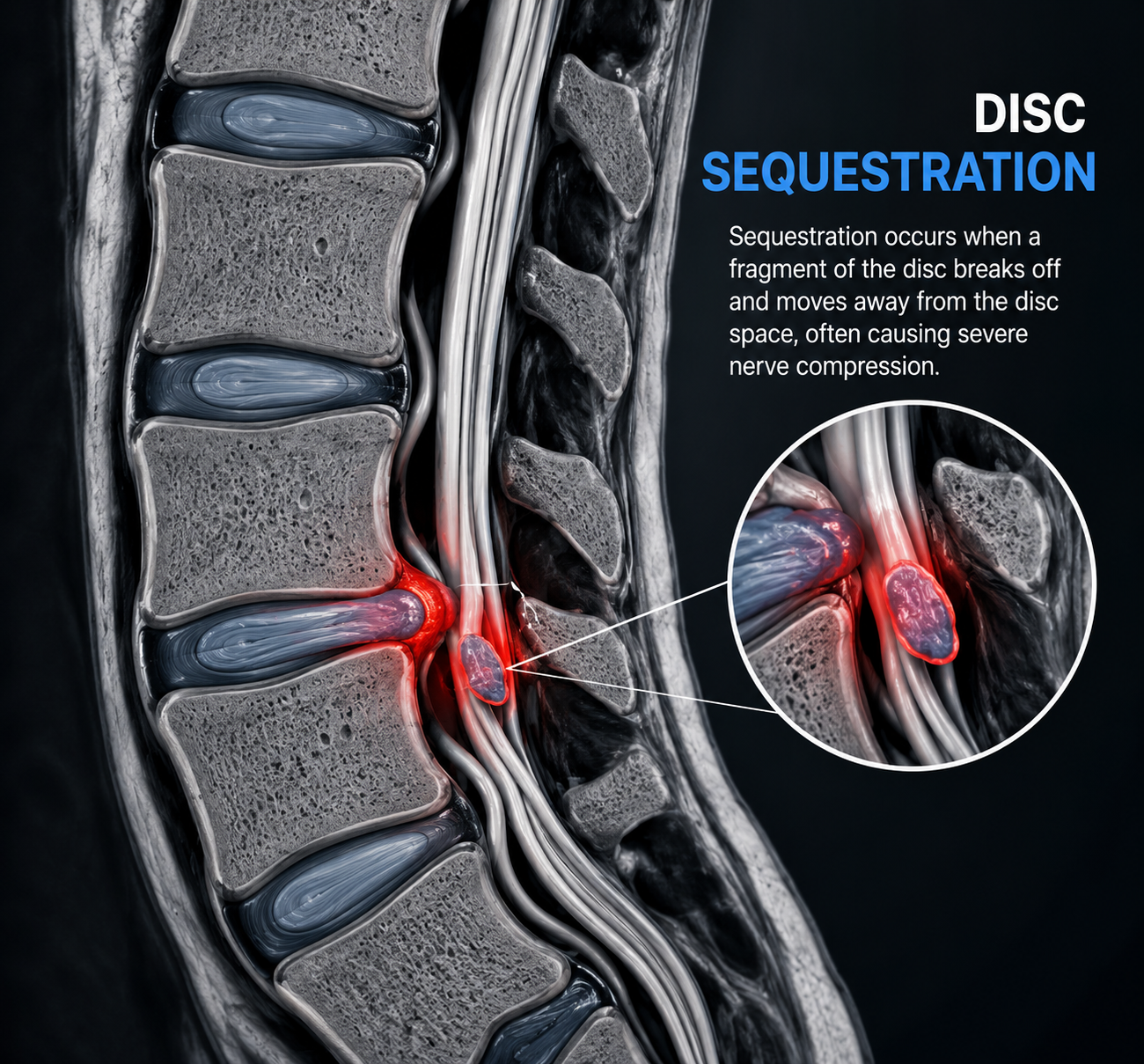
Stages of Disc Herniation
- Disc bulge: The disc extends beyond its normal boundary but the outer layer remains intact
- Disc protrusion: A more focal herniation where the outer layer is stretched but not torn through
- Disc extrusion: Disc material breaks through the outer layer but remains connected to the main disc
- Disc sequestration: A fragment fully separates from the main disc and can migrate within the spinal canal
Symptoms
- Significant, often severe back or neck pain depending on the level involved
- Radiating nerve pain, numbness, or weakness in the corresponding arm or leg
- Symptoms that can sometimes be more intense than with a simple disc bulge due to direct nerve irritation from the free fragment
- In rare, severe cases involving the lower spine, bladder or bowel changes requiring urgent evaluation
Diagnosis
MRI is essential for accurately identifying disc sequestration, clearly distinguishing a fully separated fragment from less advanced stages of disc herniation and precisely locating its position relative to the nerve roots.
Treatment Considerations
- Some sequestered fragments can still be managed conservatively, and interestingly, may sometimes resorb naturally over time due to their higher exposure to the body's immune response
- Physiotherapy and activity modification for cases with tolerable, non-progressive symptoms
- Surgical removal considered for significant, persistent, or progressively worsening nerve symptoms
- Urgent surgical evaluation for any bladder or bowel involvement
Frequently Asked Questions
Is disc sequestration worse than a regular herniated disc?
It represents a more advanced stage where the fragment has fully separated, but interestingly, sequestered fragments are sometimes more likely to naturally resorb over time compared to less severe stages.
Does disc sequestration always require surgery?
Not always — some cases with tolerable symptoms are managed conservatively, with surgery reserved for significant, persistent, or progressive nerve-related symptoms.
Can a sequestered disc fragment go away on its own?
Yes, sequestered fragments are more exposed to the body's immune system and can sometimes shrink or resorb naturally over weeks to months.
Take Care of Your Spinal Health
Concerned about back, neck, or spine pain? Book a consultation today with our specialists.
Book Spine Specialist Consultation