Understanding Radial Palsy
The radial nerve controls the muscles responsible for extending the wrist and fingers, and damage to this nerve can lead to a noticeable weakness known as radial palsy.
This condition often results in an inability to lift the wrist and fingers upward, significantly affecting hand function.
Our clinic offers thorough evaluation and treatment for radial palsy to support nerve recovery and restore hand movement.
What Is Radial Palsy?
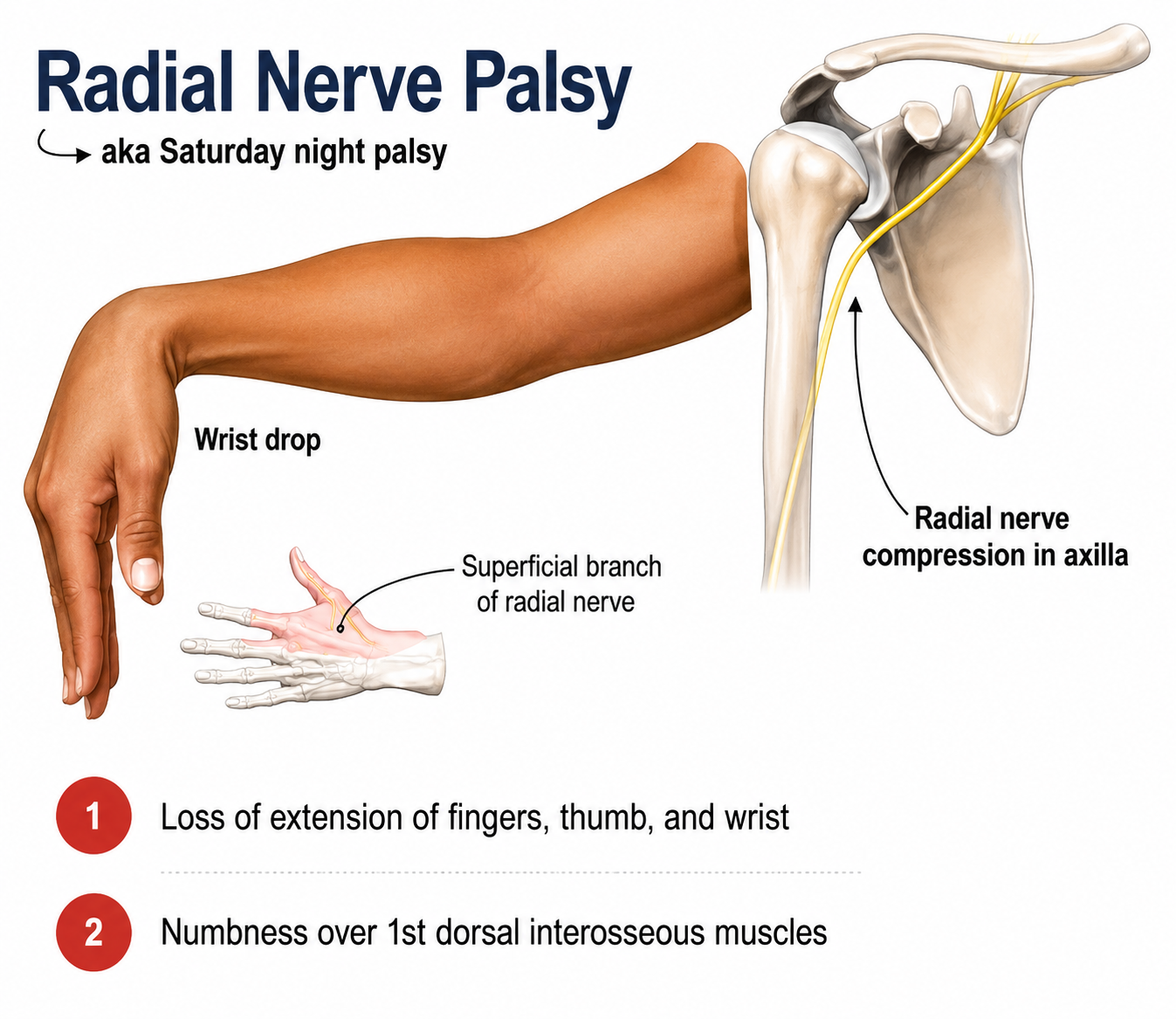
Radial palsy occurs when the radial nerve, which runs along the back of the arm and controls the muscles that extend the wrist and fingers, becomes damaged or compressed.
Because this nerve is responsible for lifting the hand and fingers upward, injury to it typically results in a distinctive pattern of weakness affecting these specific movements.
Common Causes of Radial Palsy
Fractures of the upper arm bone, where the radial nerve runs closely alongside
Prolonged pressure on the nerve, such as from falling asleep with the arm compressed
Direct trauma or penetrating injury to the arm
Compression from crutches used incorrectly under the arm
Symptoms of Radial Palsy
- Inability to extend the wrist, resulting in a condition known as wrist drop
- Difficulty straightening the fingers and thumb
- Numbness or altered sensation on the back of the hand and forearm
- Weak grip strength due to loss of wrist stability
Treatment Options for Radial Palsy
Targeted recovery protocols focus on stabilizing the joint and monitoring neural regeneration:
- Splinting – supports the wrist in a functional position while the nerve recovers
- Structured hand therapy – maintains joint mobility and prevents stiffness
- Nerve monitoring – tracks recovery progress over time with clinical assessment
- Surgical intervention – considered for nerve injuries that don't show signs of natural recovery
Frequently Asked Questions
Can radial palsy recover on its own?
Many cases caused by pressure or mild trauma improve gradually over weeks to months as the nerve heals, though more significant injuries may need further evaluation.
What is the connection between radial palsy and wrist drop?
Wrist drop is the primary symptom of radial palsy, describing the inability to lift the wrist and fingers due to loss of function in the muscles the radial nerve controls.
How is radial palsy diagnosed?
A physical examination assessing wrist and finger extension, along with nerve conduction studies when needed, helps confirm the diagnosis and pinpoint the site of nerve involvement.
Concerned about wrist or hand pain? Book a consultation today with our specialists.
Book Hand Specialist Consultation