Understanding Subscapularis Tendinitis
The subscapularis is the largest of the rotator cuff muscles and controls inward rotation of the arm, making it essential for movements like reaching across the body or behind the back. When its tendon becomes inflamed, everyday tasks such as tucking in a shirt or reaching for a seatbelt can become painful.
Our clinic offers focused treatment for subscapularis tendinitis to restore comfortable, functional shoulder movement.
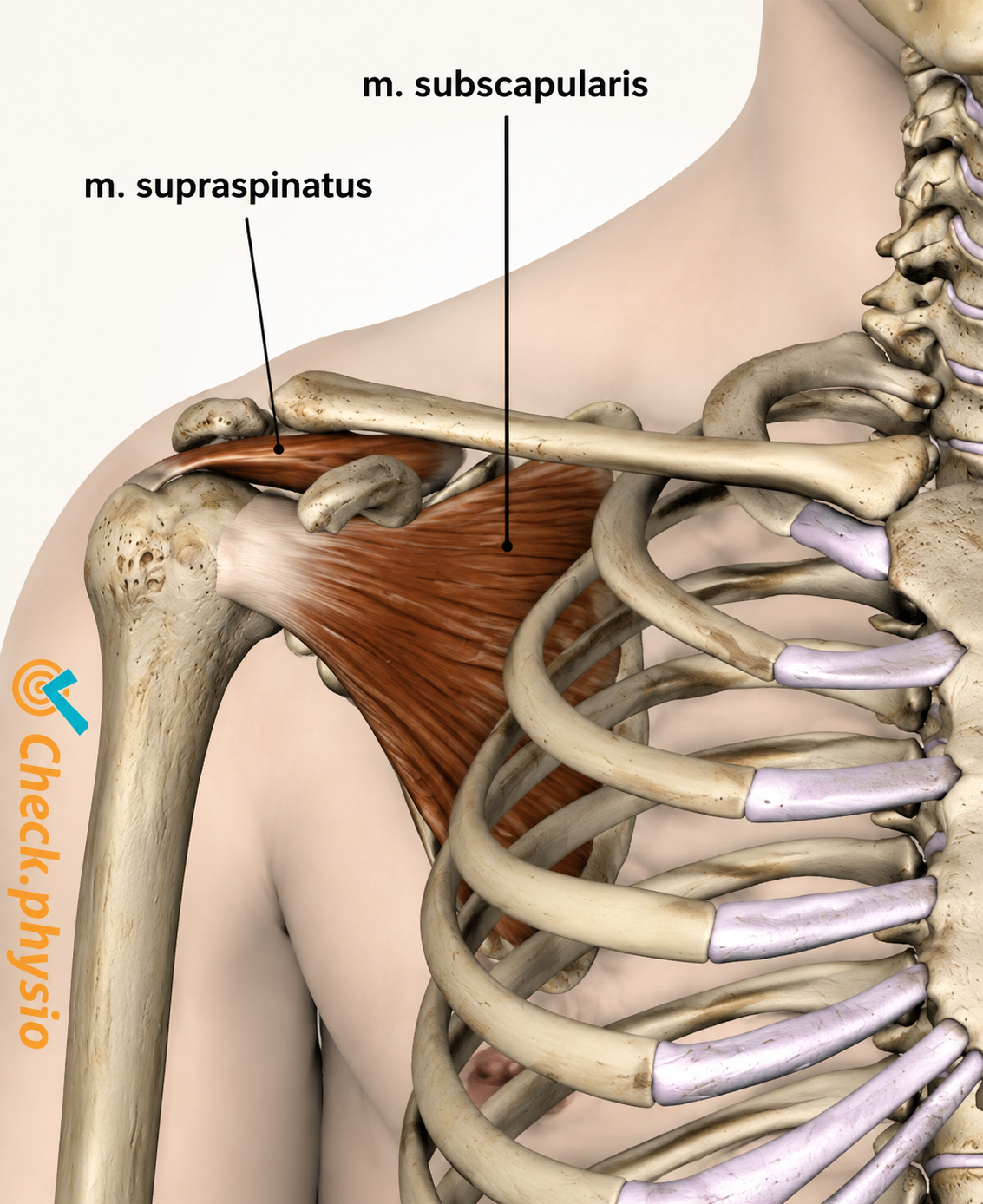
The Role of the Subscapularis Tendon
Sitting at the front of the shoulder blade, the subscapularis tendon attaches to the upper arm bone and works to internally rotate the shoulder while also helping stabilize the joint. Its central role in daily movement means irritation here can noticeably limit function.
Common Causes of Subscapularis Tendinitis
- Repetitive internal rotation movements, such as in swimming or racquet sports
- Direct trauma or a fall onto an outstretched arm
- Compensatory overuse following injury to other rotator cuff tendons
- Age-related degeneration of tendon tissue
Signs and Symptoms
- Pain at the front of the shoulder, especially with internal rotation
- Discomfort reaching across the body or behind the back
- A sensation of weakness when pushing or internally rotating the arm
- Tenderness felt at the front of the shoulder joint
Treatment Options
- Physiotherapy: Restores strength and normal movement patterns
- Activity modification: Limits aggravating movements during recovery
- Anti-inflammatory treatment: Reduces pain and swelling
- Corticosteroid or PRP injection: For cases that don't respond to conservative care
Frequently Asked Questions
What activities commonly aggravate subscapularis tendinitis?
Reaching behind the back, internally rotating the arm, or pushing movements often trigger discomfort in this condition.
Is subscapularis tendinitis common after a shoulder injury?
Yes, it can develop secondarily when other rotator cuff tendons are injured and the subscapularis compensates with added strain.
Can this condition be managed without injections?
Many cases improve with physiotherapy and activity changes alone, with injections reserved for more persistent or severe cases.
Take Care of Your Health
Concerned about shoulder pain or looking for a diagnosis? Book a consultation today with our specialists.
Book Specialist Consultation