Understanding PCL Injuries
The posterior cruciate ligament (PCL) is one of the strongest ligaments in the knee, working alongside the ACL to control forward and backward movement of the shinbone.
PCL injuries are less common than ACL injuries and often result from direct impact to the front of the shin, such as in a car accident or a fall onto a bent knee, rather than from typical sports pivoting movements.
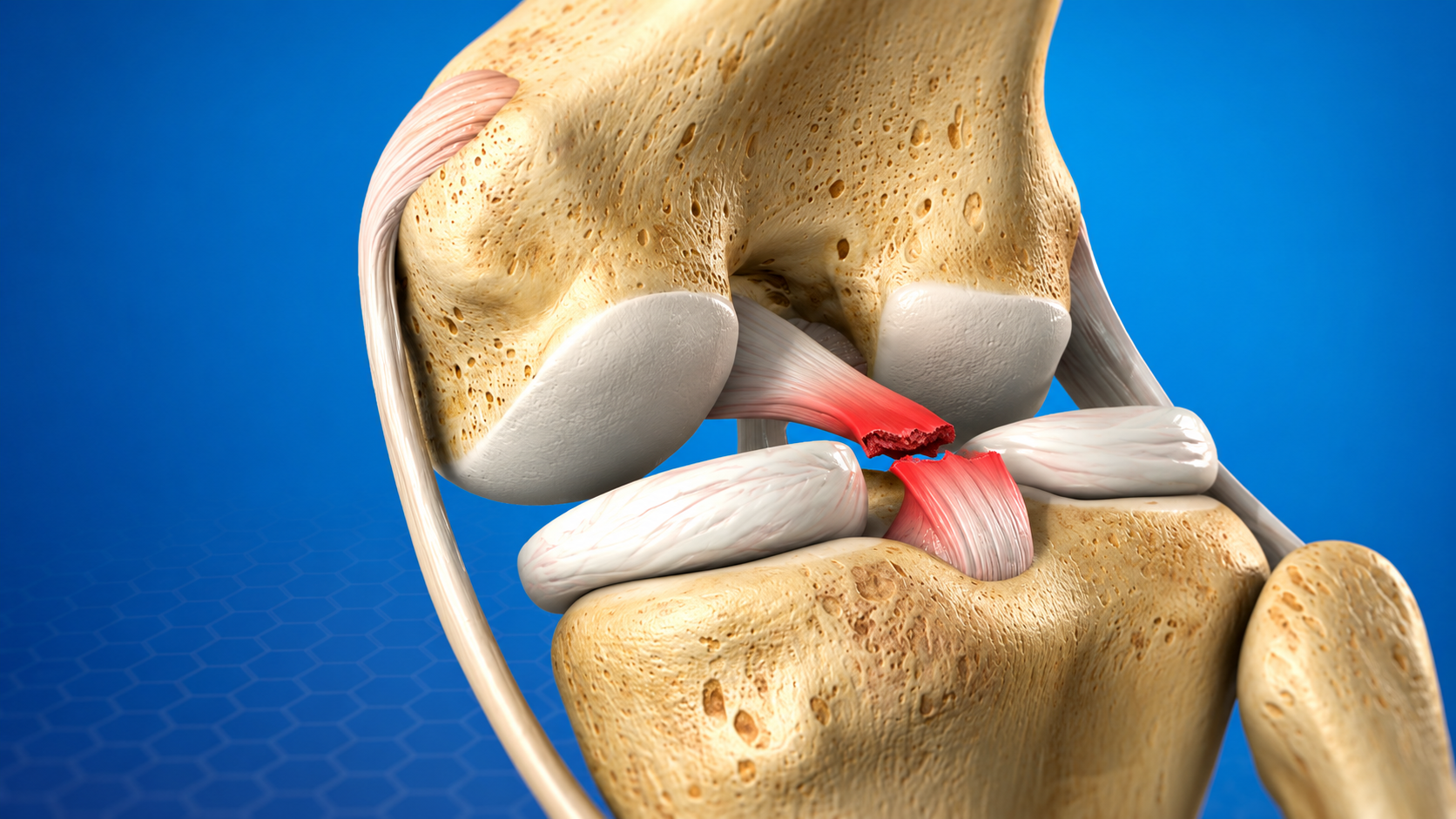
How PCL Injuries Occur
- Dashboard injury: A direct blow to the front of the shin with the knee bent during a car collision
- Falling directly onto a bent knee with the foot pointed
- Hyperextension injuries sustained during contact sports
- Combined ligament injuries resulting from high-energy trauma
Grades of PCL Injury
- Grade 1: Mild sprain with minimal joint looseness
- Grade 2: Partial tear accompanied by moderate instability
- Grade 3: Complete tear, frequently associated with multi-ligament trauma
Symptoms
- Pain felt deep at the back of the knee, particularly when kneeling
- Swelling that may be less dramatic compared to initial ACL injuries
- A vague sense of joint instability, especially when navigating uneven ground or stairs
- Stiffness and mechanical difficulty with full knee bending
Diagnosis
Diagnosis involves specialized clinical drawer tests assessing the backward translation of the shinbone relative to the thigh.
This is combined with high-resolution MRI imaging to confirm the precise injury grade and identify any associated meniscal or multi-ligament damage common in higher-energy trauma.
Treatment and Management
- Conservative management: Utilizing specialized knee bracing and structured physical therapy for isolated, lower-grade PCL injuries
- Quadriceps strengthening: Plays an essential stabilizing role by compensating for posterior tibial translation during recovery
- Surgical reconstruction: Evaluated for high-grade tears, particularly when accompanied by complex multi-ligament damage
- Progressive return: A gradual, protected return to activity governed by functional strength and stability milestones
Frequently Asked Questions
Is a PCL injury less serious than an ACL injury?
Isolated PCL injuries are often more amenable to conservative treatment options than ACL tears, though higher-grade or multi-ligament injuries can be equally severe.
Can you walk with a PCL tear?
Yes, many individuals can walk immediately following a PCL injury, often experiencing subtler initial symptoms than an ACL tear, which can sometimes delay accurate diagnosis.
Does a PCL tear always require surgery?
No, many isolated, lower-grade PCL sprains respond exceptionally well to targeted conservative treatment centered around dedicated quadriceps strengthening and bracing.
Take Care of Your Knee Health
Concerned about knee pain or looking for a specialist diagnosis? Book a consultation today with our orthopedic experts.
Book Knee Specialist Consultation