Understanding Baker's Cyst
A Baker's cyst, also called a popliteal cyst, is a fluid-filled swelling that develops behind the knee, usually as a result of excess joint fluid being pushed backward from an underlying knee problem such as arthritis or a meniscus tear.
While often painless and harmless, a Baker's cyst can sometimes cause discomfort, tightness, or, rarely, complications if it becomes large or ruptures.
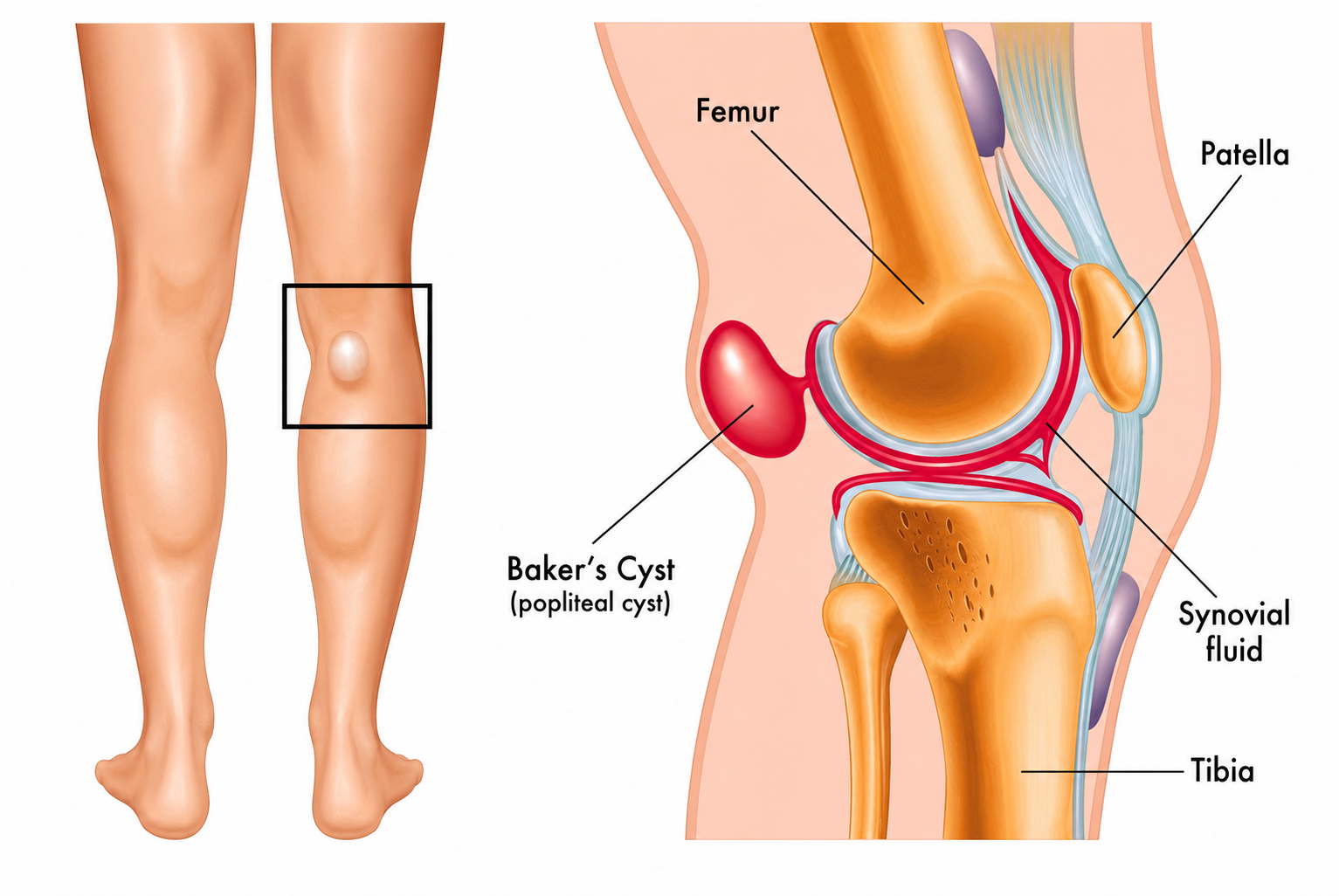
What Causes a Baker's Cyst?
- Knee osteoarthritis: One of the most common underlying causes driving joint fluid production
- Meniscus tears: Structural cartilage damage leading to chronic joint swelling and fluid displacement
- Inflammatory arthritis: Systemic conditions such as rheumatoid arthritis
- Chronic irritation: Other underlying causes of persistent knee joint inflammation
Symptoms
- A soft swelling or localized lump located directly behind the knee joint
- A feeling of tightness or fullness behind the knee, especially noticeable with full bending
- Mild discomfort or aching that may worsen with physical activity
- In some instances, no symptoms at all, discovered incidentally during imaging
- Sudden sharp pain accompanied by acute calf swelling if the cyst ruptures
Diagnosis
A Baker's cyst can often be identified through careful clinical examination alone.
However, ultrasound or MRI is commonly utilized to confirm the diagnosis and, importantly, to identify the primary underlying knee pathology driving the excess fluid production.
Treatment Approach
- Targeting root cause: Treating underlying conditions like arthritis or a meniscus tear is central to resolving the cyst
- Activity modification: Resting the joint during symptomatic flare-ups
- Symptom relief: Ice therapy and anti-inflammatory measures for discomfort
- Medical procedures: Ultrasound-guided aspiration of cyst fluid combined with corticosteroid injection in select cases
- Surgical evaluation: Surgical removal reserved strictly for large, persistent, or repeatedly symptomatic cysts
When to Seek Urgent Care
A ruptured Baker's cyst can cause sudden calf swelling, localized redness, and sharp pain that closely mimics a blood clot (deep vein thrombosis). Therefore, any sudden onset of these symptoms should be evaluated promptly by a medical professional to rule out this more serious vascular condition.
Frequently Asked Questions
Is a Baker's cyst dangerous?
Most Baker's cysts are completely harmless, though a ruptured cyst can cause symptoms that mimic a blood clot and should be evaluated promptly to rule this out.
Does a Baker's cyst need to be removed?
Not always. Many cysts shrink or resolve entirely once the underlying knee condition is successfully treated, with surgical removal reserved for large or persistently symptomatic cases.
Can a Baker's cyst go away on its own?
Yes, particularly if the underlying cause, such as mild joint inflammation or minor irritation, resolves on its own or is successfully managed.
Take Care of Your Knee Health
Concerned about swelling behind the knee or looking for a professional specialist diagnosis? Book a consultation today with our orthopedic experts.
Book Knee Specialist Consultation